GeMarkt Blog · Practical guide
Buying Art Online: A Checklist
Check the exact artwork, selected size, print format, image evidence and order terms before buying art online, with questions that reveal costly misunderstandings.

Before buying art online, make sure the picture you like and the object you are ordering are the same thing. A listing may show a large framed work while the selected option is a small unframed print. Another may show a room but deliver a digital file. These are not small details to discover after payment.
Use the following checks in order. Start with the product, move to the exact option, then consider the seller and transaction. If an answer is missing, ask a focused question rather than filling the gap with the most reassuring interpretation.
Identify what is being sold
Read the product type before judging the photograph. Is this an original artwork, a reproduction, a photograph, a print made from a digital design, or a downloadable file? A print of an oil painting is not itself an oil painting. A reproduction on canvas is not evidence of hand-painted brushwork.
Check the artwork title and artist where they are given. Familiar names can hide different versions, details or colour treatments. If you want the whole composition, look for the outer edges of the image and compare them with a reliable artwork record. A deliberately cropped detail can be a good purchase; an unexpected crop is a different matter.
Also check quantity. A room photograph containing three pictures does not establish that the order includes all three. Look for a clear statement of what the selected item supplies, including whether any frame, mat or hanging accessories are included.
Select the exact option before comparing
Choose the intended format, dimensions and frame before treating the displayed amount as your price. A starting price may refer to a smaller size or a different product altogether. Two listings are not comparable merely because their first photograph shows the same painting.
The diagram below keeps these checks separate. You can love the image and still stop before ordering because the size or included contents remain unclear.
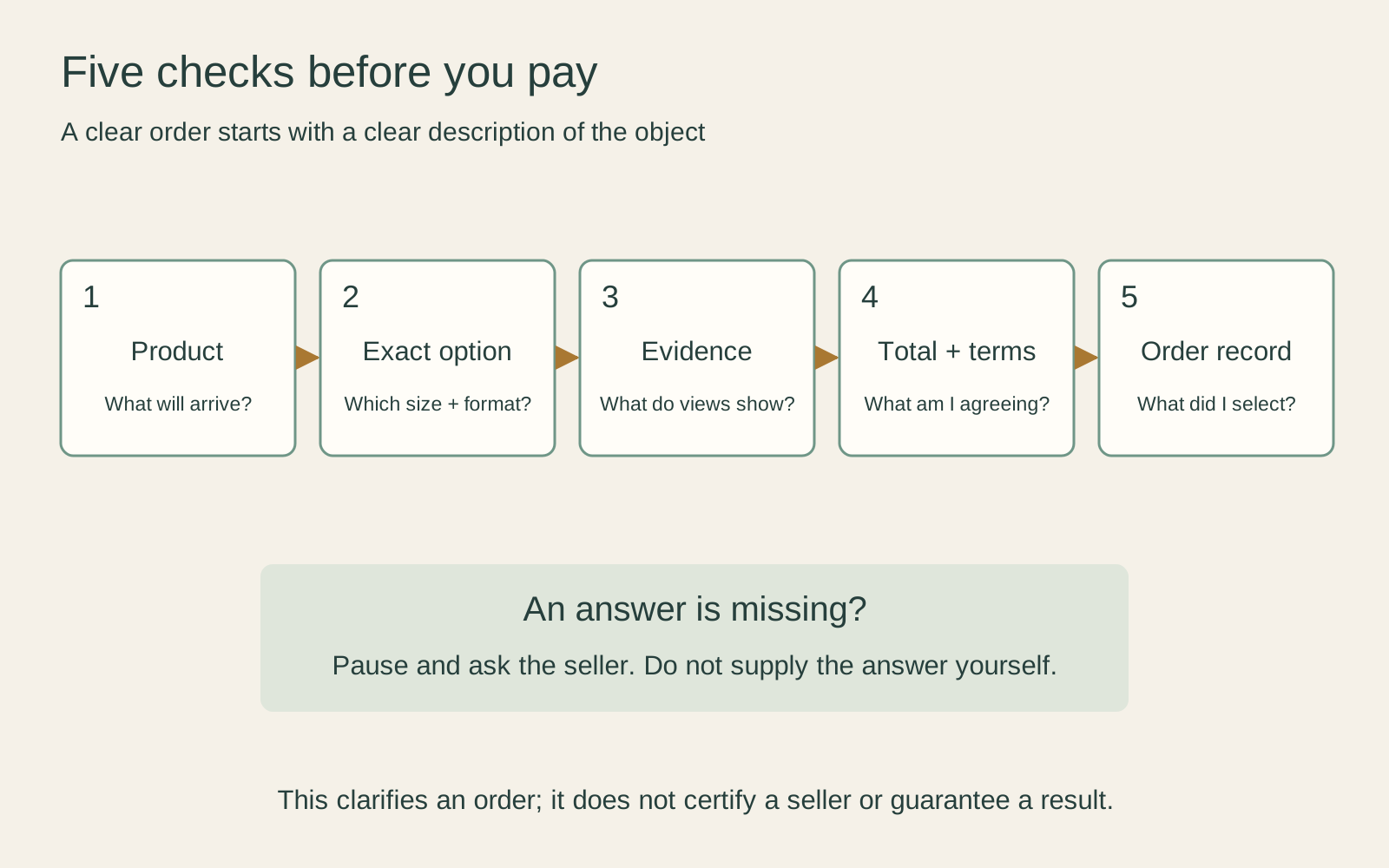
For example, “landscape print, 40 × 50 cm” is not a complete comparison if one offer includes a frame and the other does not. Write a short specification for yourself: exact image, physical paper print, chosen sheet size, border preference and framing requirement. Compare sellers against that specification.
Measure the object that will arrive
Ask what each dimension describes: the printed image, the paper sheet, the mat opening or the outside of the frame. A museum’s dimensions for the original painting are not the dimensions of the reproduction for sale.
For a tight space, make a paper template using the outside frame measurements. A 40 cm-wide print can occupy more wall width once borders and framing are added. If the seller gives only a nominal frame size, ask for the finished external size rather than estimating from the photograph.
Look at the template from the seat or doorway where the work will usually be seen. Check that an opening door, furniture or a nearby switch will not make the position awkward. This is a fit check, not a hanging instruction; the weight, wall and fixings need their own assessment.
Look for evidence beyond the room mockup
A room mockup is useful for imagining a style. It cannot, by itself, prove scale, surface texture, colour accuracy or the finish of the actual product. Ask whether a close-up shows the manufactured print or only the source image placed in a scene.
Useful additional views depend on what you are buying. For paper, inspect an edge and a close view of fine detail. For stretched canvas, look at the side and corner treatment. For a frame, see the profile and the relationship between frame, image and any mat. A front view alone leaves those questions unanswered.
Do not equate a dramatic zoom with proof of exceptional resolution. A listing can zoom into a digital image that is not a photograph of the output. If detail matters, ask for a representative printed sample or another specific form of evidence the seller can provide.
Turn material claims into specific questions
Words such as “premium” are descriptions of positioning, not a complete specification. Ask for the paper name or type, surface, relevant weight, print process and frame construction. You do not need a technical lecture; you need enough information to distinguish the options that affect your purchase.
A manufacturer’s own specification shows what useful detail can look like. Printful’s Enhanced Matte Paper Framed Poster page separately names the paper weight, wood frame, front protector and included hanging hardware. Those are details of that particular product, not promises about GeMarkt or every framed poster. Printful’s product specification.
If a seller supplies several formats, make sure the materials paragraph applies to the one you selected. A paper specification beneath a canvas option does not answer what the canvas is made from. Our paper-surface guide can help if the remaining choice is about finish.
Check the seller as well as the picture
Look for a working contact route and a coherent account of the business. If you have a genuine product question, the reply is useful evidence of whether the seller understands what is being offered. A polished storefront is not a substitute for a clear answer.
The US Federal Trade Commission advises examining reviews critically, including who wrote them and where they appear, rather than relying on star ratings alone. It also notes that an encrypted website is not necessarily a legitimate business. FTC online-shopping advice.
Read the content of reviews for matters relevant to your order. Comments about a downloadable file tell you little about a framed shipment. A photograph of one small print cannot establish how the largest version will look. Avoid turning a single delighted or disappointed review into a verdict on every product.
Settle the total and the terms
The FTC recommends comparing the complete cost, including applicable shipping and fees, and reading the seller’s delivery and return information. Keep that advice practical: establish the amount for your destination and exact selection before payment. FTC comparison and policy guidance.
Separate production, dispatch and arrival estimates. For returns, distinguish a change of mind from damage, a fault or the wrong item. The seller’s stated terms and your legal rights are not always identical; rules depend on the transaction and jurisdiction. Do not assume a standard return window applies to every custom product or digital purchase.
If an item arrives damaged, know which contact route to use and what information the seller asks for. You should not have to discover the business’s identity for the first time when reporting a problem.
Save a clear order record
Before confirming, read the order summary as if you had not seen the attractive room photograph. Does it identify the picture, quantity, format, dimensions, frame choice and delivery address you intended? Check any personalisation especially carefully.
Keep the confirmation and the relevant product description or correspondence. The FTC specifically recommends retaining purchase and seller-promise records. FTC record-keeping guidance.
Your final check can be short: I know what arrives; I know its size; I understand the selected materials; I have checked the total and terms; I can contact the seller. If you cannot say one of those things, pause on that question. The aim is not to remove every uncertainty from buying art online. It is to avoid paying for an assumption that the listing never made.
Editorial record
About this article
- Author
- Publisher
- GeMarkt
- Published
- Reviewed
- Internal source & rights check. Conducted by GeMarkt Research Review. This is an internal editorial check—not independent peer review.
- Source standard
- Buying guide source standardSeparates measured or first-hand evidence from general guidance and keeps practical limits visible.
Found a claim that needs checking? Report a factual error.