GeMarkt Blog · Essay
Woodcut vs Engraving vs Etching
See how woodcut, engraving and etching differ through Dürer and Rembrandt: where the ink sits, how the marks are made and why techniques overlap.

A woodcut prints from the raised surface of a block. An engraving prints from lines cut into a plate. An etching prints from lines bitten into a plate by acid. All three transfer ink to paper, but they make and hold that ink in different ways.
The resulting images can look surprisingly similar. Dürer made intricate black-and-white pictures in both woodcut and engraving; Rembrandt could combine several metal-plate techniques in one print. Rather than guessing from an image’s subject or apparent detail, start with the printing surface.
Start with where the ink sits
There are two main families in this comparison. Relief printing takes ink from high areas; intaglio printing takes ink from recesses below a plate’s surface. “Intaglio” is simply the family name here, not another quality grade.
| Process | What makes the mark? | Where does the printing ink sit? |
|---|---|---|
| Woodcut | Knives and gouges remove areas of wood | On the surface left standing |
| Engraving | A cutting tool called a burin cuts into metal | In the cut lines |
| Etching | Acid bites metal exposed through a protective coating | In the bitten lines |
The important reversal is between cutting away space around a line in woodcut and making the line itself a recess in intaglio. The paper receives the ink; it is not the surface being carved.
These descriptions concern historical printmaking processes, not the way a modern inkjet reproduction of a Dürer image is produced. The same composition can reach a wall through a different process centuries later.
Woodcut removes what will not print
For a woodcut, the design is prepared on a wooden block. The cutter removes the areas that should remain unprinted, leaving the image’s printing surfaces raised. Ink is applied to that remaining surface and transferred to paper by pressure. The Met’s woodcut demonstration shows this positive-and-negative relationship.
Imagine a black line surrounded by white paper. On the block, that line needs to survive as a narrow ridge, with wood removed from its sides. A large white area is not a white substance painted onto the sheet: it can be an area that received no ink at all.
The person cutting the block was not necessarily the person who designed the picture. Specialist block cutters could translate an artist’s drawing into a printable surface. That division of labour belongs to the making of a print; it does not automatically make the result a reproduction of a painting.
Engraving cuts the printing line
An engraver uses a burin, a pointed cutting tool, to remove metal and leave grooves in a plate. Different depths and widths can produce varying lines. After inking, the surface is wiped so that ink remains in those recesses. A press brings dampened paper into contact with them. The Met’s engraving guide explains this sequence.
A darker area can be built from closely spaced lines. Parallel lines are called hatching; overlapping sets are cross-hatching. They can suggest the turn of a body, rough bark or a shadow without filling every part of that area with solid black.
The direct transfer normally reverses the plate’s image. Lettering therefore needs to be prepared with that reversal in mind. A readable inscription on the final print does not mean it was readable in the same direction on the plate.
Two Dürer prints side by side
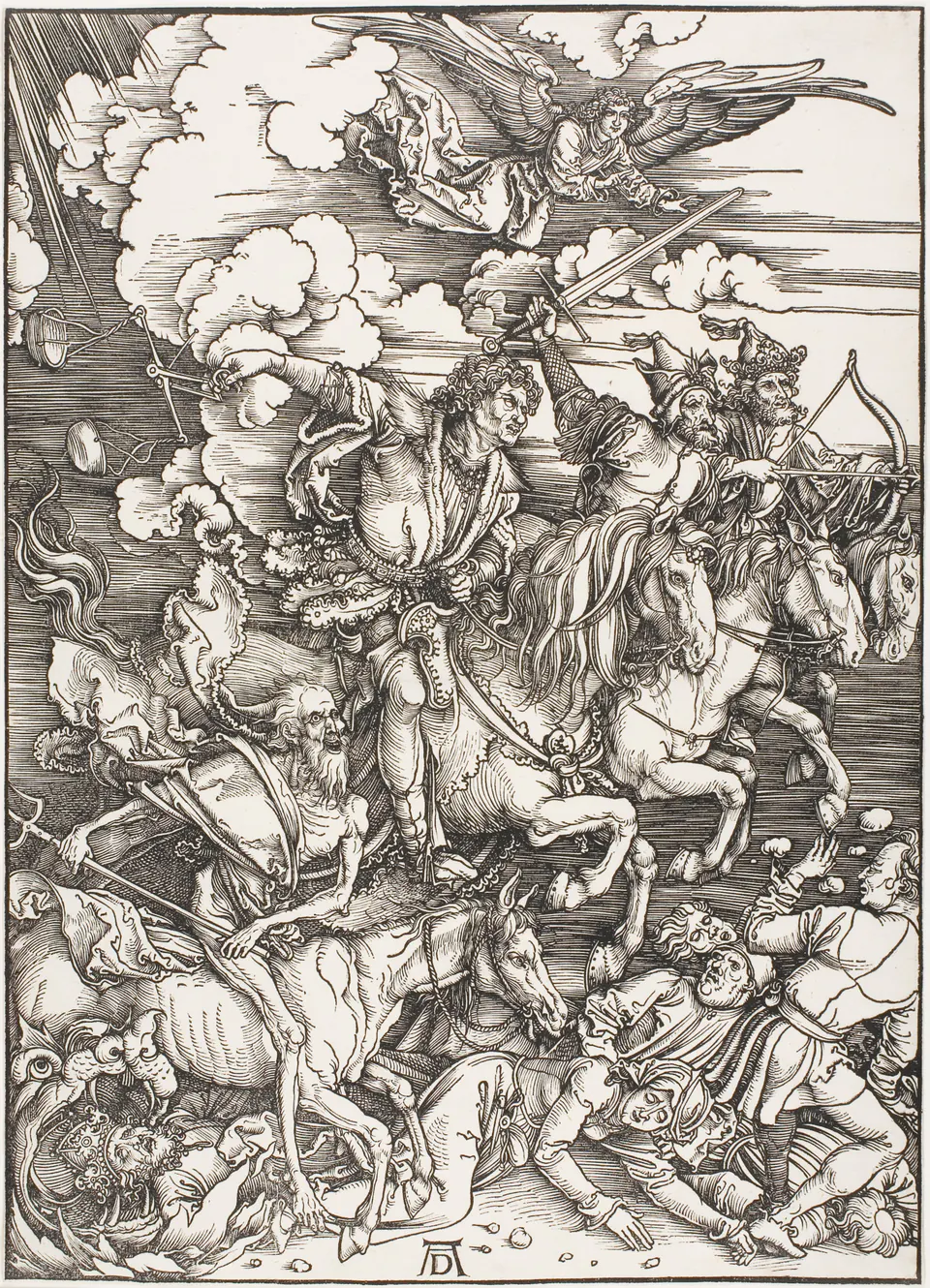
Look at the horsemen’s billowing clothes, the crowded hooves and the small lines describing hair. This is a woodcut, yet it is anything but crude. The Art Institute’s record identifies this impression as black ink on ivory laid paper.
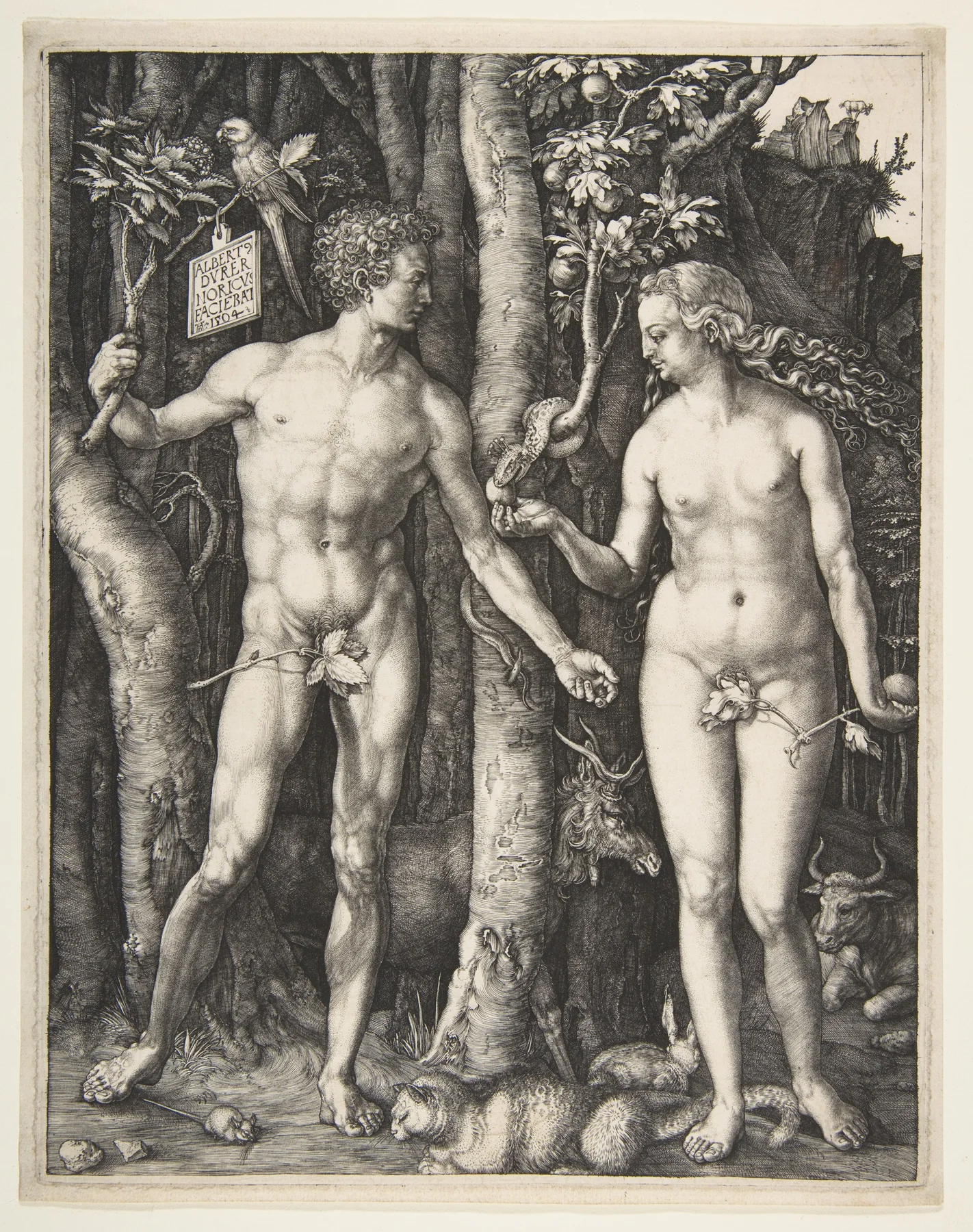
In Adam and Eve, follow the lines around Adam’s torso and the curves of Eve’s hair. The Met identifies the work as an engraving. Its many small marks make the pale figures appear rounded against the forest’s darkness.
The images invite a comparison of movement as well as technique. The horsemen push diagonally across their sheet; Adam and Eve stand almost still. Those are compositional decisions, not effects forced on Dürer by wood or metal. A woodcut need not be restless, and an engraving need not be calm.
Etching uses acid to make the recess
In etching, the plate is covered with a protective coating called a ground. An artist draws through that coating with a needle, exposing the metal underneath. Acid then bites the exposed areas. The needle opens the ground; it does not have to cut the final groove into the metal itself. The Met’s etching guide makes this distinction clear.
Once the ground is removed, the plate is inked and wiped, and dampened paper receives ink from its recessed marks under pressure. Etching and engraving therefore share an intaglio printing stage, even though their lines were made differently.
This helps explain why an etched line can follow the movement of drawing through a soft coating, while engraving involves pushing a tool through resistant metal. It is a difference in making, not a dependable rule that every loose line is etched or every neat one engraved.
Rembrandt combines the methods
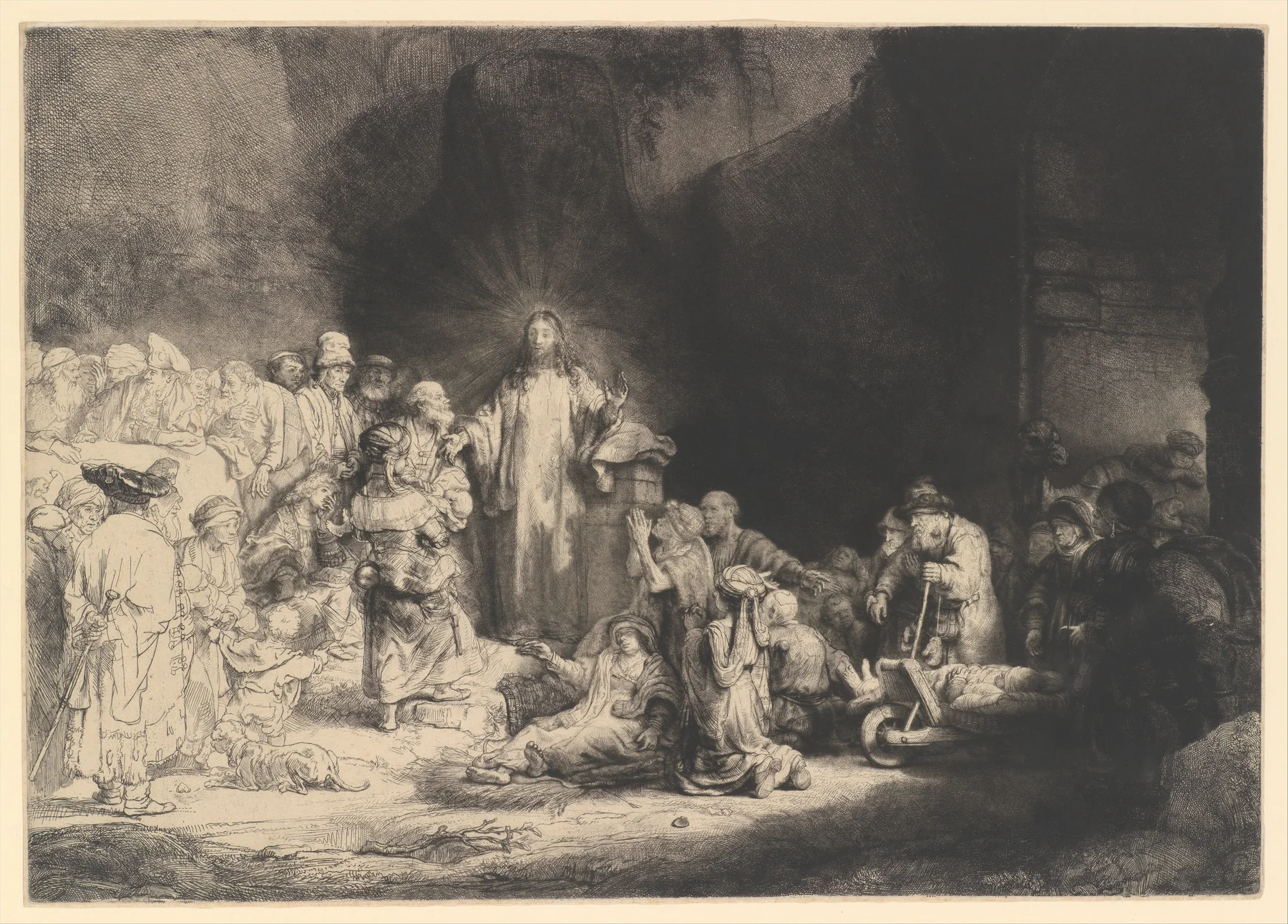
This sheet is not a pure etching selected to illustrate a single technique. The Met’s medium description names etching, engraving and drypoint. Notice the lightly outlined figures on the left beside the dense dark space on the right. Rembrandt’s tonal range belongs to a combination of methods.
Drypoint scratches directly into metal with a sharp point. It can leave a fine ridge of displaced metal, called a burr, which also holds ink and produces a soft-edged line. It is different from an acid-bitten etching and from a burin-cut engraving. The Met’s drypoint history also explains why this delicate burr can wear during printing.
What you can and cannot tell by looking
A pressed border around an image—a plate mark—can support an intaglio identification, but it is not an authentication certificate. Trimming, reproduction and the limits of a photograph complicate what you can infer. Start with a reliable object’s medium record, then use the image to understand what the process made possible.
One further naming trap is wood engraving. Despite “engraving” in its name, it is a relief process, generally worked on end-grain wood, rather than the metal-plate intaglio process described above. The V&A’s printmaking introduction distinguishes these families.
When reading a label, ask three questions: what surface was prepared, how were its marks made, and where did it hold ink? Those questions explain more than “fine lines mean engraving.” For the relationship between a historical impression and a modern reproduction, continue with Original vs Reproduction vs Print.
Editorial record
About this article
- Author
- Publisher
- GeMarkt
- Published
- Reviewed
- Internal source & rights check. Conducted by GeMarkt Research Review. This is an internal editorial check—not independent peer review.
- Source standard
- Art history source standardPrioritises object records and research sources, distinguishes evidence from interpretation, and states material uncertainty.
Found a claim that needs checking? Report a factual error.