GeMarkt Blog · Practical guide
Valentine’s Day Art: Famous Love Paintings
Choose a Valentine’s art gift by its story, not just its romantic title. Compare Klimt and Fragonard, then check the image, frame and personal message.

Choose a Valentine’s art gift for the person receiving it, then look closely at the painting’s story. A famous embrace, an exchanged letter and a flirtatious garden scene suggest different kinds of romance. None becomes the right present simply because a shop groups it under “love.”
The most useful starting point is something you already share: a museum visit, a favourite painter, a habit of writing letters or a private joke. That connection can make a familiar image personal without adding names across the artwork or buying an enormous version of it. These three paintings offer distinct possibilities, with a few practical checks before you commit.
Choose the kind of romance you mean
Ask whether your partner would enjoy a direct declaration on the wall. Some people want a recognisable couple; others prefer an image whose meaning stays between you. A landscape associated with a shared trip can be more romantic to its recipient than a painting of lovers.
Then separate your response from theirs. Loving an elaborate gold painting does not mean your partner wants it above their desk. Look at pictures they have chosen, rather than inferring their taste from the colour of their cushions. If you have never discussed art together, show two or three possibilities and enjoy choosing one.
The occasion also matters. An extravagant, permanent-looking gift can carry more weight than you intend in a new relationship. A modest print, chosen together, gives the other person more room to respond. For a long-established couple, the best surprise may be remembering a picture they mentioned months ago, rather than finding something nobody has heard of.
Klimt for an unmistakable embrace
Gustav Klimt’s The Kiss, dated c. 1907–1909 by the Belvedere, puts its couple at the centre of a richly patterned, gold-coloured field. The original combines paint and metal leaf; an ordinary colour reproduction does not reproduce that metallic surface.
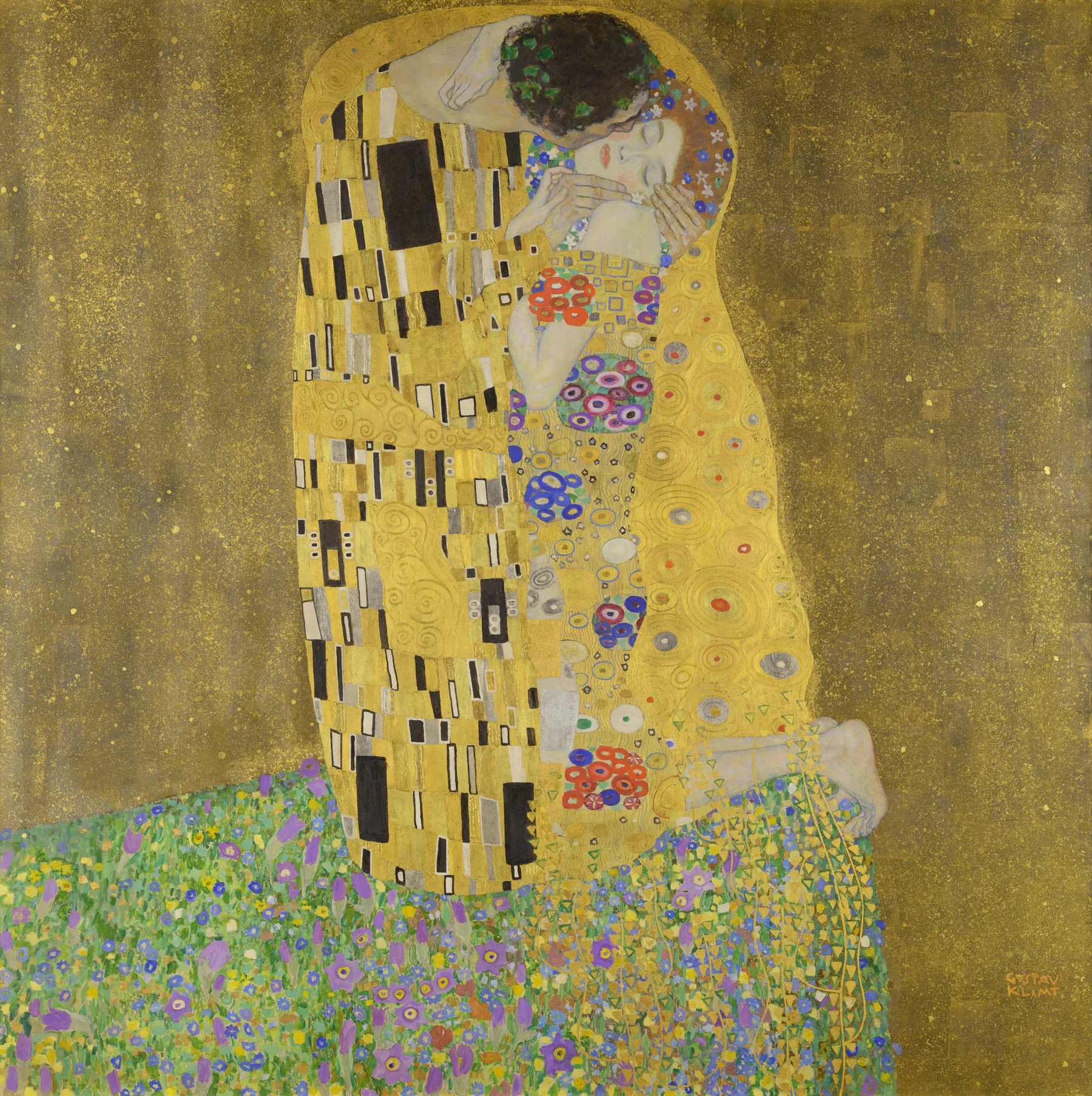

Look at the contrast between the hard rectangles on one robe and the coloured circles and flowers on the other. Even before you examine the faces, the patterns make the two bodies distinct. This is a good option for someone who already enjoys ornament, close detail and a strongly visible centrepiece.
Before ordering, compare the complete composition with any cropped preview. A tight detail of the heads is a different choice from the full image, which includes the kneeling figure, feet and flower-covered ground. Neither has to be your preference, but a detail should be identified as a detail. For more about the painting itself, see our Klimt story.
Fragonard for a letter with a story
Jean Honoré Fragonard’s The Love Letter, early 1770s, is a quieter alternative to a painted kiss. The Met identifies it as a narrative genre scene, rather than a portrait of a named sitter. A letter and flowers suggest a relationship beyond the picture without showing the other person.
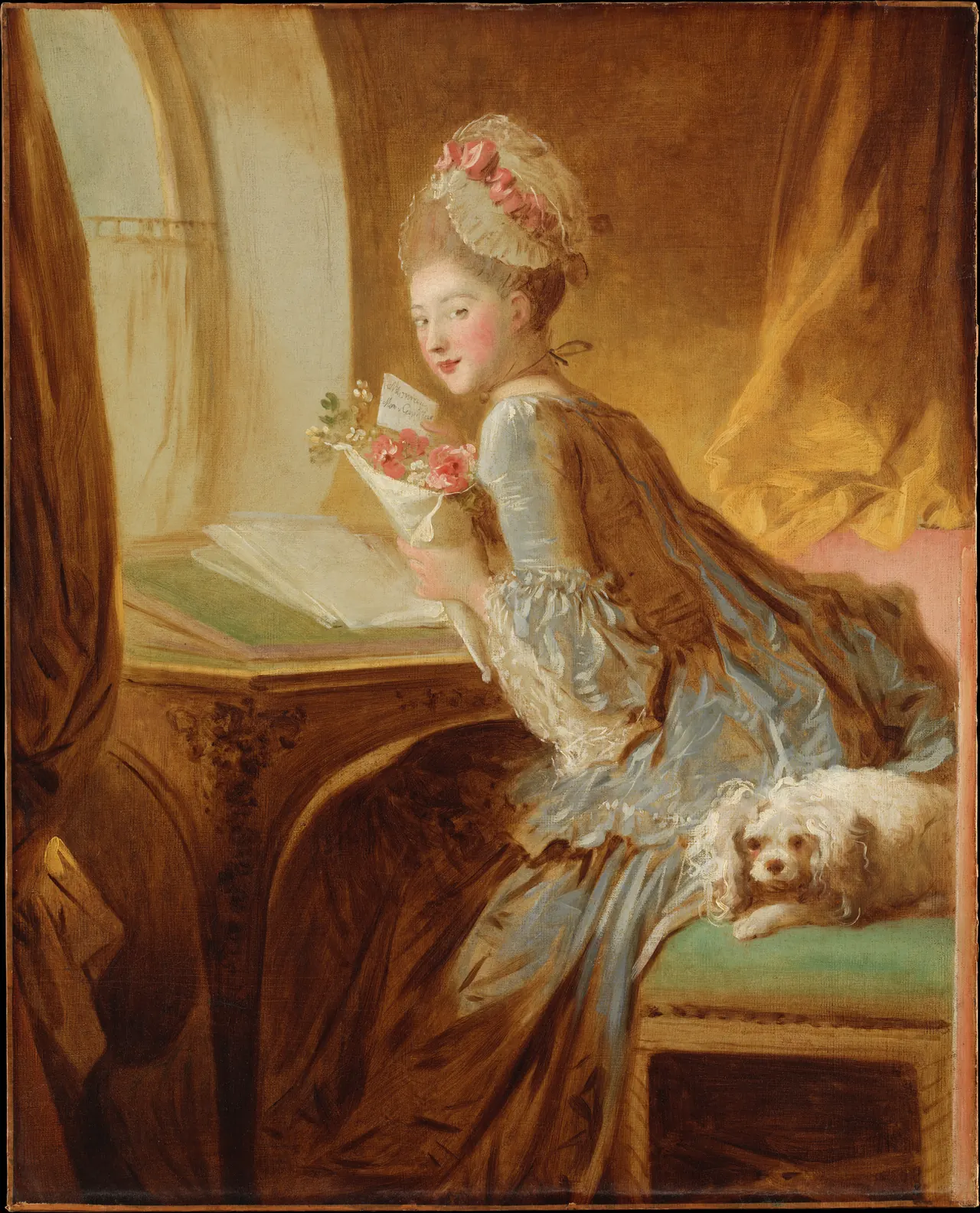
The warm curtain, cool dress and small white dog give you several things to notice beyond the romantic title. It could suit a partner who enjoys correspondence, novels or interiors with a little theatrical detail. The reason to choose it is that particular interest, not a general assumption that old-fashioned pictures are more romantic.
A handwritten note is an especially natural companion. You need not invent the letter’s exact message or identify its sender. Tell the recipient why the scene made you think of them. “For all the letters we wrote while living apart” says something specific; a borrowed grand quotation may say much less about your relationship.
The Swing for someone who enjoys the joke
Fragonard’s The Swing, c. 1767–1768, is not simply a pretty woman enjoying a garden. The Wallace Collection explains its playful, erotic setting: a concealed admirer looks towards the swinging woman while another man operates the swing. That story makes it a knowing choice, not a neutral emblem of faithful love.
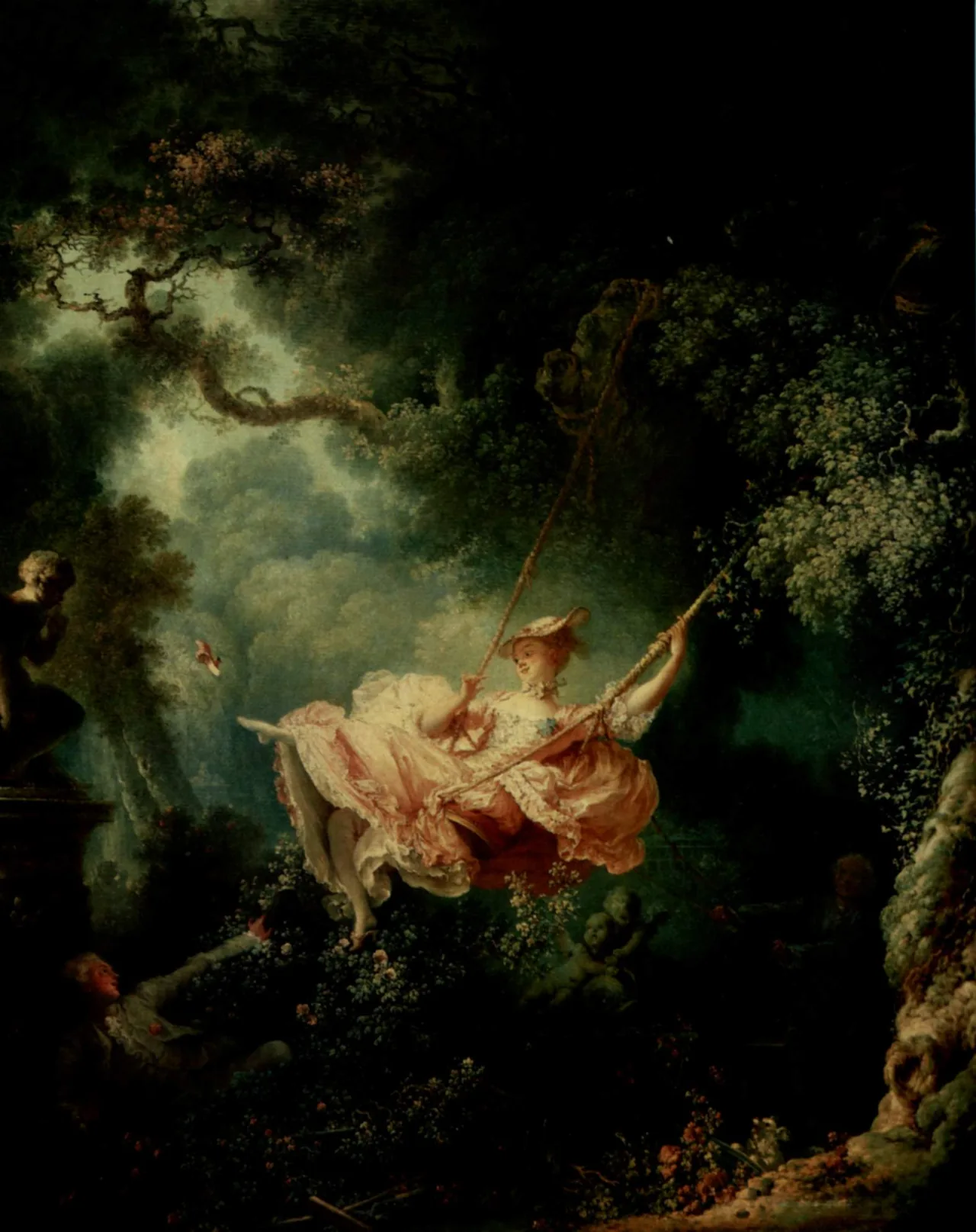

Choose it for somebody who likes its wit, movement and slightly outrageous social theatre. Do not attach a solemn invented story about the couple’s lifelong devotion. A gift can be affectionate and funny, provided you know the recipient will enjoy the joke.
The flying shoe and surrounding foliage matter to that reading. A cropped version that keeps only the dress loses much of the action. Also compare the supplier’s actual reproduction with its room mockup: older photographs, including the historical image shown here, can differ visibly from the painting after conservation. Treat them as particular reproductions, not interchangeable colour standards.
Let the room help you choose the format
A gift should not require redecorating. Ask where the recipient might put it, or choose a size together after the celebration. For these detailed pictures, think about where somebody can comfortably stand and look, not only whether the largest available format fits above a sofa.
Measure the outside of the finished frame. A 40 cm-wide frame centred on a 70 cm-wide clear wall area leaves 15 cm at either side. That arithmetic does not establish an ideal margin; a lamp, door or neighbouring picture can still make the arrangement awkward.
If you are buying the sheet separately, confirm the image area, any printed border and the frame opening. “Fits a standard frame” is incomplete without the actual dimensions. Our guide to paintings and standard frame proportions explains why a famous image may need a border rather than an unnoticed crop.
Put your own meaning in the card
Write one honest sentence about why you chose the work. You can admire Klimt’s patterns, associate Fragonard’s letter with your own correspondence or remember laughing together at The Swing. That is your connection; it does not have to be the artist’s documented intention.
Keep the message separate from the picture unless personalisation is something the recipient wants. A removable card lets the artwork remain useful in different rooms and at different stages of life. Names, dates and slogans printed over the composition are harder to reconsider later.
Include the artist and title so they can learn more, but do not turn the card into an art-history exam. A museum link is enough for a curious recipient. The personal part should sound like you, rather than like product copy describing a supposedly universal symbol of eternal love.
Make it a gift they can keep living with
Before purchase, check the actual format, outer dimensions, delivery estimate and seller’s exchange conditions. A photograph of a framed picture does not establish that a frame is included. Neither does a romantic deadline make a delivery estimate a guarantee.
If the right format will not arrive in time, give the note and choose the final version together. Avoid buying an unsuitable substitute simply to have a large parcel on the day. The promise should be specific enough to follow through, without pretending an unplaced order is already a finished gift.
Finally, leave the decision about display with them. A painting given with affection is still an object they will live with. The thoughtful choice combines a story they enjoy, a manageable format and a clear personal reason—not an obligation to hang it exactly where you imagined.
Editorial record
About this article
- Author
- Publisher
- GeMarkt
- Published
- Reviewed
- Internal source & rights check. Conducted by GeMarkt Research Review. This is an internal editorial check—not independent peer review.
- Source standard
- Buying guide source standardSeparates measured or first-hand evidence from general guidance and keeps practical limits visible.
Found a claim that needs checking? Report a factual error.