GeMarkt Blog · Essay
Sketch vs Study vs Finished Painting
A sketch tries an idea; a study explores a problem. Compare Seurat's study and La Grande Jatte to see why finished does not simply mean more polished.

A sketch usually records or tries an idea with relatively little finish. A study concentrates on a problem, such as a hand, a pose, a colour relationship or the arrangement of a whole scene. A finished painting is a work brought to the state intended for its purpose. These are useful distinctions, but not three compulsory steps that every artist follows.
The same object can be both a sketch and a study. A drawing can also be a complete artwork rather than preparation for a painting. To understand the label, ask what the work was doing, not just how much detail it contains.
Sketch and study describe different things
Think of sketch as a way of working and study as a reason for working. A few quick lines might catch the tilt of a head before a person moves. A carefully shaded drawing of that head could examine how light falls across the cheek. Both investigate something; their degree of detail and intended use differ.
Neither term fixes the material. A sketch can be painted in oil, and a study can include colour or cover an entire composition. Composition simply means the arrangement of the elements within a picture. Studying a composition might involve moving a figure, widening a gap or changing where the strongest light falls.
The Getty’s drawings collection describes drawing as a way to explore ideas and study the world, but also as an end in itself. That last use matters: paper and pencil do not automatically signal an unfinished version of something more important.
Compare Seurat’s study with La Grande Jatte
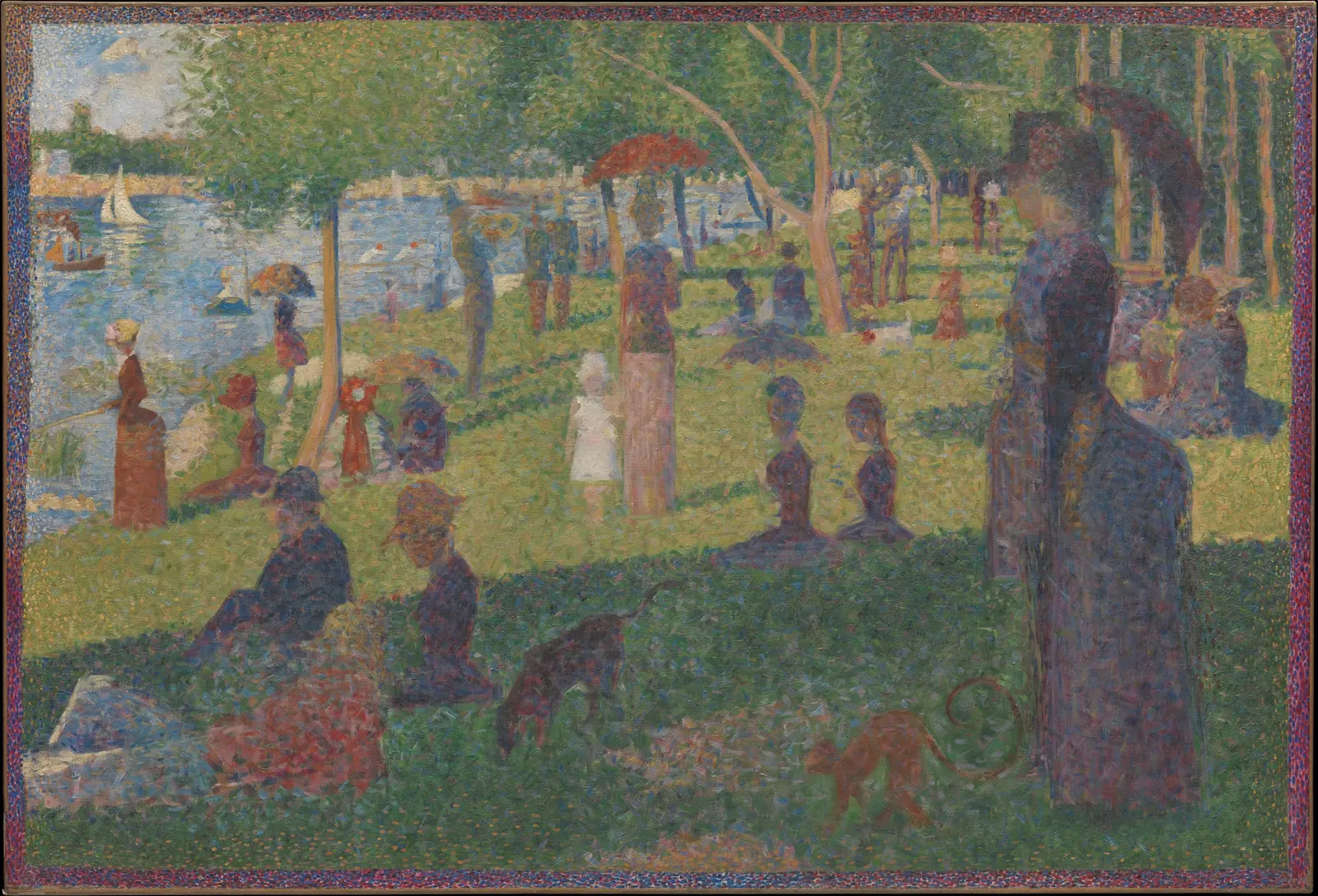
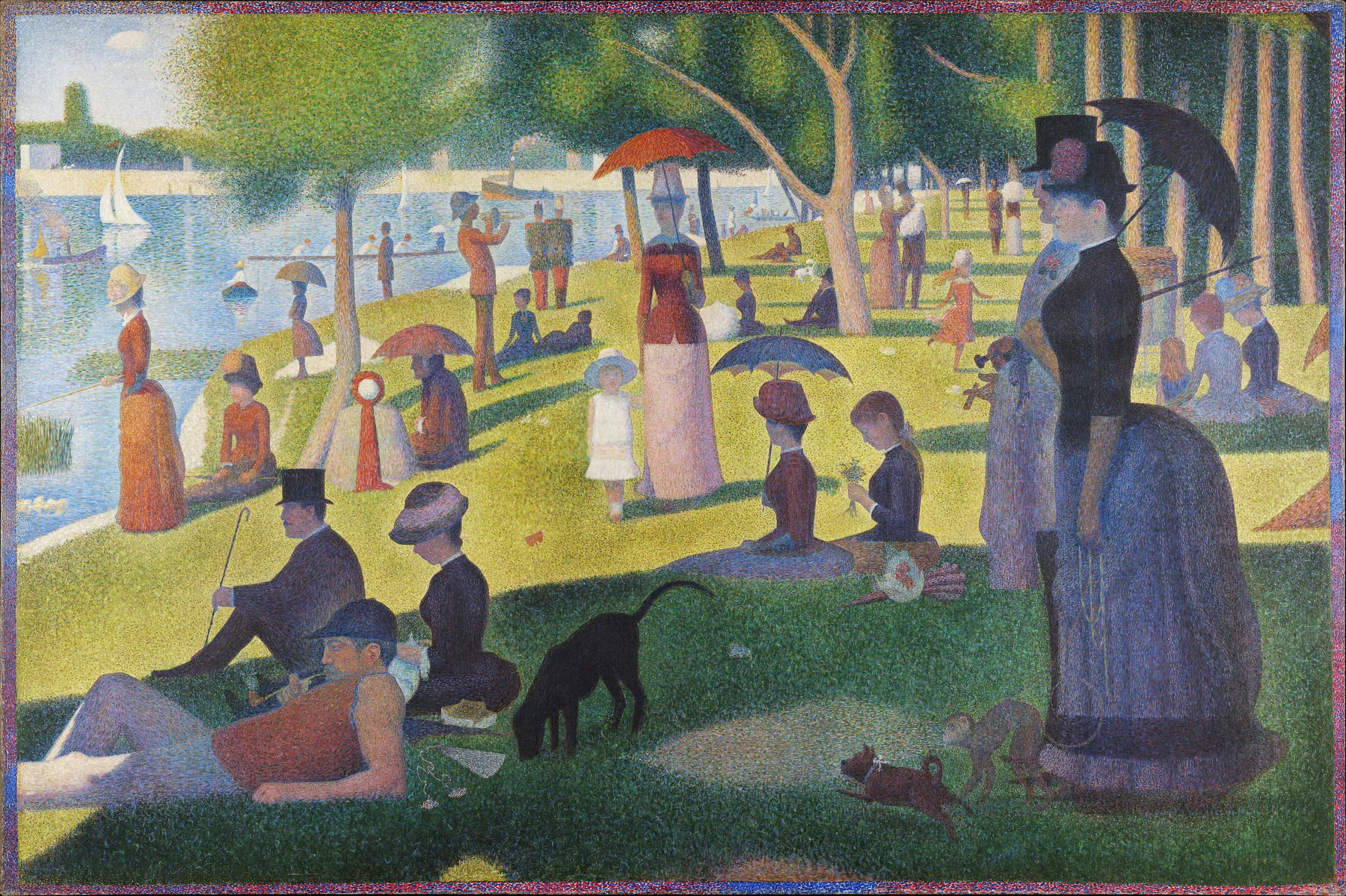

Seurat painted both of these riverbank scenes. The first is a substantial oil study, not a tiny pencil note. The Met identifies it as his final study for the larger painting in Chicago. Its crossing brushstrokes differ from the more closely divided colour in the later work.
The second painting was first exhibited in 1886, despite “1884” being part of its title. The Art Institute’s exhibition account describes an extended process involving drawings, small painted panels and larger canvases, followed by further revisions. It dates the painted border to 1888–89. The pair records a developing project, not one picture simply made bigger.
Look for decisions rather than missing detail
Start with the standing couple on the right. In the study, their dark clothing blends into the shadowy foreground. In the larger painting, their outlines read more crisply against the lawn. Look next at the upright figure with the pale skirt near the centre: her position helps organise the space in both works, even though the surrounding surface feels different.
Now follow the division between sunlit and shaded grass. You do not need to count dots to see that the later picture separates areas more firmly. Figures look like distinct shapes placed at deliberate intervals. The study feels more open to adjustment because its marks do not pin every boundary down in the same way.
These are observations you can test in the pair above. They are more useful than saying the study is “missing details.” Ask what the artist was resolving: the size of the foreground people, the light across the bank, or the relationship between upright bodies and tree trunks. A study may answer one of these questions while leaving others open.
Finished does not always mean smooth
“Finished” is not a universal texture. Some artists hide individual strokes; others leave them visible. A rough surface can belong to an intended final work, while a highly detailed drawing can still have a preparatory purpose.
Nor is an artwork necessarily complete because it has been signed. A Getty Research Journal study of Ferdinand Hodler discusses pictures that began as studies and were later treated as independent works, sometimes with construction lines still visible. Those lines are evidence of a process, not an automatic instruction to dismiss the picture as incomplete.
It helps to separate unfinished from unfinished-looking. The first is a claim about an artwork’s history or intended state. The second describes what you see. A museum catalogue may establish the first; your eye alone can only begin with the second.
Artists do not follow one fixed sequence
The familiar sequence of sketch, study and final painting is a useful teaching model. It becomes misleading if it suggests that an artist settled every question on paper before touching the canvas. Seurat’s revisions show how preparation and change can continue across a project.
Sketchbooks can have other jobs, too. The Getty’s account of artists’ sketchbooks describes records of everyday observation, practice and ideas. A page may preserve something worth looking at without pointing towards a specific finished picture.
And an altered line is not necessarily a mistake in the everyday sense. In the Getty’s discussion of revised drawings, changed positions and reworked passages reveal experimentation. An artist trying several solutions is doing the work, not merely failing to reach it.
How to read a sketch or study in a museum
Begin with the title and medium. “Study for” names a relationship to another work; “oil on canvas” tells you that a preparatory picture can itself be a painting. Then compare three things:
- What receives attention? One hand may be carefully modelled while the body remains a few lines.
- What changes? Repeated outlines can show alternatives rather than separate objects.
- What carries over? In a documented study and final work, follow the same figure or shape before judging the overall finish.
Finally, allow the study to work as a picture in its own right. You may prefer its openness to the final version’s precision. That is a response to what survives on the surface, not proof that the artist should have stopped earlier. For another practical comparison, Monet and Manet show why visibly different ways of handling paint can both be deliberate.
Editorial record
About this article
- Author
- Publisher
- GeMarkt
- Published
- Reviewed
- Internal source & rights check. Conducted by GeMarkt Research Review. This is an internal editorial check—not independent peer review.
- Source standard
- Art history source standardPrioritises object records and research sources, distinguishes evidence from interpretation, and states material uncertainty.
Found a claim that needs checking? Report a factual error.