Is Paul Cézanne's art public domain? A collector's guide
Cézanne died in 1906, so his paintings are public domain worldwide. Learn how both copyright clocks apply, what the 2011 record sale means, and what buyers should check.
From the guide to the collection
Explore the Cézanne collection → · Shop all art → · Free Cézanne wallpapers — the complete paintings at 4K ↓
From the studioCézanne prints — 300+ restored works, curated and annotated →
Thirty years of painting, almost nobody watching
Paul Cézanne was born in Aix-en-Provence in January 1839 and died there in October 1906, and between those dates lies one of the strangest careers in the history of painting: a man who worked with complete seriousness for four decades while remaining, for most of that time, nearly invisible. The official Salon rejected him year after year. He showed with the Impressionists in the 1870s, drew harsher ridicule than any of them, and then essentially withdrew from exhibiting altogether, painting in Provence on a banker father’s money while Paris forgot he existed.
The turn came absurdly late. In November 1895, a young dealer named Ambroise Vollard hung about 150 of his canvases in a small Paris gallery — Cézanne’s first solo exhibition. He was fifty-six years old. The public stayed mostly indifferent, but the painters did not: the show put his work in front of the generation that would soon build modern art on top of it, and historians now trace the roots of Cubism directly to these canvases.
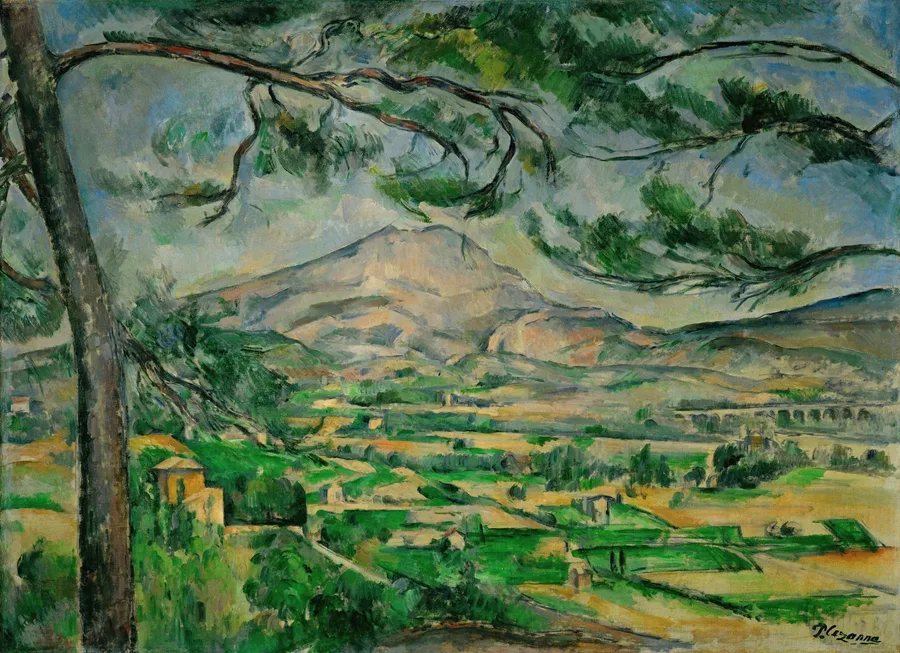
What that late audience discovered was a painter of patient repetition. He returned to the same motifs for years at a stretch — apples that seem heavier than apples are, card players sunk in concentration, bathers — and above all Mont Sainte-Victoire, the limestone ridge east of Aix, which he painted dozens of times across three decades, in more than sixty oils and watercolors. He was still working outdoors in October 1906 when a storm caught him; he collapsed, developed pneumonia, and died days later, on 22 October, at sixty-seven.
A quarter of a billion dollars — for a free image
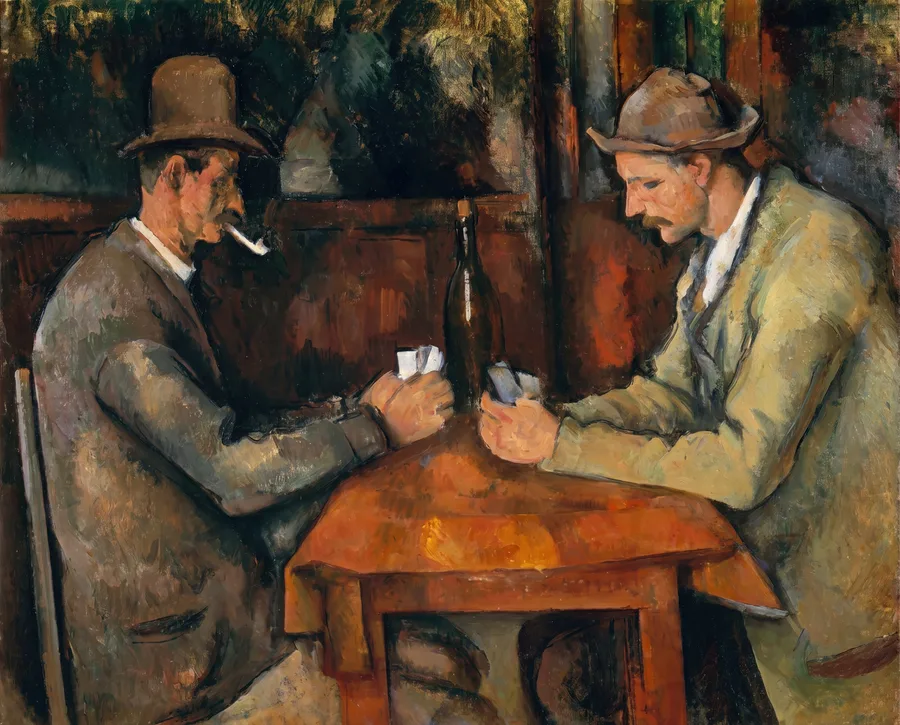
In 2011, one of the five versions of The Card Players was sold to Qatar for a reported price above 250 million dollars. At the time, it was the highest sum ever paid for a painting, far beyond the previous record. And here is the detail worth pausing on: the buyer acquired a canvas, not an image. Anyone, anywhere, may print the same picture — because the picture itself belongs to everyone.
That separation is not a loophole; it is written into law. The American Copyright Act of 1976 spells it out: ownership of a copyright is distinct from ownership of the physical object that embodies the work, and selling the object transfers no rights in the work itself. By a tidy coincidence, the same decade closed Cézanne’s own file — count seventy years from his death in 1906 and you land in 1976.
Is Cézanne’s art public domain?
Yes — worldwide, under both of the systems that matter, with nothing left to argue about.
Copyright in most of the world lasts for the life of the author plus seventy years. Cézanne died in October 1906, so even under today’s long term his protection lapsed by the end of 1976 — and in many countries earlier still, under the shorter terms that applied historically.
The United States runs a different clock for older works, based on publication rather than the artist’s death: works published more than ninety-five years ago are in the public domain. Cézanne’s entire output predates his death in 1906, so every painting in our collection clears the American bar by decades as well.
There is no estate asserting rights, no country where a term is still running, no posthumous puzzle. Among the giants of painting, Cézanne’s case is as clean as Van Gogh’s: public domain everywhere, for everyone.
One honest caveat before the practical part: copyright terms vary by country and change over time, and this page is general information, not legal advice. If a commercial decision hangs on the question, ask a lawyer in your own jurisdiction.
The painting is free; a particular file may not be
Here is the point that surprises many collectors: a painting being public domain does not by itself make every digital image of it free. Museums and picture libraries sometimes assert rights, or impose contractual terms, on the photographs they make of public-domain works. How enforceable those claims are differs from country to country — but you do not want the print on your wall to depend on that argument. The status of the artwork and the provenance of the file are two separate questions, and a careful shop answers both.
That is exactly why we put it in writing: the restorations we sell are our own work, and we verify the rights status of every individual piece before it is listed.
Cézanne in our collection
We keep over 300 Cézanne works in the shop, spanning the whole arc from the dark early portraits to the last canvases of 1906. A few markers of the range:
- The Card Players (1892–95) — the quietest of the five versions, from the same series as the canvas that broke the world record in 2011.
- Mont Sainte-Victoire with Large Pine (1887) — the mountain he could not stop painting, a pine branch bending to echo the ridge line across the valley.
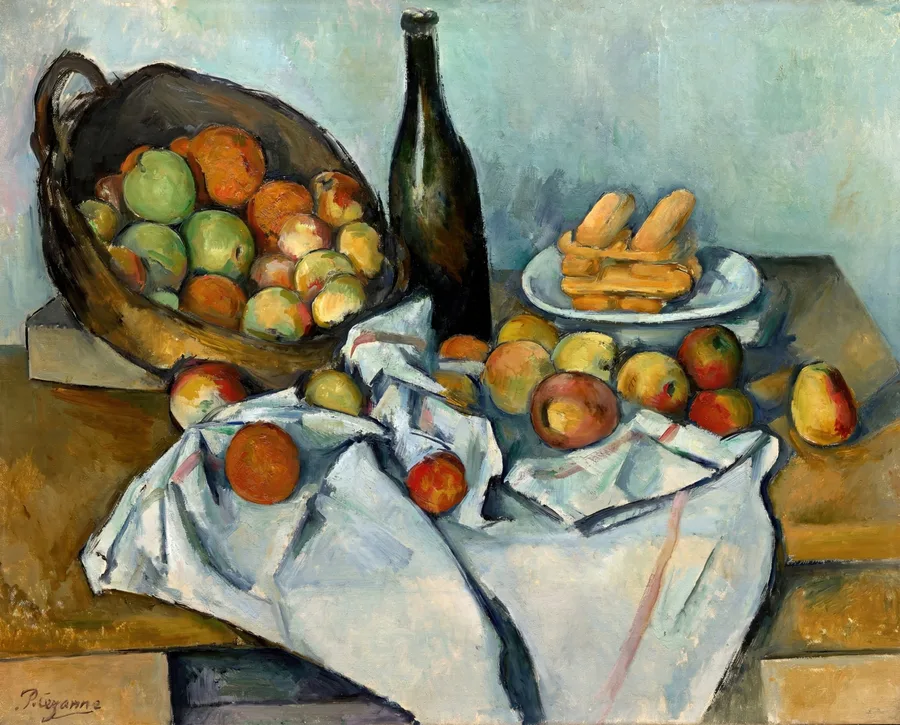
- The Basket of Apples (1893) — one of the rare canvases he actually signed, its table edge deliberately misaligned on either side of the cloth.
- The Large Bathers (1898–1905) — seven years of work, still unfinished at his death; the bare patches are his, not damage.
- Boy in a Red Vest (1888–90) — stolen from a Zurich collection in 2008 and recovered four years later; the vermilion vest against all that slate blue is the whole picture.
Every piece is available in the same four formats: rolled poster, stretched canvas, framed canvas, and framed paper print. The rolled poster suits collectors who already have a framer they trust; the framed options arrive ready to hang.
An artist who went almost unseen for thirty years now anchors the most expensive painting sales in history — while his images belong to anyone who wants them. Browse the Cézanne collection and start with the mountain.
Editorial record
About this article
- Publisher
- GeMarkt
- Published
Found a claim that needs checking? Report a factual error.