GeMarkt Journal · Practical guide
Is Caspar David Friedrich Public Domain? Versions, Prints, and Files
Caspar David Friedrich's established works are public domain in the markets checked here, but late publication, versions, impressions, attribution, and exact files matter.
Rights check · reviewed
The short answer
Yes—for Friedrich’s established works and the 12 institutional objects below in the European Union, United Kingdom, Türkiye and United States. Versions, late-first-published works, impressions, restorations, and exact image files still require separate records.
| What is being checked | Result | Why |
|---|---|---|
| European Union, United Kingdom & Türkiye | Public domain | Caspar David Friedrich died in 1840, far beyond the ordinary life-plus-70 economic-rights terms. |
| United States — named set | Clear for the documented objects below | The selected print editions and institutionally documented works have object-level Public Domain status and histories supporting reuse; published works before 1931 are beyond the maximum term in 2026. |
| United States — late first publication | Check §303 chronology | A work unpublished on 1 January 1978 but first published by the end of 2002 can remain protected through 2047. Display alone is not publication. |
| Version, impression, attribution, or file | Clear the exact layer | A related version, later impression, reattribution, technical image, restoration, and provider file can change the production record. |
This guide clears a named AIC, NGA, Met, and Cleveland set. It answers the underlying Wanderer above the Sea of Fog question but excludes an exact Wanderer file until holding-museum provenance is locked.
This is a documented research summary, not legal advice. Copyright and moral-rights rules can vary by country and by the history of a particular work.

What we’ll look at
When can a Friedrich work be reused, and why do a famous composition, one physical version, and one digital file need different records?
The useful answer is yes for Caspar David Friedrich’s established works and the 12 institutional objects documented here—but not automatically for every late-discovered drawing, moonwatcher version, print impression, restoration, or online copy of Wanderer above the Sea of Fog. Friedrich died in 1840. His underlying works are public domain in the European Union, United Kingdom, and Türkiye, and the named institutional set has provider and chronology evidence supporting reuse in the United States.
Friedrich presents an instructive rights problem because his most familiar images survive through different kinds of evidence. A composition may exist in several painted versions. A woodcut or etching may survive in multiple impressions. A landscape can be rediscovered under another attribution. An institution can supply a public-domain file while a search result offers an undocumented restoration or colour treatment of the same old work.
This guide asks four linked questions:
- Is the underlying work outside copyright in the market being checked?
- What publication history supports the U.S. answer, especially for a private or late-discovered object?
- Which version, state, impression, accession, and current attribution are actually shown?
- Is the exact digital file covered by the holding institution’s Open Access statement?
The answer is a research summary, not legal advice. It names the territories, objects, and files actually checked rather than claiming worldwide freedom.
The short answer is yes for the named set
The published set combines five Art Institute of Chicago files, three National Gallery of Art files, three Metropolitan Museum of Art files, and one Cleveland Museum of Art file. Every selected object record identifies Friedrich, every file carries an object-level Public Domain or CC0 statement, and every local derivative was made from the exact institutional source recorded in the ledger.
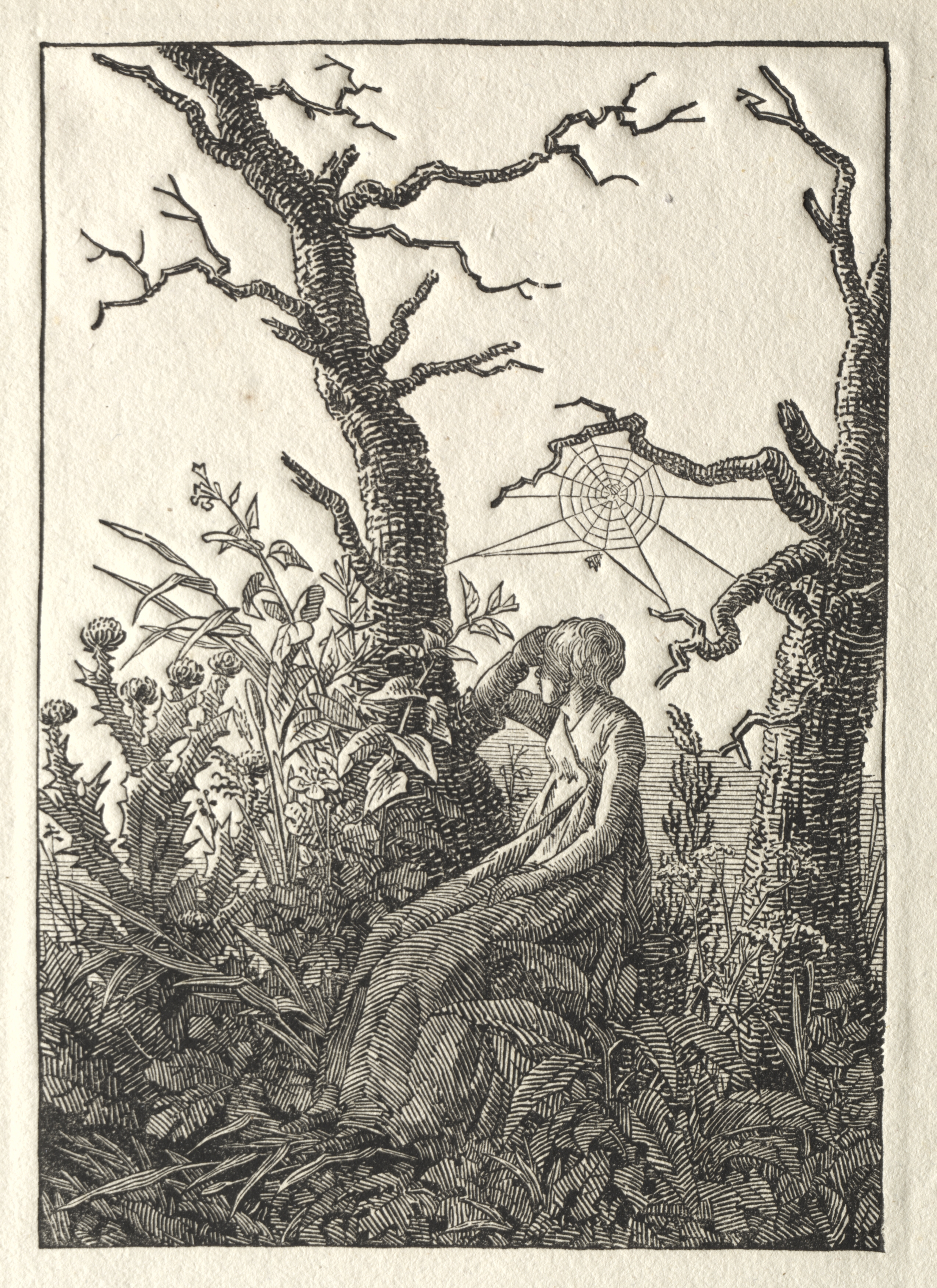
The range is intentional. It includes a large wash drawing, two separate spider-web woodcut impressions, an etched fire scene in two institutional collections, a profile self-portrait, moon and eclipse studies, a rediscovered painting, and the Met’s version of Two Men Contemplating the Moon. That variety prevents “Friedrich” from becoming shorthand for one poster image.
The conclusion does not automatically clear:
- a private drawing whose first-publication chronology is unknown;
- an object newly attributed to Friedrich without institutional consensus;
- another painted version of a familiar composition;
- a later print pulled from a recut block or altered plate;
- an infrared reflectogram, X-radiograph, stitched macro image, or colour reconstruction;
- a commercial download or search thumbnail detached from its source;
- museum logos, exhibition graphics, agency watermarks, or endorsement claims.
Old authorship and usable production evidence remain separate conclusions.
Life plus 70 markets are clear
The EU term directive, UK government guidance, and Article 27 of Türkiye’s Law No. 5846 each use an ordinary life-plus-70 framework for artistic works. Friedrich’s death in 1840 places his established works far beyond those economic-rights terms.
| Market checked | Rule relevant here | Result for Friedrich’s established works |
|---|---|---|
| European Union | author’s life plus 70 years | public domain |
| United Kingdom | 70 years after the creator’s death | public domain |
| Türkiye | life plus 70 years for economic rights | public domain |
That is not a licence for every later layer. A modern restoration, photograph, translation, layout, colour reconstruction, or typographic treatment can introduce new authorship. Attribution and integrity interests, trademarks, provider terms, and title or restitution claims can operate through different law and evidence.
Responsible wording therefore names Friedrich’s established work and then identifies the exact object and file used.
The US answer keeps the 2047 exception
Copyright Office Circular 15A places works published before 1 January 1931 beyond the maximum 95-year publication term in 2026. Friedrich’s lifetime etchings and woodcuts were made as distributable impressions, and several objects in this set have documented early cataloguing, exhibition, or collection histories.
Creation date alone is not enough. Copyright Office guidance explains that distribution can publish a visual work, while public display by itself does not. A drawing dated 1804 could still require a later publication analysis if it remained in private hands.
Section 303 supplies the fail-closed fork for works that were still unpublished on 1 January 1978:
- a never-published work by an author who died before 1933 entered the public domain on 1 January 2003 after the statutory minimum ended;
- if that formerly unpublished work was first published by 31 December 2002, protection can continue through 31 December 2047;
- a late attribution does not itself establish when the work was first published under copyright law.
The institutional Public Domain labels and histories support the 12 named objects. They do not justify a blanket answer for a sheet appearing from a private estate tomorrow. If the 1978 and 2002 facts cannot be reconstructed, keep the U.S. status open.
Paintings, drawings, and prints need different records
A unique painting or drawing has one physical support, but can have variants, studies, copies, restorations, and many reproductions. A print is designed for multiplication. Plates and blocks can change state, later hands can recut or reprint them, and each impression carries its own paper, ink, pressure, trimming, condition, and accession.
For paintings and drawings, preserve:
- attribution, title, date range, medium, dimensions, accession, and institution;
- provenance and publication evidence relevant to the U.S. term;
- version relationships and attribution changes;
- conservation state, provider file, and local transformation.
For prints, add:
- matrix, technique, state, edition or printing, and any separately identified cutter or printer;
- recto/verso identity, sheet dimensions, watermark, and condition;
- whether another institution’s image is a separate impression of the same design.
The AIC and Cleveland spider-web woodcuts demonstrate the point. Their subject and date align, but they have different accessions, physical sheets, institutional captures, dimensions, and local files. They are not duplicates in a production ledger.
Is Wanderer above the Sea of Fog public domain?
Yes—the underlying Friedrich painting from about 1818 is public domain in the EU, UK, Türkiye, and United States under the term and publication analysis. But this guide does not clear an arbitrary Wanderer image file.
The holding object belongs to Hamburger Kunsthalle. During review, search results mixed a very low-resolution Commons file, a larger replacement with a changing file history, commercial resellers, agency-linked reproductions, and a Commons record involved in a 2026 deletion discussion. That is not a stable exact-file chain suitable for GeMarkt’s published production set.
The answer is therefore deliberately split:
- the historical painting is outside the checked economic copyright terms;
- a proposed production file still needs a holding-museum or other reliable object record, exact endpoint, current file statement, dimensions, checksum, and transformation log;
- a photograph of a book page, exhibition installation, framed product, or retailer poster adds its own modern content.
GeMarkt does not create a separate /blog/wanderer-above-the-sea-of-fog-public-domain-guide/ in this release. This section answers the exact legal intent without inventing file confidence or duplicating the general canonical. A later exact page must add a genuinely distinct, fully verified download task.
Moonwatchers are several objects, not one image
The Met describes Two Men Contemplating the Moon as the third version of one of Friedrich’s best-known compositions. Its ca. 1825–30 canvas, accession 2000.51, follows an 1819 version in Dresden and a Berlin variation generally titled Man and Woman Contemplating the Moon.
Those differences matter. The figures are not the same across every version, dates and ownership histories differ, and physical condition, dimensions, paint handling, and institutional files belong to separate objects. A caption that simply says “Friedrich, Two Men Contemplating the Moon” can hide a silent substitution.
The local candidate comes from the Met’s exact Public Domain Open Access JPEG for 2000.51. Replacing it with the Dresden or Berlin painting would require a new object record and source-file decision even though Friedrich’s underlying authorship is equally old.
Versions are an art-historical fact before they are a licensing problem. Good rights metadata preserves that fact instead of flattening it.
Rediscovery, attribution, and provenance are not copyright
The NGA’s Northern Landscape, Spring was sold as the work of an anonymous artist in 2003 and acquired as Friedrich in 2004. A changed attribution can alter which death date or authorship rule should be analysed, but scholarly recognition does not create a new copyright in the nineteenth-century paint.
Provenance creates another boundary. Ownership of the physical canvas or sheet does not itself transfer copyright, and expiry of copyright does not settle title, theft, wartime displacement, restitution, export, or cultural-property claims. A museum can label a digital file Public Domain while separately continuing provenance research.
Keep at least three conclusions distinct:
- Attribution: who is currently believed to have made the work?
- Title and provenance: who owns the physical object, and is its custody history sound?
- Copyright and file status: may the underlying work and exact digital asset be reproduced in the target market?
If attribution changes, reopen the term record. If provenance contains a gap, route it to ownership and restitution review rather than treating “public domain” as a cure.
Digital files and restorations need their own clearance
The U.S. Copyright Office says a purely faithful photographic copy lacks new registrable authorship, while sufficiently creative restoration or alteration can be protectable. Other jurisdictions and provider contracts can differ. An old landscape therefore does not make every digital representation interchangeable.
This guide separates:
- Underlying work or design. Friedrich’s composition.
- Version or print state. The particular painted variant, block, plate, state, or printing.
- Physical object or impression. One accession with its support, condition, and provenance.
- Institutional file. The exact AIC, NGA, Met, or Cleveland photograph or scan and provider statement.
- Technical or restored image. Infrared, X-ray, stitched detail, reconstructed colour, cleanup, or damage repair.
- Local derivative. Resize, crop, compression, colour adjustment, generative edit, or composite.
The feature file illustrates the method. AIC 1976.22 was fetched from the recorded 3000-pixel IIIF endpoint, resized to 1584 pixels wide, converted to WebP, and not cropped. Its dimensions and checksum are locked in responsive delivery.
Twelve open files form the published set
The registry is both an evidence map and a production boundary. It contains 12 distinct accessions from four institutional Open Access programmes. Every entry records title, date, institution, accession, object page, exact source endpoint, rights label, local dimensions, alt text, and no-crop conversion.
The set includes two carefully distinguished impressions of the spider-web composition and two fire-scene impressions in separate collections. It also includes three NGA works whose modern histories demonstrate why cataloguing, rediscovery, and copyright should not be compressed into a single “old art” label.
The feature has a locked SHA-256 checksum and deterministic responsive renditions. Tests verify the exact institution counts, unique object and file URLs, unique accessions and local paths, image format, dimensions, feature identity, and source metadata.
This does not imply a Friedrich product or collection exists. It proves the article is supported by processed files with affirmative provider evidence.
A commercial reuse checklist
Before a Friedrich image enters a product, publication, campaign, or downloadable file, verify:
- Attribution. The holding institution currently identifies Friedrich; qualifiers and reattributions are preserved.
- U.S. chronology. Publication evidence is real, and creation or exhibition alone is not treated as publication.
- Section 303. A work unpublished in 1978 was not first published by the end of 2002 without a 2047 review.
- Version or state. The painted variant, print state, side, impression, and accession match the image.
- Exact file. The master came from the recorded institutional endpoint and current Open Access label.
- Modern authorship. Restoration, technical imaging, photography, typography, and layout are separately cleared where required.
- Provenance. Copyright freedom is not used to dismiss ownership, restitution, or cultural-property concerns.
- Territory and presentation. Distribution matches the named markets, and institution names or logos do not imply endorsement.
If the file chain cannot be recovered, source it again. Public domain is not a free-for-all explains the wider legal and ethical boundaries.
Where Friedrich fits inside GeMarkt
The Journal Methods chapters How to research an artwork and Provenance, attribution, and restitution show how an accession, provenance trail, catalogue, ownership history, attribution, and file can be assembled into an evidence map. This guide applies those methods to production reuse.
There is no Caspar David Friedrich collection or dedicated wallpaper room on GeMarkt at publication time. The wallpaper library and shop should not imply otherwise. Future routes are reserved as /collections/caspar-david-friedrich/ and /free/wallpapers/caspar-david-friedrich/; they must remain inactive until product-specific file, version, restoration, quality, provenance, and territory checks pass.
The guide can publish now because its research, exact-file ledger, processed 12-image set, responsive delivery, and fail-closed tests exist. Inventory can follow later without weakening the difference between a famous public-domain work and a verified production file.
Rights-checked image ledger
A documented starting set
These files were selected from the holding institutions rather than from search-result copies. Each card keeps the artwork record, exact source file, provider statement and GeMarkt transformation visible as separate facts.
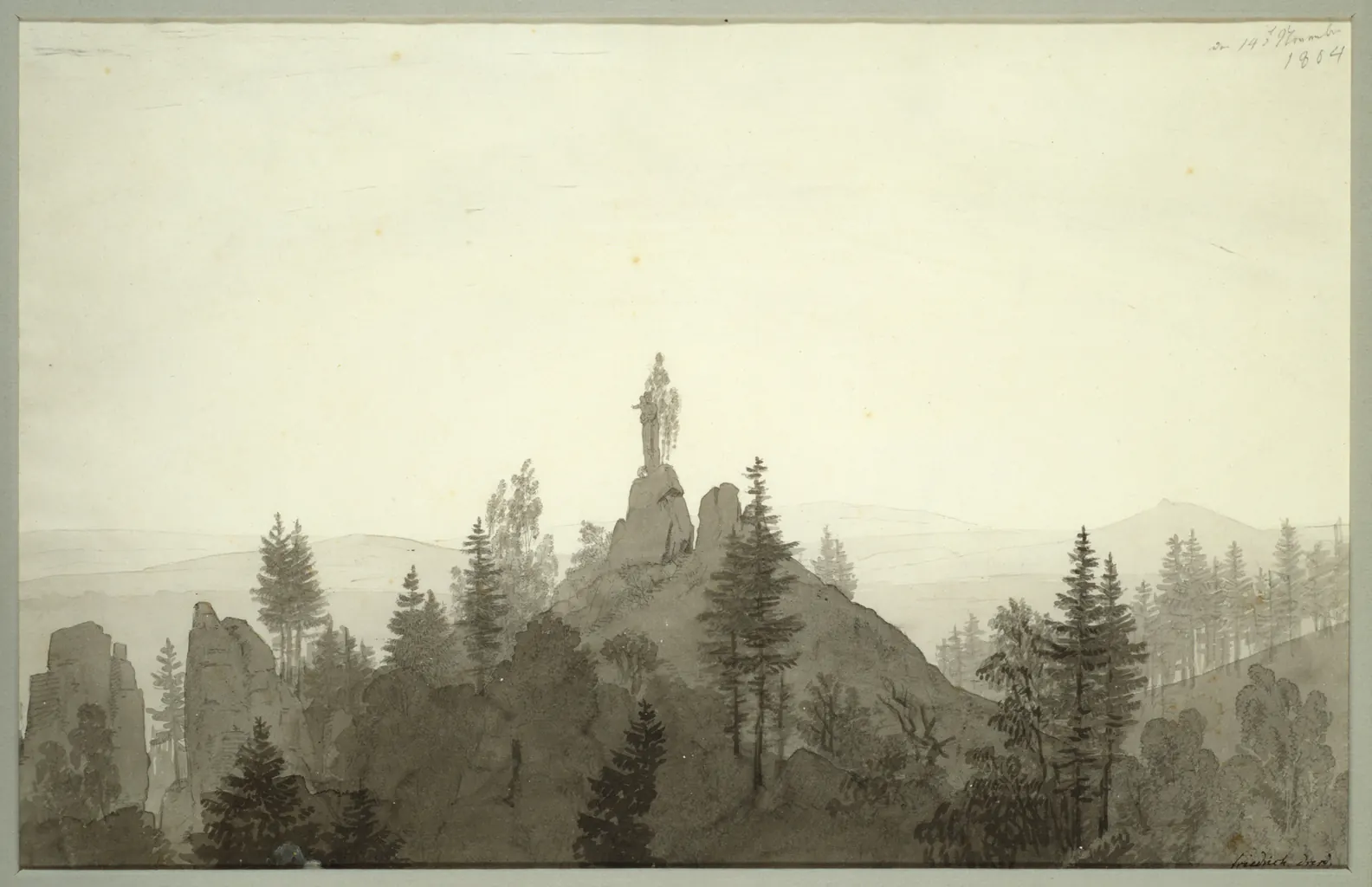
Statue of the Madonna in the Mountains
1804 · Art Institute of Chicago · 1976.22
CC0 Public Domain Designation
Resized to 1584 pixels wide and converted to WebP; no crop.

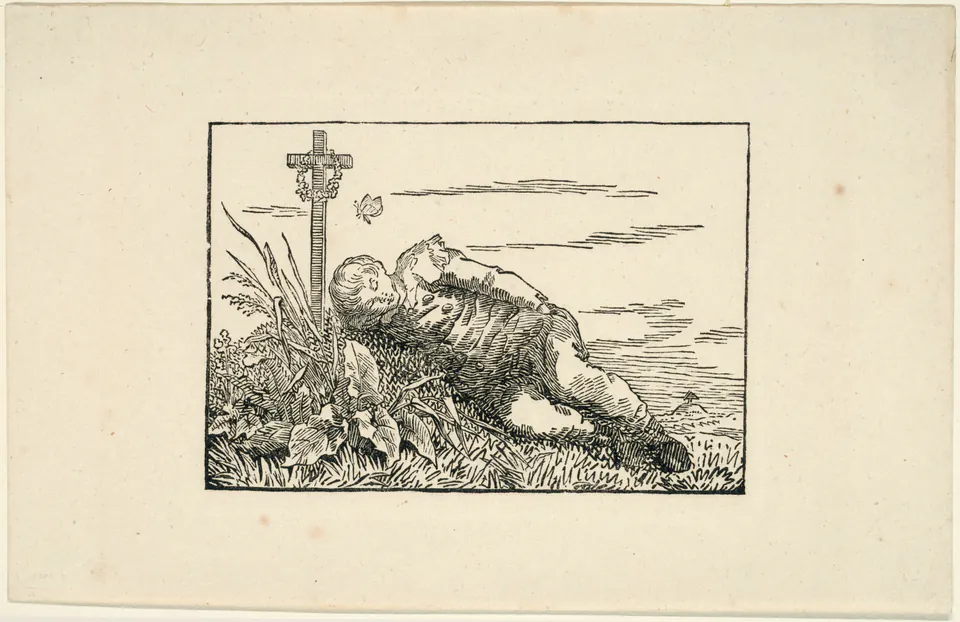
Young Man Lying on a Grave
1803–04 · Art Institute of Chicago · 1957.334
CC0 Public Domain Designation
Resized to 960 pixels wide and converted to WebP; no crop.

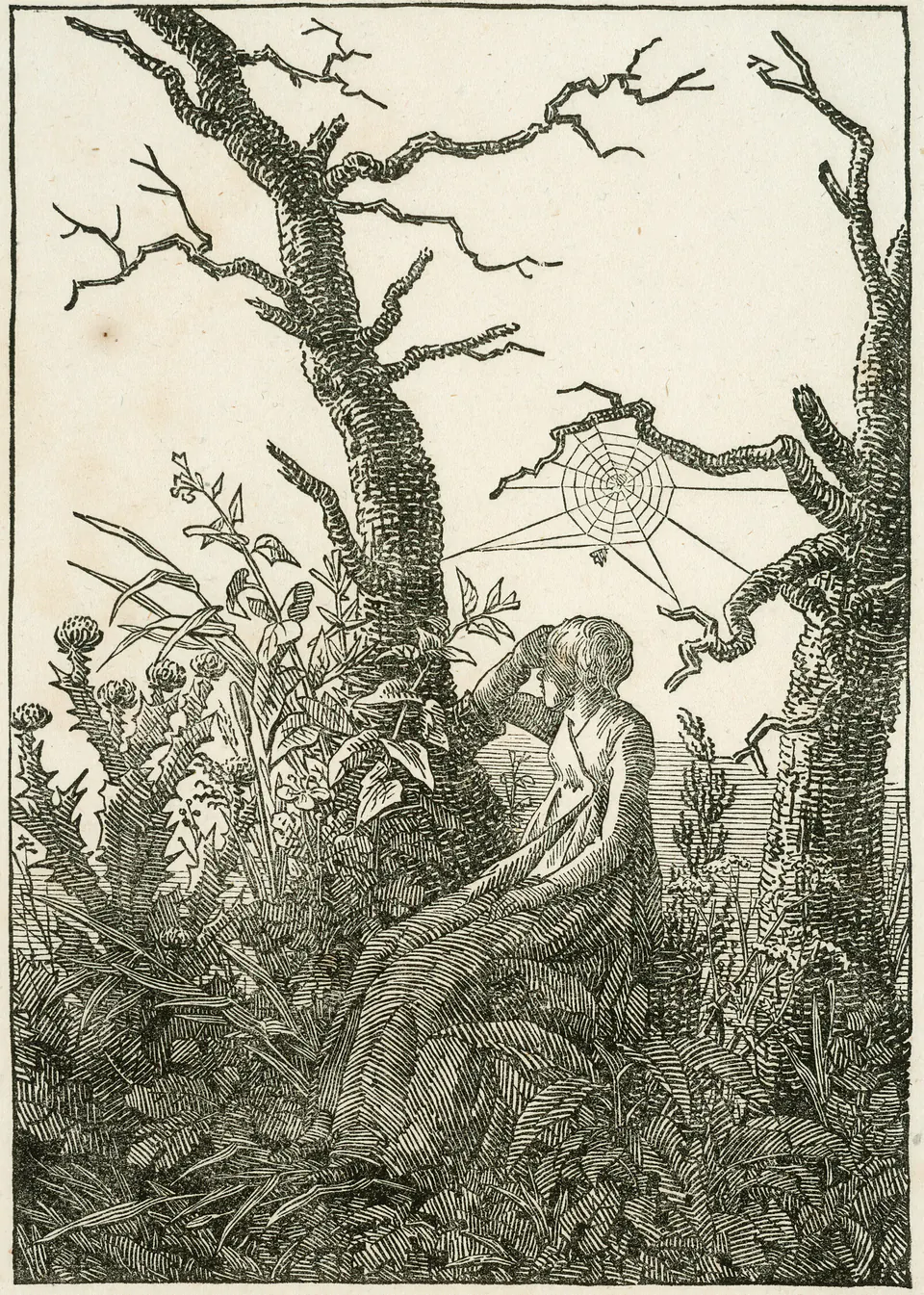
Woman with Spider's Web Between Bare Trees
1803 · Art Institute of Chicago · 1955.1031
CC0 Public Domain Designation
Resized to 960 pixels wide and converted to WebP; no crop.

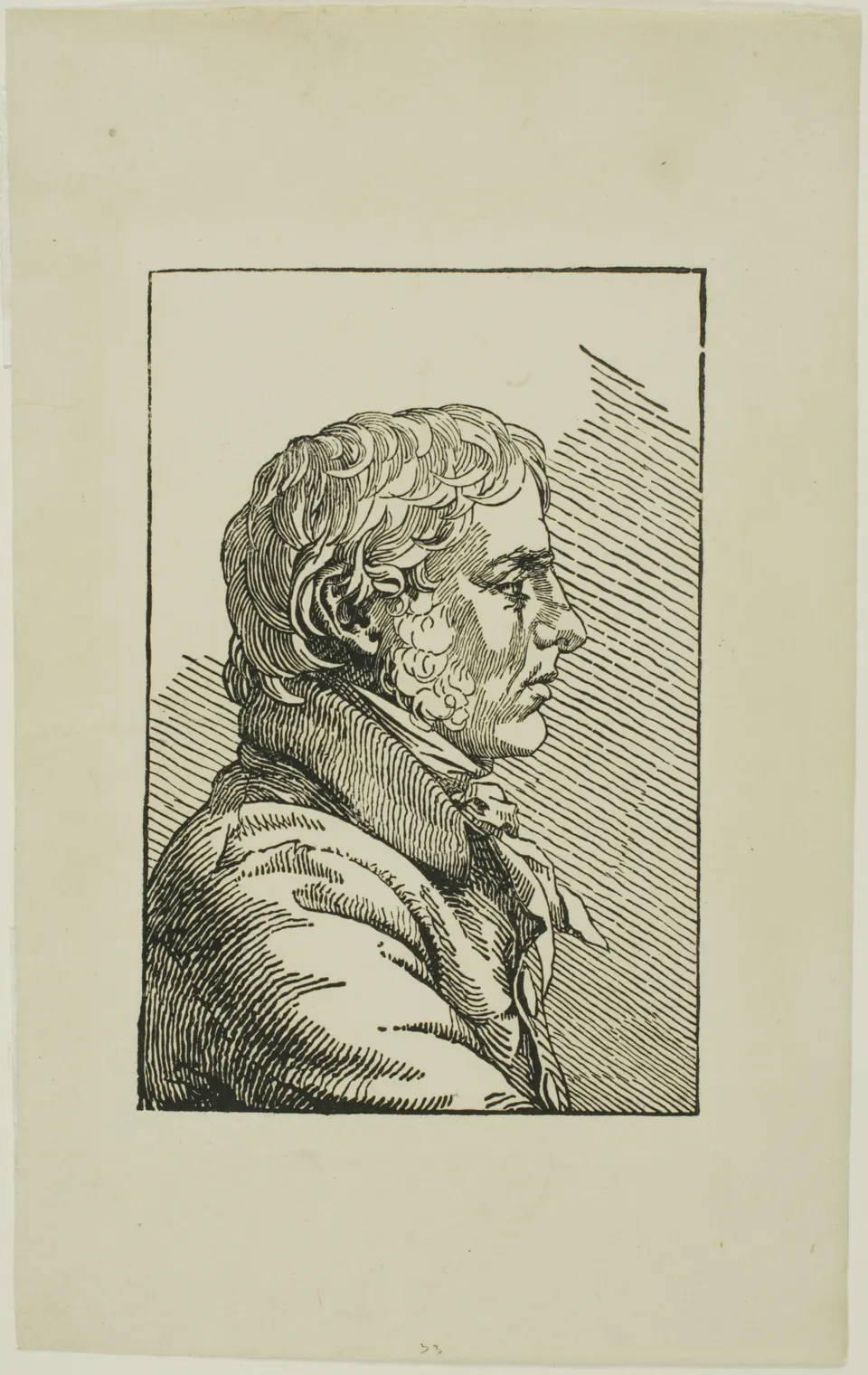
Self-Portrait
undated · Art Institute of Chicago · 1957.333
CC0 Public Domain Designation
Resized to 960 pixels wide and converted to WebP; no crop.

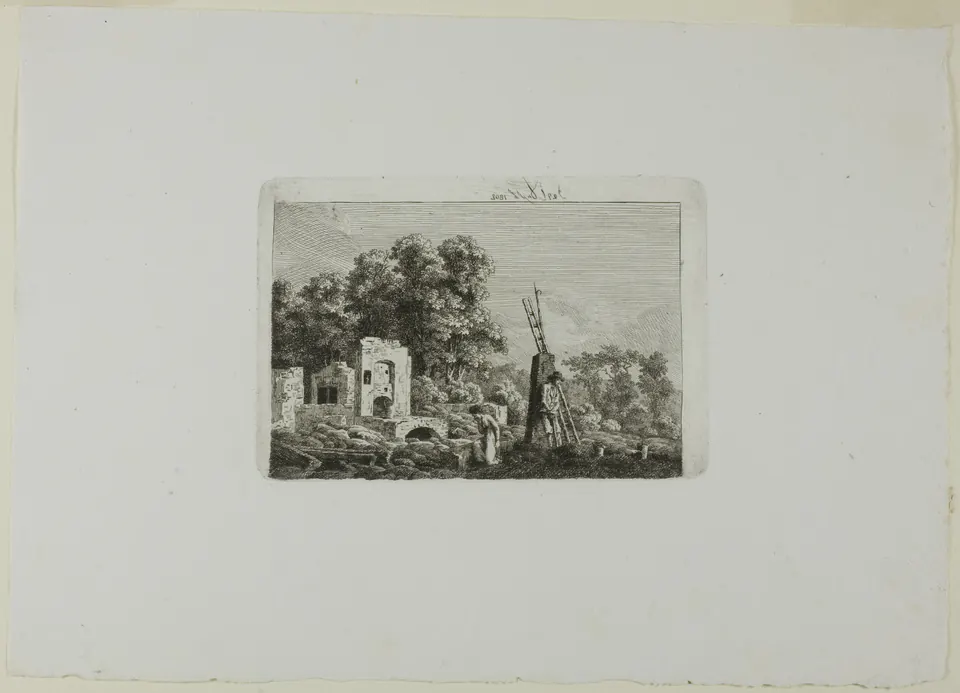
Scene of a Fire
1802 · Art Institute of Chicago · 2013.357
CC0 Public Domain Designation
Resized to 960 pixels wide and converted to WebP; no crop.

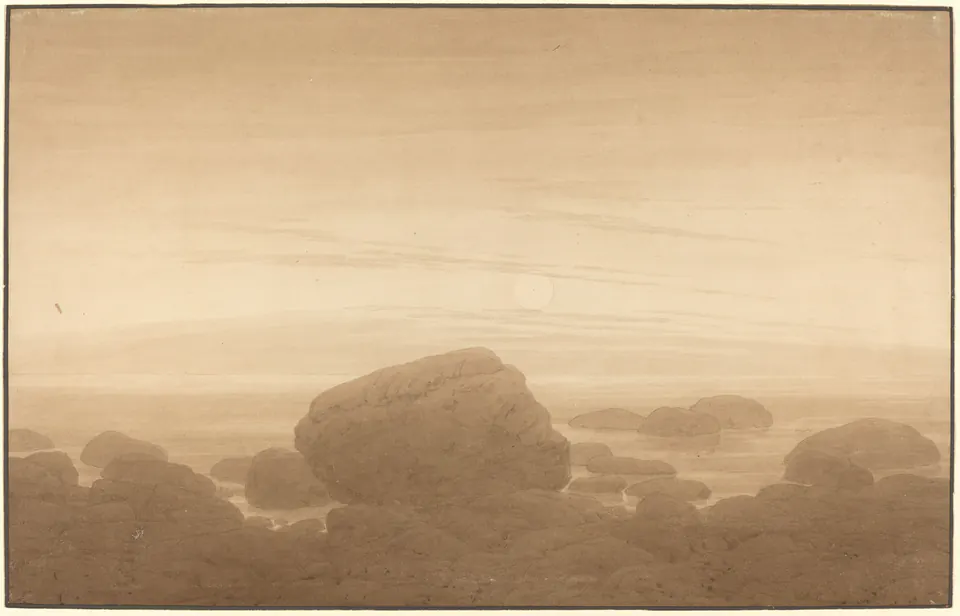
Moonrise on an Empty Shore
1837/1839 · National Gallery of Art · 1992.11.1
Public Domain / Open Access
Resized to 960 pixels wide and converted to WebP; no crop.

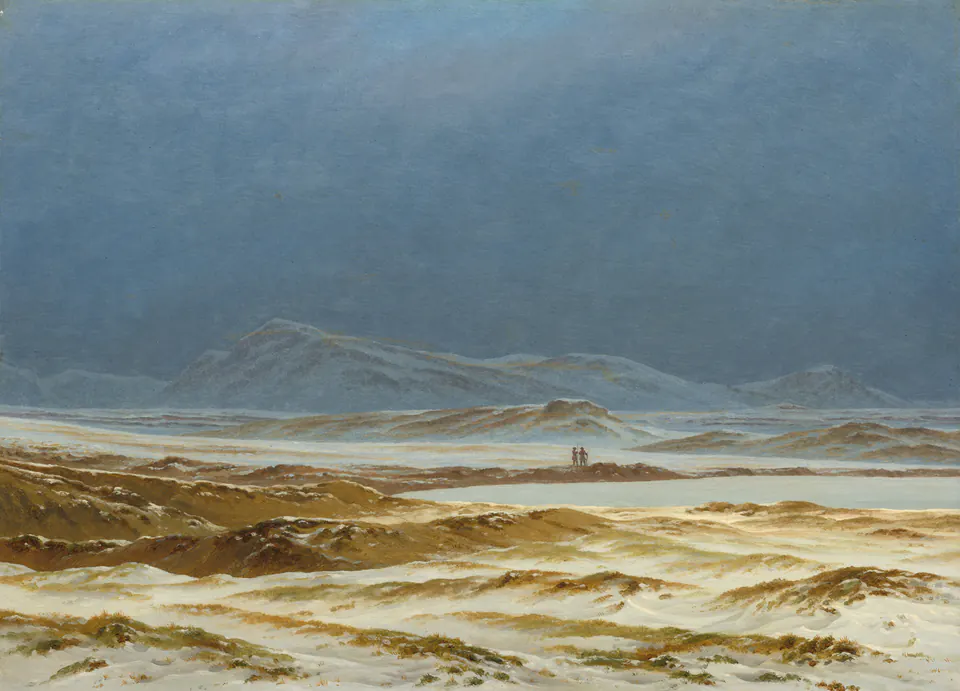
Northern Landscape, Spring
c. 1825 · National Gallery of Art · 2004.113.1
Public Domain / Open Access
Resized to 960 pixels wide and converted to WebP; no crop.

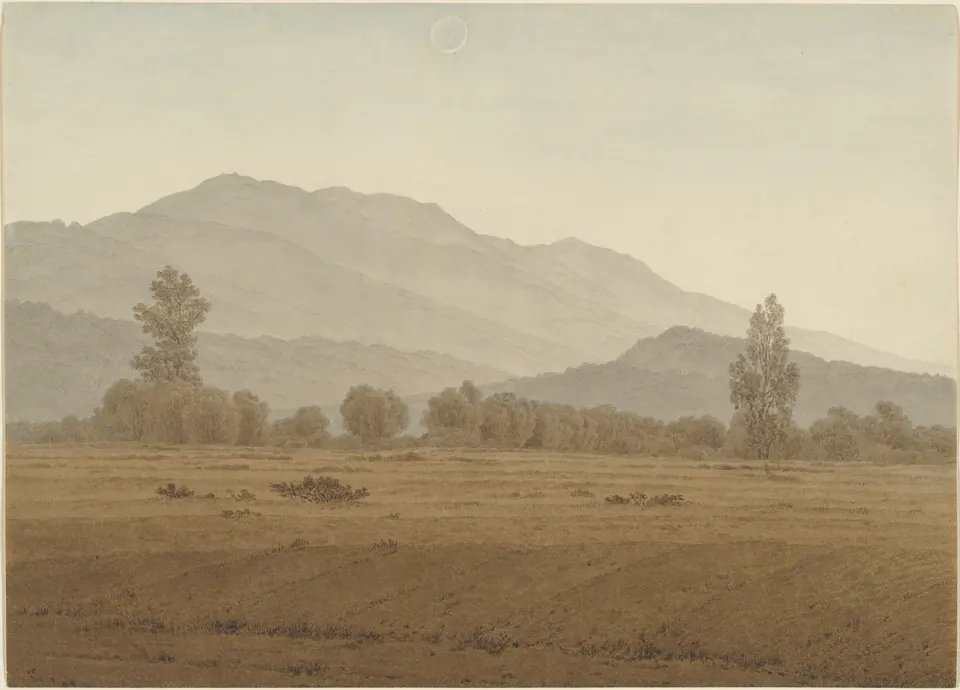
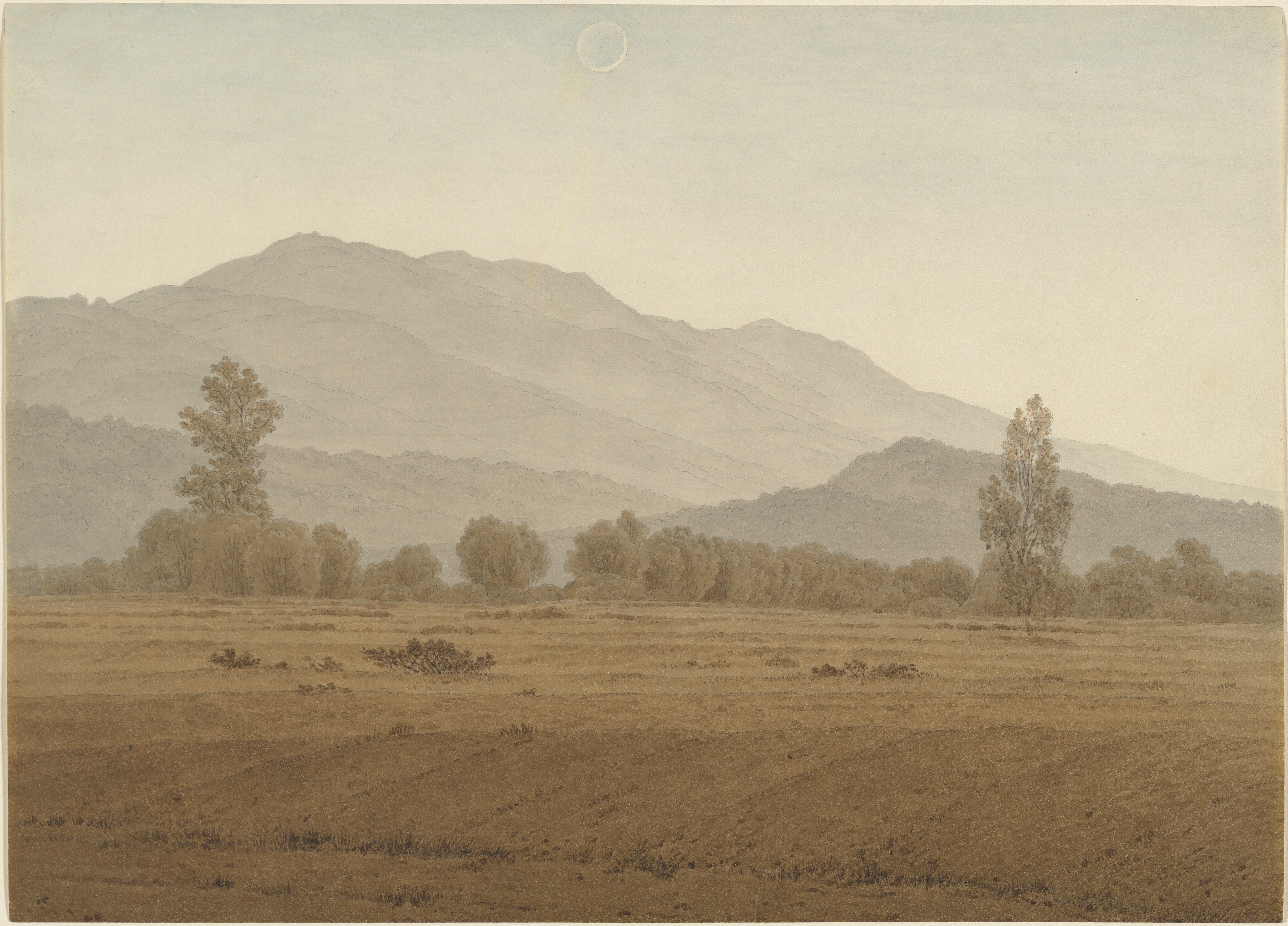
New Moon or Solar Eclipse above the Riesengebirge Mountains
1810 or 1828/1835 · National Gallery of Art · 2007.111.10
Public Domain / Open Access
Resized to 960 pixels wide and converted to WebP; no crop.
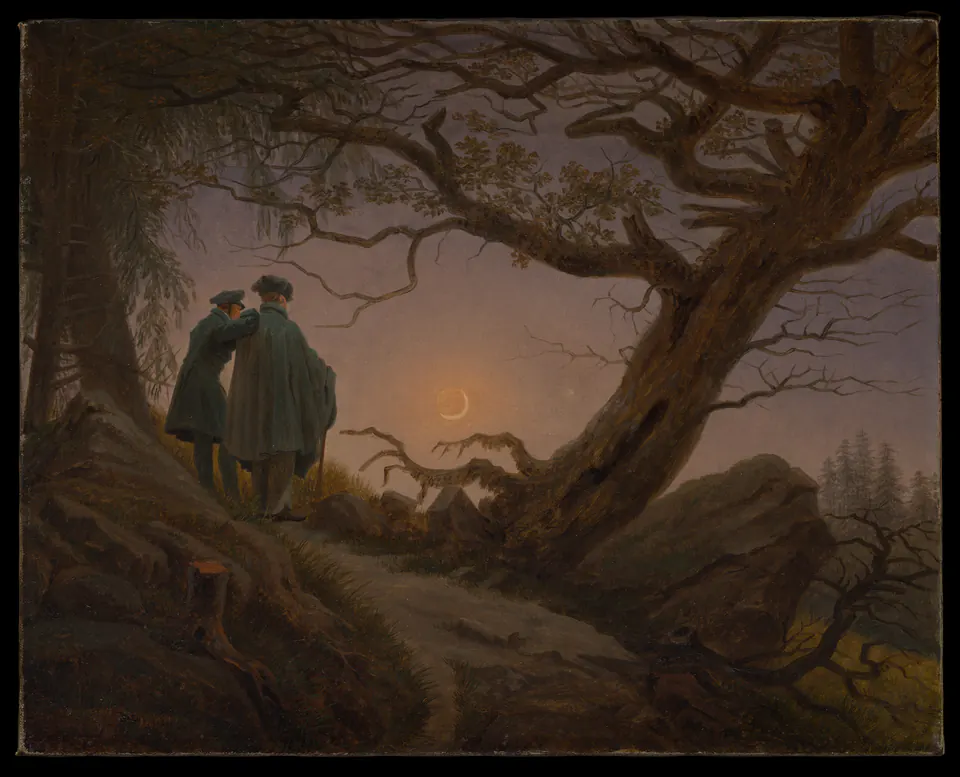
Two Men Contemplating the Moon
ca. 1825–30 · The Metropolitan Museum of Art · 2000.51
Public Domain / Open Access (CC0)
Resized to 960 pixels wide and converted to WebP; no crop.
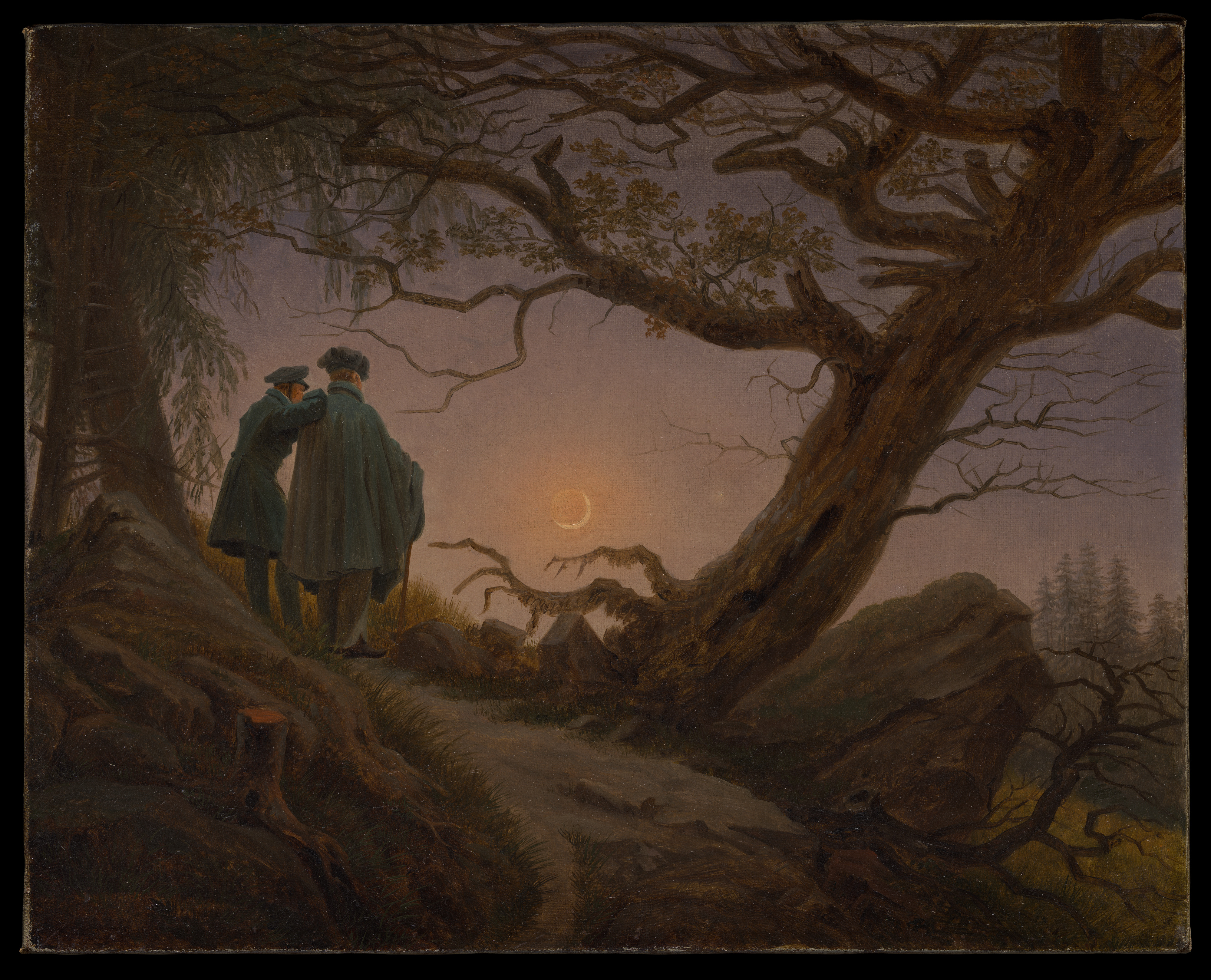
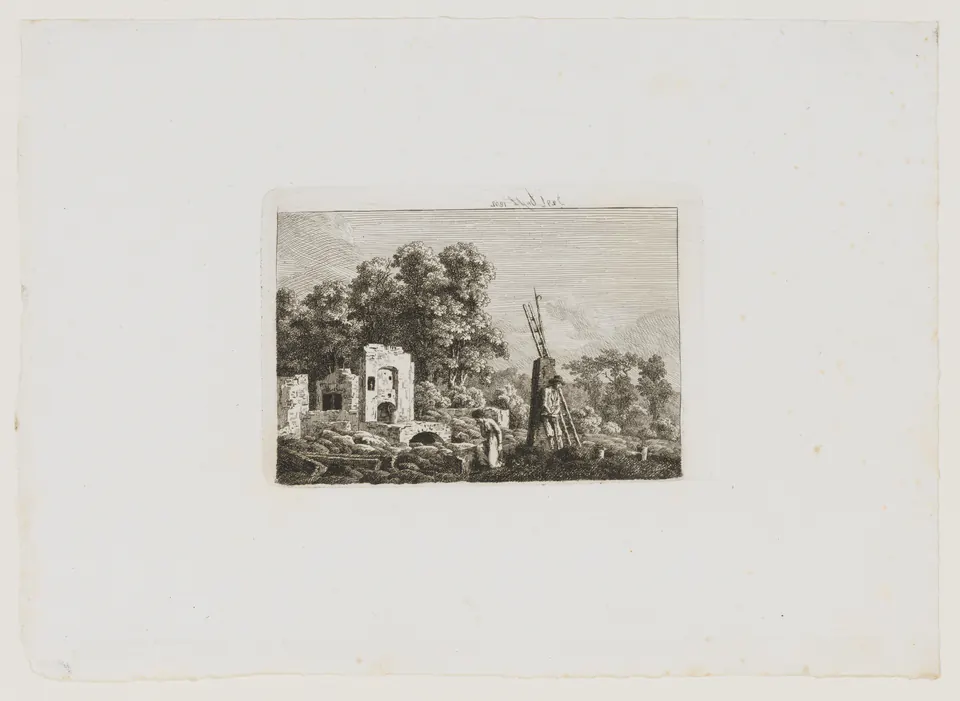
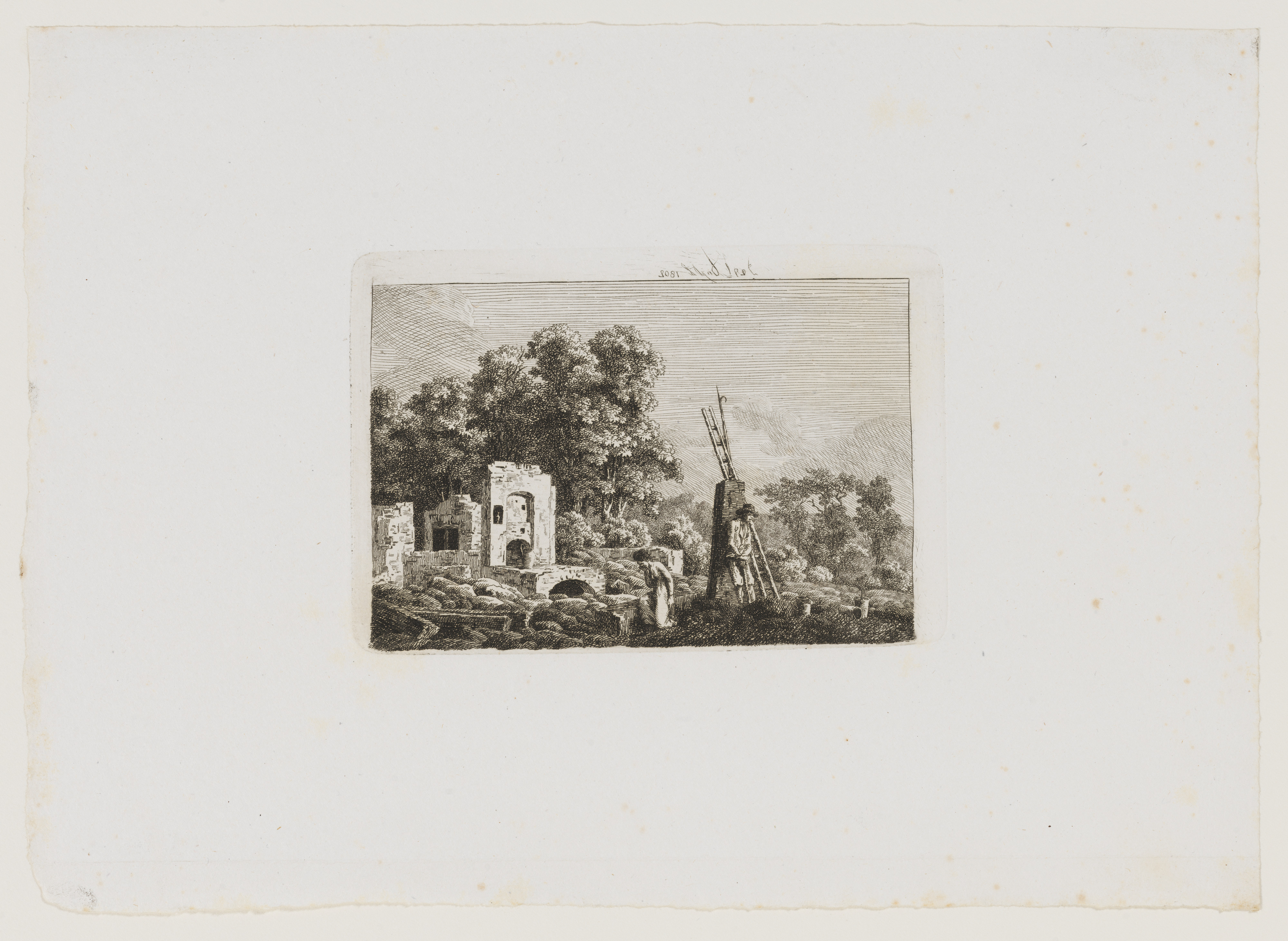
Site of a Fire
1802; printed 1803 or later · The Metropolitan Museum of Art · 27.36.1
Public Domain / Open Access (CC0)
Resized to 960 pixels wide and converted to WebP; no crop.
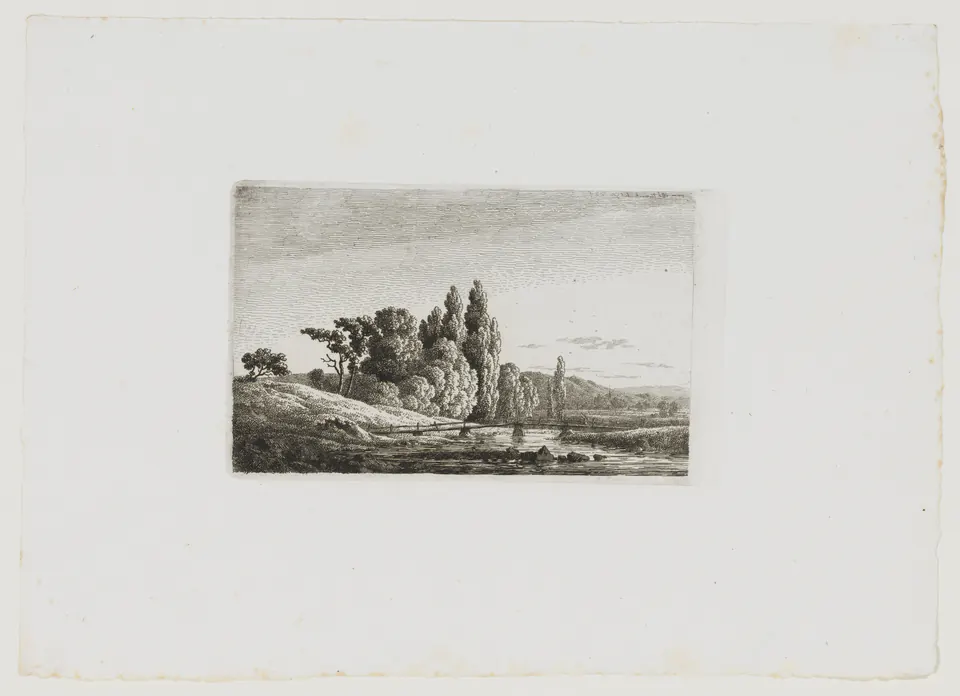
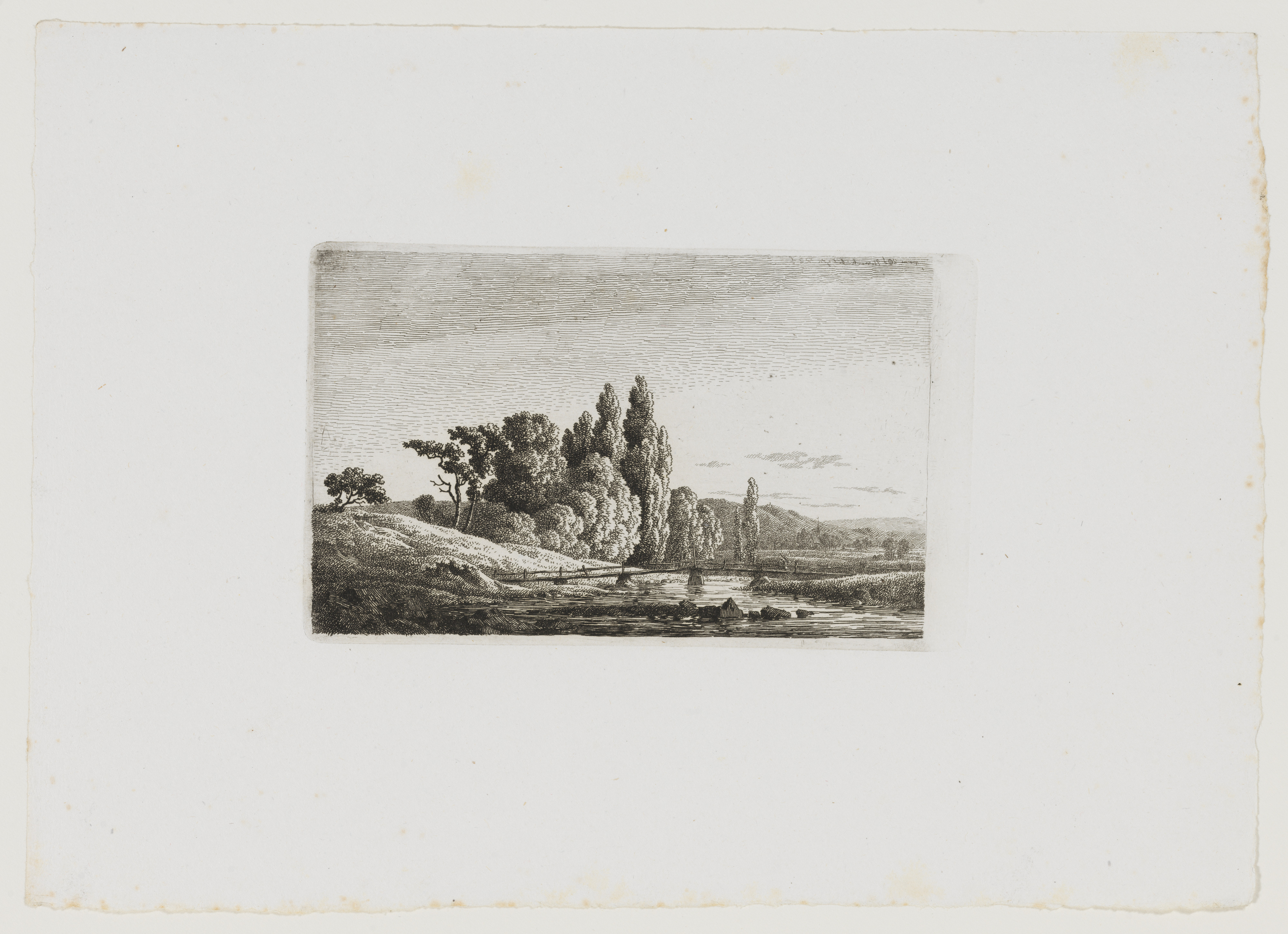
Footpath with a Bridge
November 20–22, 1802? · The Metropolitan Museum of Art · 27.36.2
Public Domain / Open Access (CC0)
Resized to 960 pixels wide and converted to WebP; no crop.
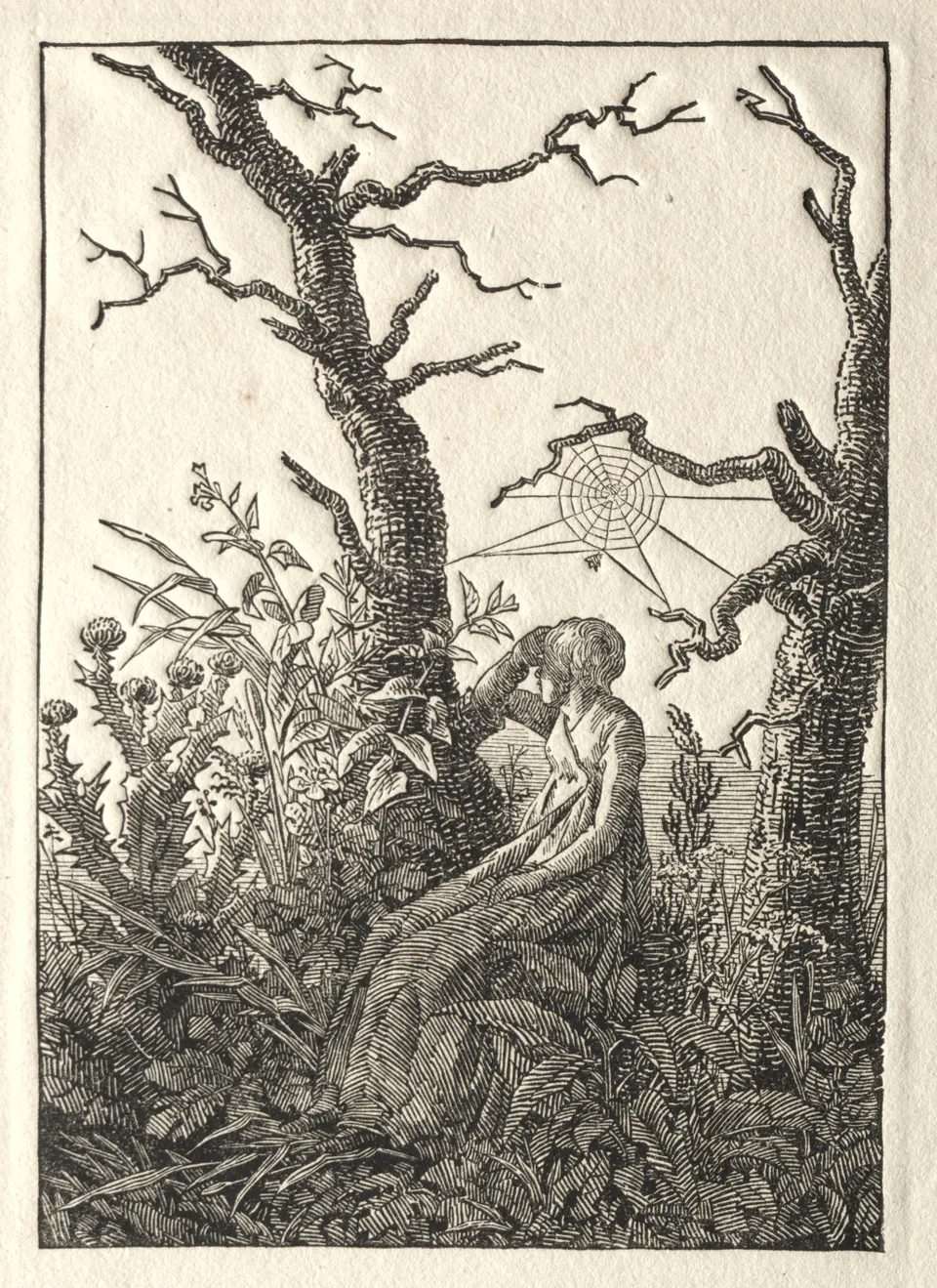
The Woman with the Spider Web between Bare Trees
1803 · Cleveland Museum of Art · 1995.68
CC0 / Public Domain Open Access
Resized to 960 pixels wide and converted to WebP; no crop.
Sources and review method
We checked the artist chronology against museum records, treated each named jurisdiction separately, and recorded the provider policy for the image set. These sources support the legal framework and artist dates used above; the source file for any individual image still needs its own record.
- Statue of the Madonna in the Mountains — Art Institute of Chicago. Feature identity, attribution, date, accession, and CC0 Public Domain Designation.
- Open Access Images — Art Institute of Chicago. Files labelled CC0 Public Domain Designation may be reused for commercial and non-commercial purposes.
- Moonrise on an Empty Shore — National Gallery of Art. Object identity, provenance, early exhibition history, accession, and Public Domain media status.
- Free Images and Open Access — National Gallery of Art. The NGA releases images of public-domain works that it believes are public domain and free of known restrictions.
- Two Men Contemplating the Moon — The Metropolitan Museum of Art. Third-version identity, provenance, accession, and Public Domain Open Access file status.
- Image and Data Resources — The Metropolitan Museum of Art. The Met makes images marked Public Domain available for unrestricted use under its Open Access programme.
- The Woman with the Spider Web between Bare Trees — Cleveland Museum of Art. Impression identity, accession, catalogue record, and CC0 file status.
- Terms and Conditions — Open Access Content — Cleveland Museum of Art. Cleveland permits commercial and non-commercial reuse of content designated CC0.
- Directive 2006/116/EC, Article 1 — EUR-Lex. The EU term for an artistic work is the author’s life plus 70 years.
- How long copyright lasts — UK Government. UK guidance gives 70 years after the author’s death for artistic works.
- Law No. 5846 on Intellectual and Artistic Works, Article 27 — WIPO Lex. The Turkish economic-rights term is the author’s life plus 70 years.
- Circular 15A: Duration of Copyright — U.S. Copyright Office. The 2026 term table places works published before 1931 outside the maximum 95-year publication term.
- Certain Unpublished, Unregistered Works Enter Public Domain — U.S. Copyright Office. Older unpublished works have a separate U.S. term analysis; discovery and first-publication history can matter.
- 17 U.S.C. Chapter 3, including §303 — U.S. Copyright Office. Section 303 states the transition rules and minimum 2002 or 2047 expiry floors for works that were unpublished on 1 January 1978.
- Visual Artists: Publication — U.S. Copyright Office. Distribution can publish a visual artwork, while public display by itself does not establish publication.
- Compendium of U.S. Copyright Office Practices, Chapter 900, §909.3(A) — U.S. Copyright Office. A purely faithful scan or “slavish copy” does not add registrable authorship, while substantial restoration or alteration can require a separate analysis.
- Copyright notice: digital images, photographs and the internet — UK Intellectual Property Office. A digital image can require a separate rights and website-terms check even when its subject is old.
Editorial record
About this article
- Author
- Publisher
- GeMarkt
- Published
- Updated
- Reviewed
- Internal source & rights check. Conducted by GeMarkt Research Review. This is an internal editorial check—not independent peer review.
- Source standard
- Rights guide source standardSeparates the underlying work from the source file, records the review date, and links the evidence used for the conclusion.
Found a claim that needs checking? Report a factual error.