GeMarkt Journal · Practical guide
Is William Morris Public Domain? Patterns, Products, and Image Files
William Morris's documented designs are public domain in the markets checked here, but modern colourways, repeat files, photographs, and branding need separate clearance.
Rights check · reviewed
The short answer
Yes—for the 12 nineteenth-century designs and manufactured samples attributed to William Morris below in the European Union, United Kingdom, Türkiye and United States. A modern colourway, repeat tile, product photograph, or Morris & Co. branded item needs its own review.
| What is being checked | Result | Why |
|---|---|---|
| European Union, United Kingdom & Türkiye | Public domain | William Morris died in 1896, beyond the ordinary life-plus-70 economic-rights terms. |
| United States | Clear for the 12 published designs below | The named wallpapers and textiles were registered, manufactured, sold, and distributed in the nineteenth century. A newly surfaced unpublished drawing still needs a §303 review. |
| Designer attribution | Morris & Co. is not an authorship label | Designs by John Henry Dearle, May Morris, Kate Faulkner, or another maker require that person’s dates and publication history. |
| Modern file, colourway, repeat, or brand | Clear new production layers separately | A public-domain pattern does not automatically clear a contemporary retailer photograph, redrawn repeat, packaging, trademark, or endorsement claim. |
This guide clears a named institutional set. It does not attribute every Morris & Co. object to William Morris, license contemporary trademarks, or clear a retailer’s modern scan, photograph, vector, recolour, or product presentation.
This is a documented research summary, not legal advice. Copyright and moral-rights rules can vary by country and by the history of a particular work.

What we’ll look at
When can a William Morris pattern be reused, and which modern production layers remain outside that answer?
The useful answer is yes for the established William Morris designs and 12 institutional objects documented here—but not automatically for every pattern, product, or image carrying his name. Morris died in 1896. His underlying designs are public domain in the European Union, United Kingdom, and Türkiye, and the named nineteenth-century wallpapers and textiles have publication histories that support the same result in the United States.
The difficult part begins after that answer. A pattern may survive as a design, a printing block or loom setup, a length of manufactured material, a particular colourway, a museum photograph, a newly constructed repeat tile, and a present-day product. Those layers are related, but they are not interchangeable rights records.
This guide therefore asks four linked questions:
- Is the underlying design outside copyright in the market being checked?
- Does the object record actually attribute the design to William Morris rather than merely to Morris & Co.?
- Is the exact museum file affirmatively covered by an open-access statement?
- Has a modern manufacturer, restorer, photographer, or designer added new authorship, branding, or contractual restrictions?
The answer is a research summary, not legal advice. It covers the named territories and files rather than making a worldwide claim.
The short answer covers the old design
The 12 works in this guide come from the Art Institute of Chicago and The Metropolitan Museum of Art. Each object record identifies William Morris as designer, each selected file carries an object-level Public Domain or CC0 statement, and each local derivative was made from the exact institutional file recorded in the rights ledger.
The set includes Strawberry Thief, Peacock and Dragon, Cray, Acanthus, Honeysuckle, Willow, Kennet, Bird, and Willow Bough. Together they show why “a William Morris pattern” is too vague for production: a named design can appear in several materials, production dates, colourways, dimensions, and physical states.
The conclusion does not automatically cover:
- an unattributed drawing newly found in a private archive;
- an object made by Morris & Co. but designed by John Henry Dearle, May Morris, Kate Faulkner, or another maker;
- a present-day manufacturer’s colourway or newly drawn repeat;
- a cleaned vector, seamless tile, restored scan, product photograph, or room mock-up;
- a contemporary company name, logo, packaging system, or sponsorship claim;
- a download whose institutional source and provider statement cannot be recovered.
An old design and a reusable production file are two separate conclusions.
Life plus 70 and the US publication test
The EU term directive, UK government guidance, and Article 27 of Türkiye’s Law No. 5846 each use an ordinary life-plus-70 framework for artistic works. Morris’s death in 1896 is far beyond those economic-rights terms.
| Market checked | Rule relevant here | Result for the named designs |
|---|---|---|
| European Union | author’s life plus 70 years | public domain |
| United Kingdom | 70 years after the creator’s death | public domain |
| Türkiye | life plus 70 years for economic rights | public domain |
U.S. law needs a publication analysis rather than a death-date shortcut. Copyright Office Circular 15A organises older works by publication date; in 2026, works published before 1 January 1931 are beyond the maximum 95-year publication term. The selected patterns were registered, manufactured, sold, or distributed in the nineteenth century. The museum records preserve that production chronology, so this set does not depend on treating exhibition alone as publication.
The fail-closed exception remains important. Under 17 U.S.C. §303, a work that was still unpublished on 1 January 1978 can fall under transition rules with an end-of-2002 floor—or an end-of-2047 floor if first published by the end of 2002. A newly surfaced private drawing should therefore be checked item by item.
URAA restoration does not restart the term for these underlying designs. Restoration requires, among other conditions, that a work was not already public domain through expiry of its source-country term. Morris’s works had exhausted the relevant UK term before the restoration regime could supply a new U.S. term.
These are economic-rights conclusions. Moral rights, trademarks, passing off, consumer protection, cultural context, and provider conditions can require separate care.
Morris and Company is not one authorship label
“Morris & Co.” identifies a business and production context, not a single hand. The firm’s output involved designers, draughtspeople, block cutters, printers, dyers, weavers, embroiderers, managers, and later custodians of patterns and equipment. A retailer or auction record may foreground the celebrated company name while the museum’s fuller record attributes a design to someone else.
This matters legally and historically. John Henry Dearle lived until 1932 and designed important patterns for the firm. May Morris lived until 1938 and developed an independent career as an embroidery designer and advocate. Their work cannot inherit William Morris’s 1896 death date simply because it was sold through the same business.
For every proposed reuse, preserve four attribution fields:
- the designer named by the institution;
- the manufacturer, printer, or workshop;
- the design and object dates;
- the accession and holding institution.
If the designer is uncertain, the rights decision should remain uncertain. Commercial familiarity is not a substitute for attribution evidence.
Pattern, object, repeat, and file are separate layers
A wallpaper or textile record describes a manufactured object, not an abstract pattern floating free of material. Block-printed wallpaper depends on blocks, inks or distempers, registration, paper, joins, and the dimensions of the printed roll or surviving fragment. Woven textiles depend on fibre, weave structure, loom preparation, colour, finishing, and use. A museum sample may be trimmed, faded, mounted, stitched, or assembled from several pieces.
A digital production chain adds more decisions:
- Design: the public-domain composition attributed to Morris.
- Manufactured interpretation: blocks, weave, palette, scale, registration, and repeat used for a particular production.
- Physical object: one surviving sample with its own accession, dimensions, condition, and provenance.
- Institutional file: the museum’s photograph or scan and its provider statement.
- Local derivative: a documented resize or format conversion.
- New product asset: any reconstruction, cleaned repeat, recolour, vector, photograph, mock-up, packaging, or typography made today.
The U.S. Copyright Office says that a purely faithful photographic copy lacks new registrable authorship, while sufficiently creative restoration or alteration can be protectable. Other jurisdictions and provider contracts may differ. The practical answer is to start with an institutionally cleared file and record every transformation rather than extracting an undocumented pattern from a retail listing.
Is Strawberry Thief public domain?
Yes—the underlying 1883 William Morris design is public domain in the EU, UK, Türkiye, and United States under the analysis above. For actual reuse, select and document a particular manufactured object and exact file.
This guide’s feature is Art Institute of Chicago 1992.396, a textile made between 1883 and 1917 from Morris’s 1883 design. Its object page identifies the designer, production context, accession, and a CC0 Public Domain Designation. The AIC Open Access policy permits commercial and non-commercial reuse of files carrying that label.
The local master was made from the recorded 3000-pixel IIIF JPEG. The source was 1324 by 3000 pixels; the feature uses a centred 4:3 crop converted to WebP without enlargement. That detail prevents two common mistakes: calling the image “the original Strawberry Thief” and assuming that every online image with the same birds and fruit is the same colourway, textile, or file.
A search result can mix historic samples with modern printed cotton, wallpaper, licensed bedding, seamless vectors, recoloured tiles, and retailer photography. The correct reuse instruction is not “download any Strawberry Thief image.” It is “reuse this documented public-domain object and provider-cleared file, then record any repeat construction, restoration, or recolouring as new production work.”
Modern colourways, products, and branding need new clearance
The continuing commercial life of Morris patterns does not place the nineteenth-century designs back under copyright. It does create new layers that should not be collapsed into the old design.
A contemporary manufacturer may make protectable or contractually controlled choices in:
- a newly drawn repeat or reconstruction from fragments;
- scale, spacing, edge joins, and motif repair;
- a new colour palette or separation system;
- a woven structure, embroidery chart, or print-ready file;
- photography, styling, room scenes, packaging, copy, and layout;
- a word mark, logo, collection name, or endorsement presentation.
Copyright status also does not authorise trademark use or a suggestion that a current company, museum, or estate sponsors the product. Use descriptive attribution accurately, avoid institutional logos unless separately permitted, and do not present a modern branded sample as the historical source.
If the commercial objective requires a seamless repeat, construct it from a cleared institutional source and document the construction. Do not lift a ready-made tile from a retailer merely because the underlying motif is old.
Twelve open files form the published set
The rights registry is both an editorial source map and a production boundary. Four files come from Art Institute objects carrying the CC0 Public Domain Designation; eight come from The Met’s Public Domain Open Access programme. All 12 exact source endpoints were fetched during implementation.
For each file, the ledger preserves:
- title, design or production date, institution, and accession;
- object record and exact source-file URL;
- provider rights label;
- local image dimensions and no-crop transformation;
- a stable local path verified by automated tests.
The feature additionally has a checksum and deterministic responsive renditions in the Journal delivery lock. If the master changes, validation fails until the rights record, source metadata, and generated files agree.
This set does not imply that GeMarkt sells William Morris products. It proves that the guide is illustrated by processed, rights-checked files rather than by an aspirational list or retailer screenshots.
A commercial reuse checklist
Before a Morris pattern enters a product, publication, campaign, or downloadable asset, verify:
- Designer. The institutional record attributes the design to William Morris, not only to Morris & Co.
- Chronology. The design and manufactured object dates support the market-specific term and U.S. publication conclusion.
- Object. The accession and physical sample are the ones actually shown.
- Source file. The production master came from the recorded institutional endpoint.
- Provider status. The object page still carries the Public Domain or CC0 status relied on here.
- Modern authorship. Repeat construction, vector cleanup, restoration, recolouring, typography, photography, and layout have their own review where required.
- Branding. Company names and museum identities are descriptive and do not imply sponsorship.
- Territory. Distribution markets match the legal review; the named markets are not “worldwide.”
If provenance cannot be recovered, source the file again. Public domain is not a free-for-all explains why attribution, trademark, privacy, and platform rules can remain relevant after economic copyright expires.
Where William Morris fits inside GeMarkt
The Journal’s Art Nouveau poster chapter examines another world where art, craft, reproduction, commerce, and public space meet. It is a useful conceptual neighbour, but it does not answer the pattern-file clearance question handled here.
There is no William Morris collection or dedicated wallpaper room on GeMarkt at publication time. The wallpaper library and shop should not imply otherwise. Future routes are reserved as /collections/william-morris/ and /free/wallpapers/william-morris/; they must remain inactive until product-specific repeat construction, colour, file, quality, branding, and territory checks pass.
The editorial guide can publish now because its search intent, designer-level attribution, exact-file ledger, 12-image set, and delivery records exist. A future collection may link back to this evidence, but inventory is not a precondition for an honest rights answer.
Rights-checked image ledger
A documented starting set
These files were selected from the holding institutions rather than from search-result copies. Each card keeps the artwork record, exact source file, provider statement and GeMarkt transformation visible as separate facts.
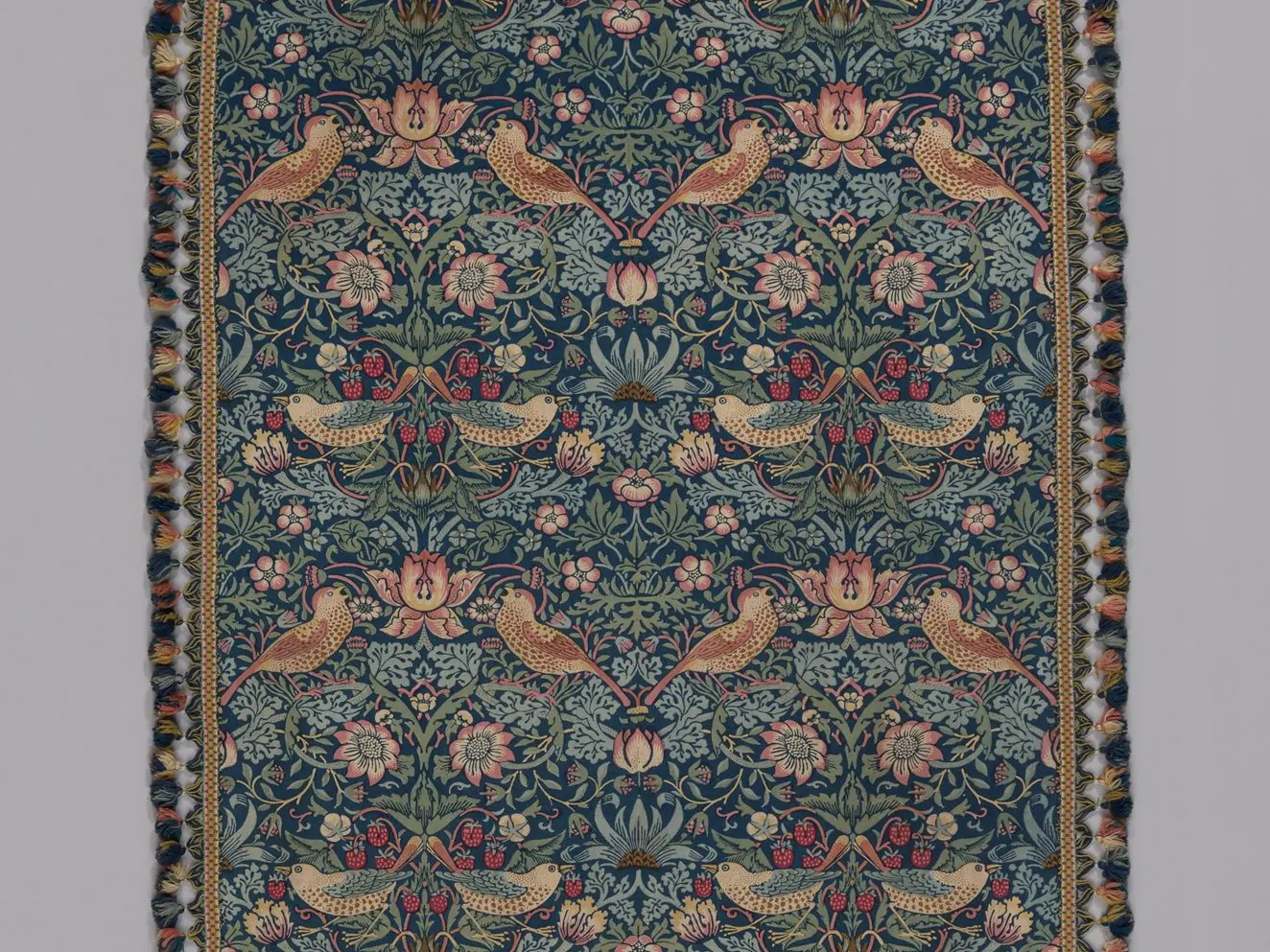
Strawberry Thief
design 1883; made 1883–1917 · Art Institute of Chicago · 1992.396
CC0 Public Domain Designation
Centered 4:3 crop from the full textile and converted to WebP without enlargement.

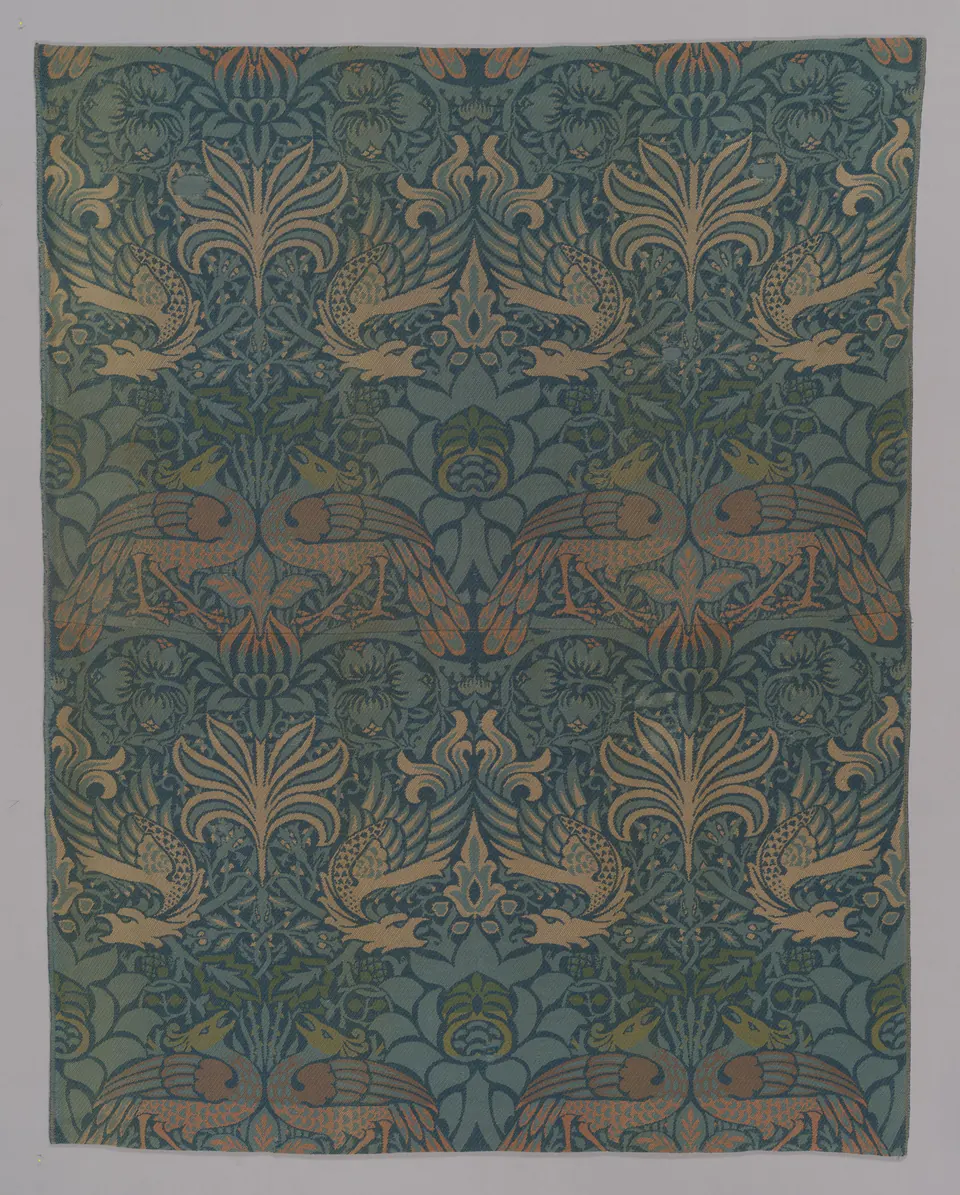
Peacock and Dragon
design 1878 · Art Institute of Chicago · 1985.74
CC0 Public Domain Designation
Resized to 960 pixels wide and converted to WebP; no crop.

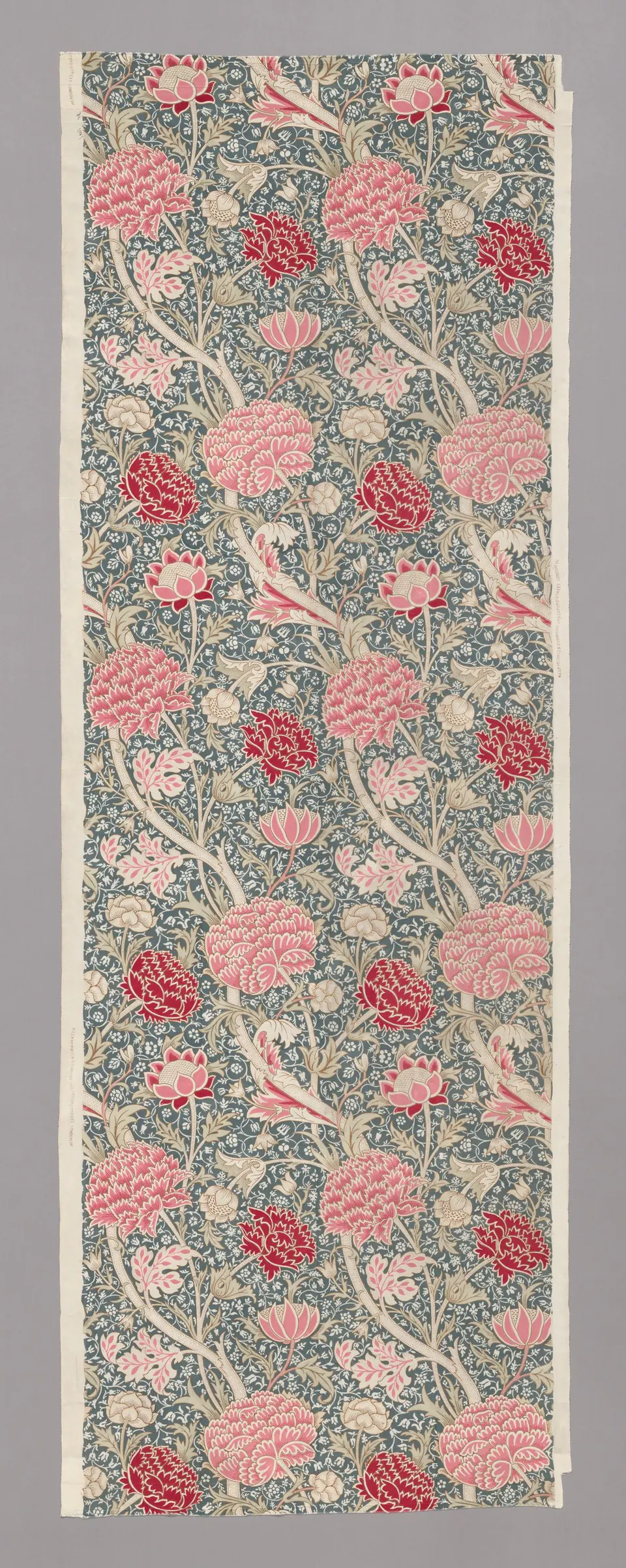
Cray
design 1884; made 1884–1917 · Art Institute of Chicago · 1974.419a
CC0 Public Domain Designation
Resized to 960 pixels wide and converted to WebP; no crop.

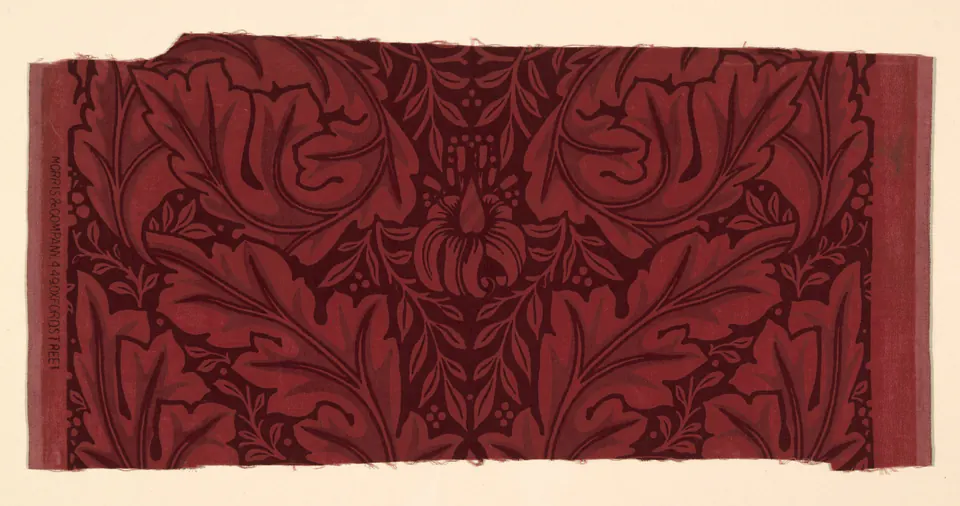
Acanthus
design 1876; made 1877–1917 · Art Institute of Chicago · 1978.192
CC0 Public Domain Designation
Resized to 960 pixels wide and converted to WebP; no crop.

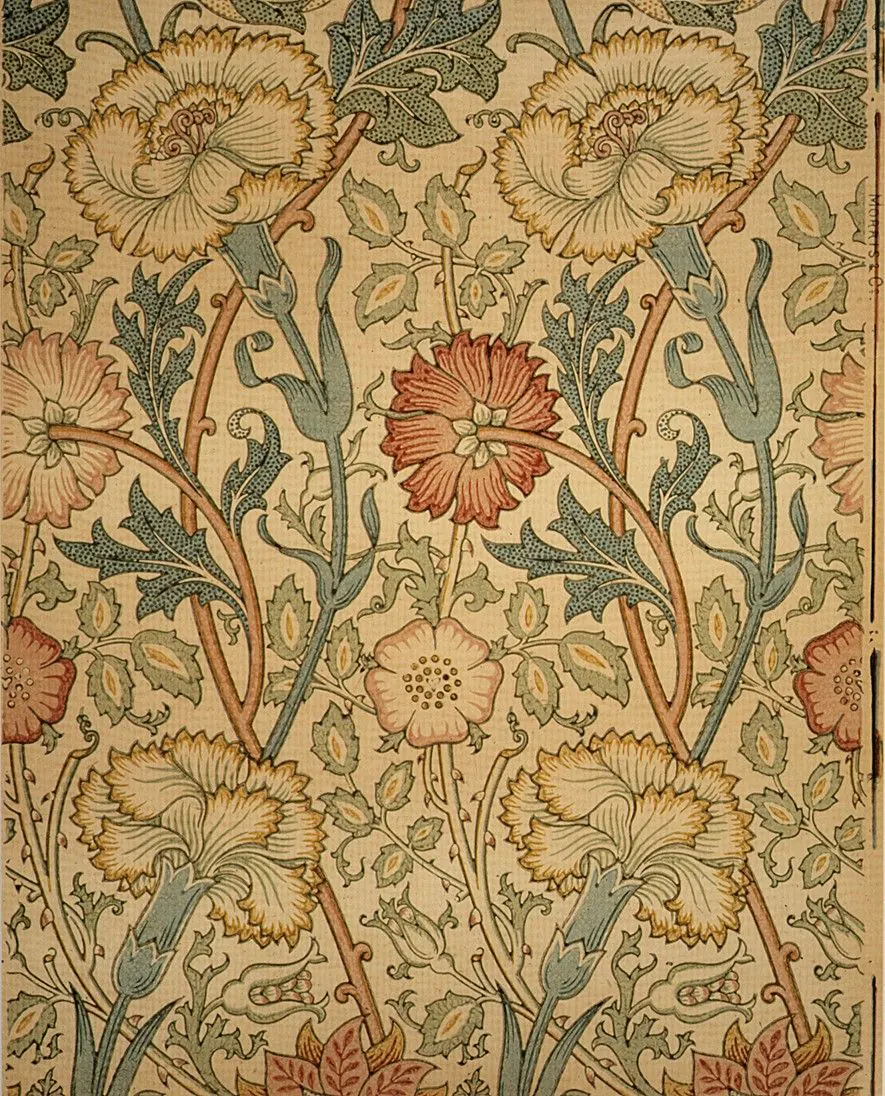
Pink and Rose
ca. 1890 · The Metropolitan Museum of Art · 23.163.4a
Public Domain / Open Access (CC0)
Converted to WebP without enlargement or crop.
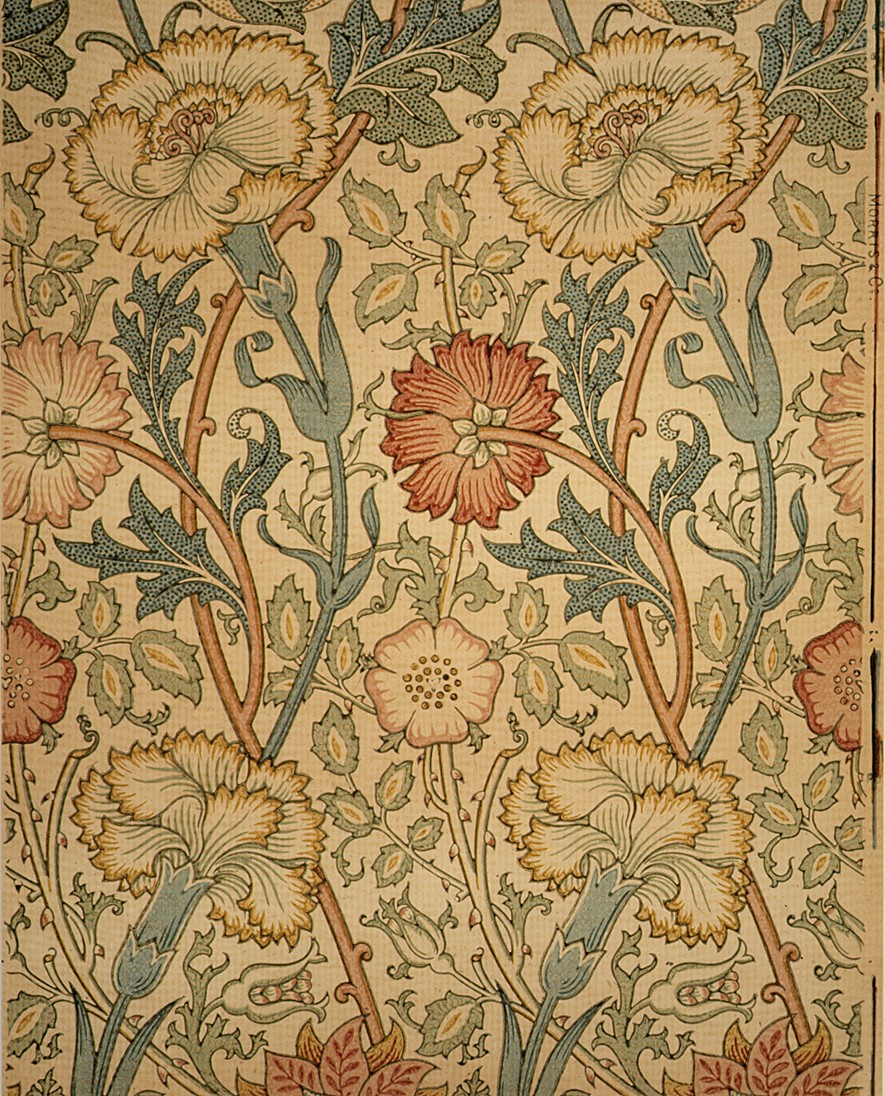
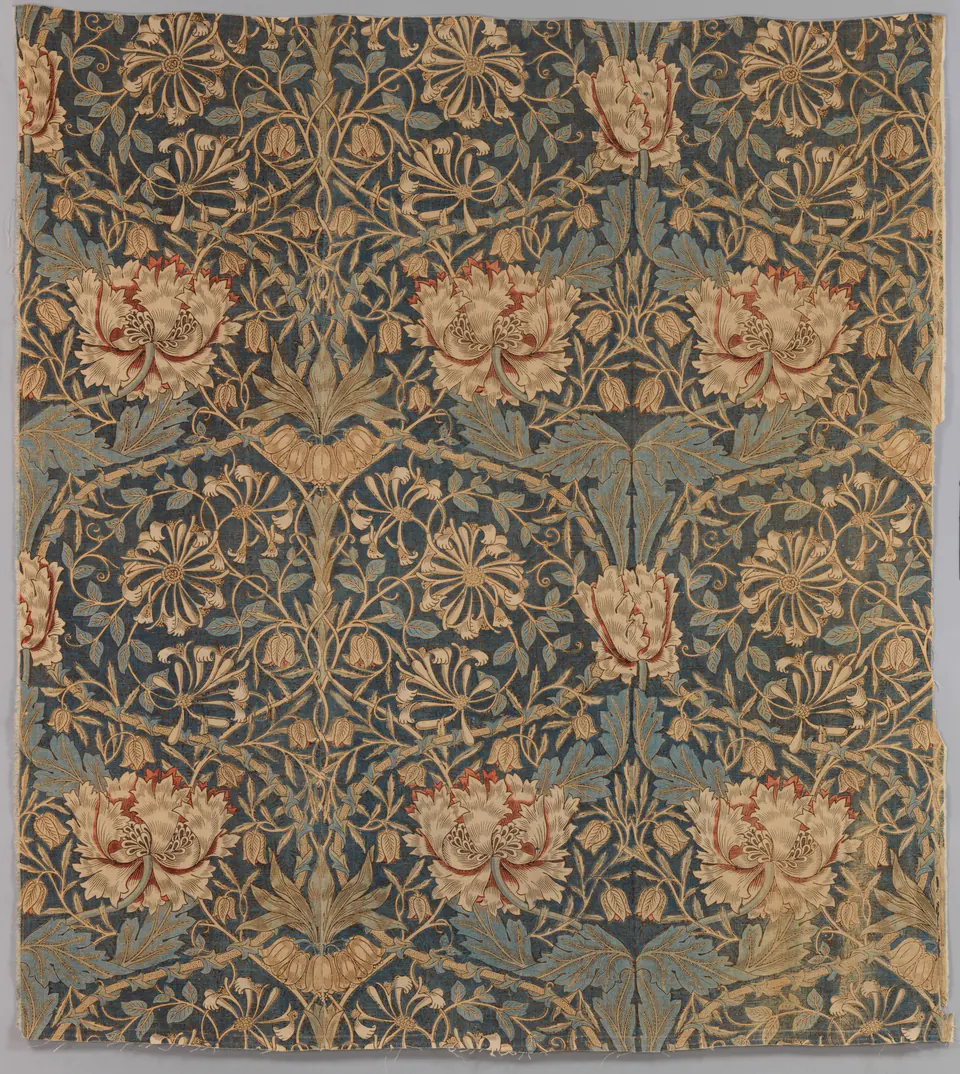
Honeysuckle
registered 1876; printed 1876–77 · The Metropolitan Museum of Art · 30.95.46a–f
Public Domain / Open Access (CC0)
Resized to 960 pixels wide and converted to WebP; no crop.
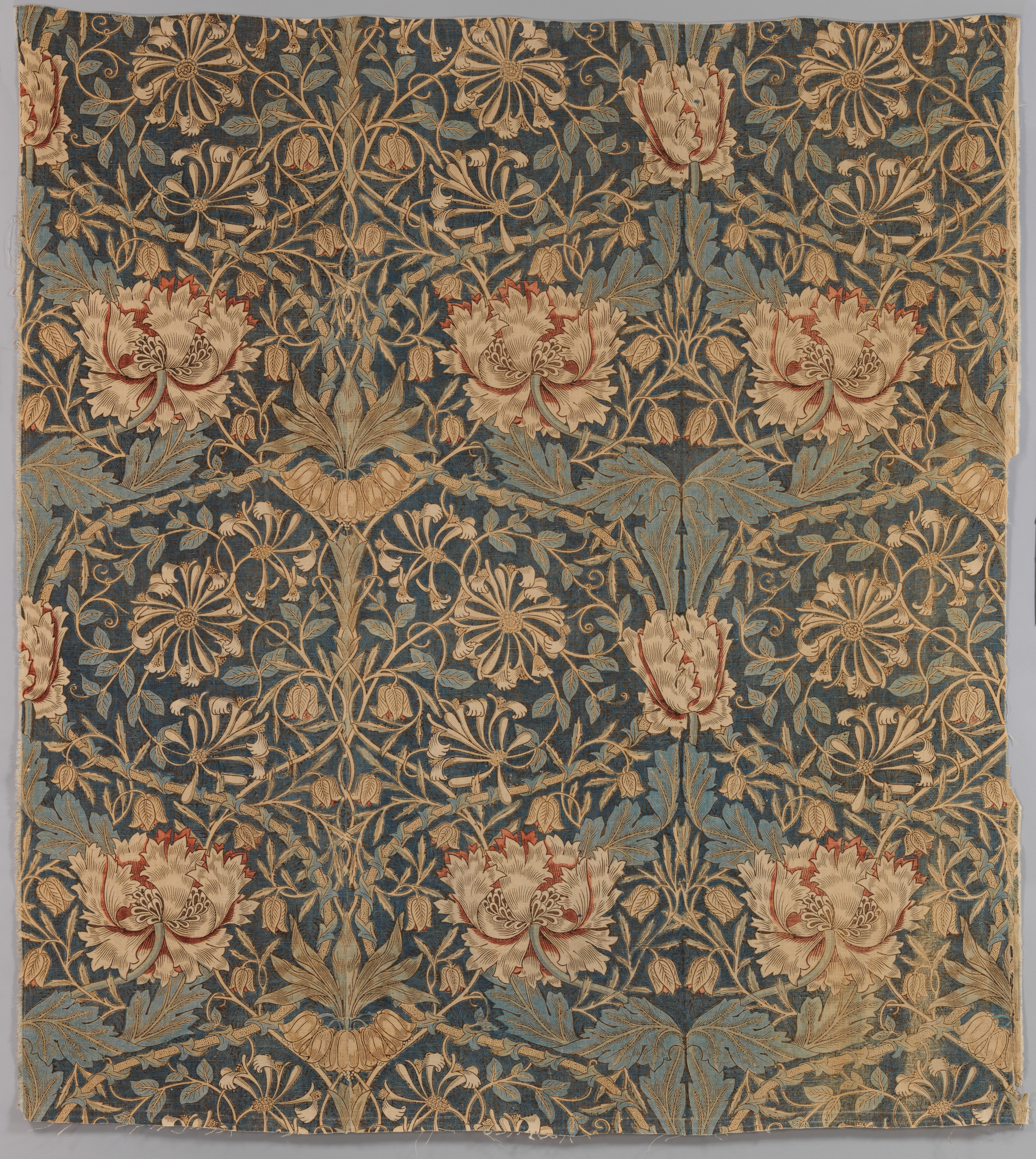
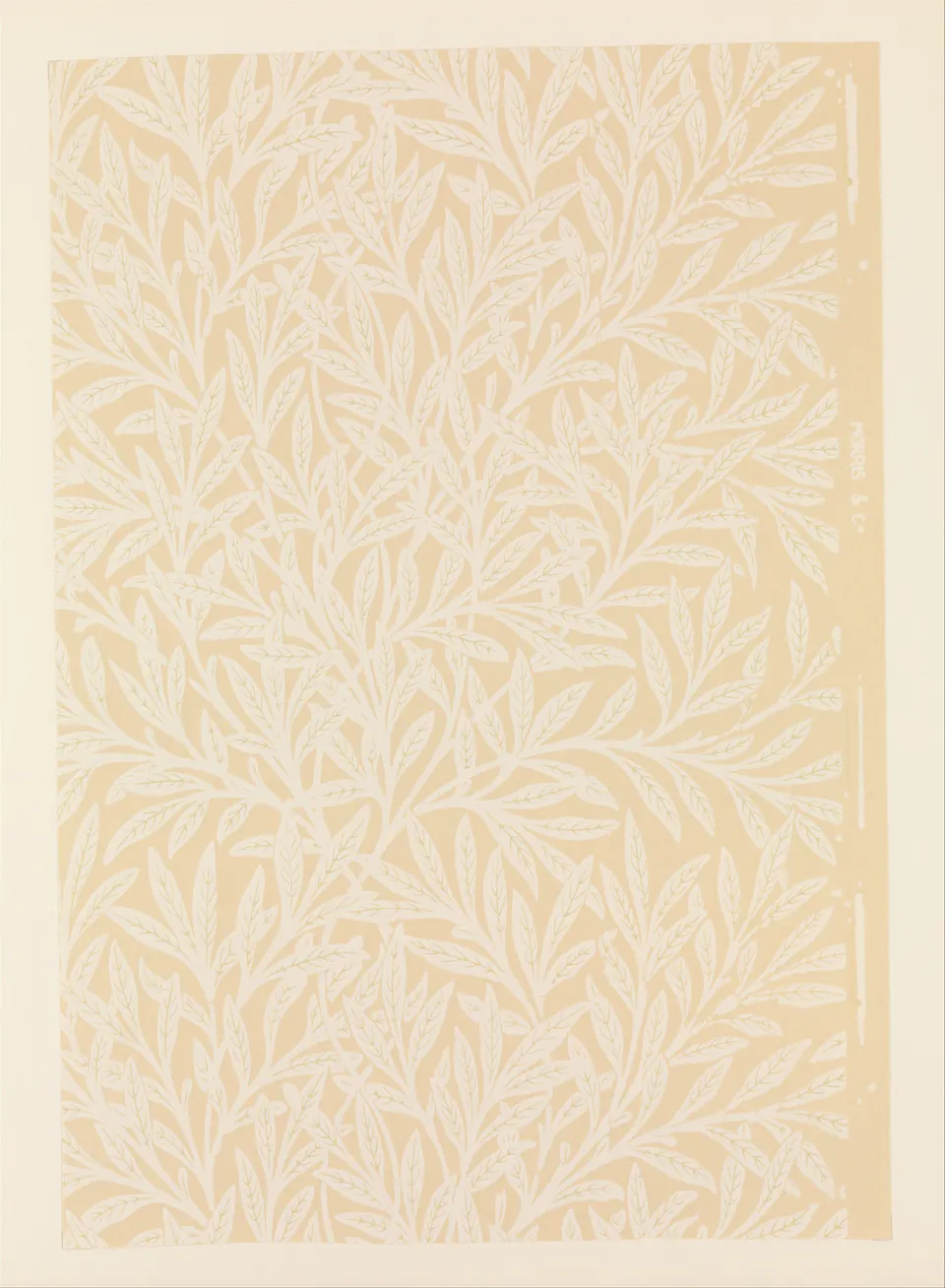
Willow
1874 · The Metropolitan Museum of Art · 39.18.5
Public Domain / Open Access (CC0)
Resized to 960 pixels wide and converted to WebP; no crop.
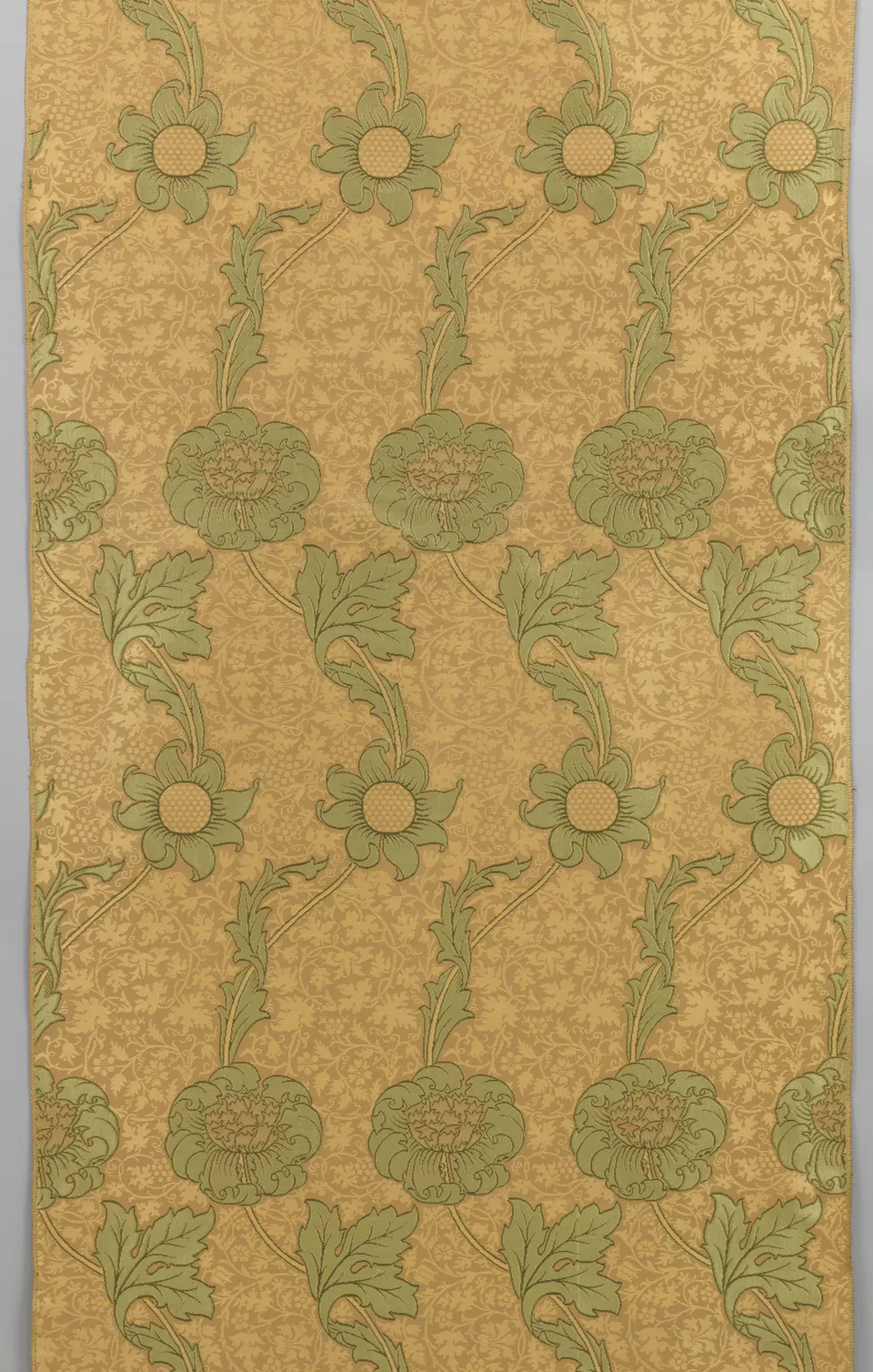
Kennet
registered 1883 · The Metropolitan Museum of Art · 23.163.12
Public Domain / Open Access (CC0)
Resized to 960 pixels wide and converted to WebP; no crop.
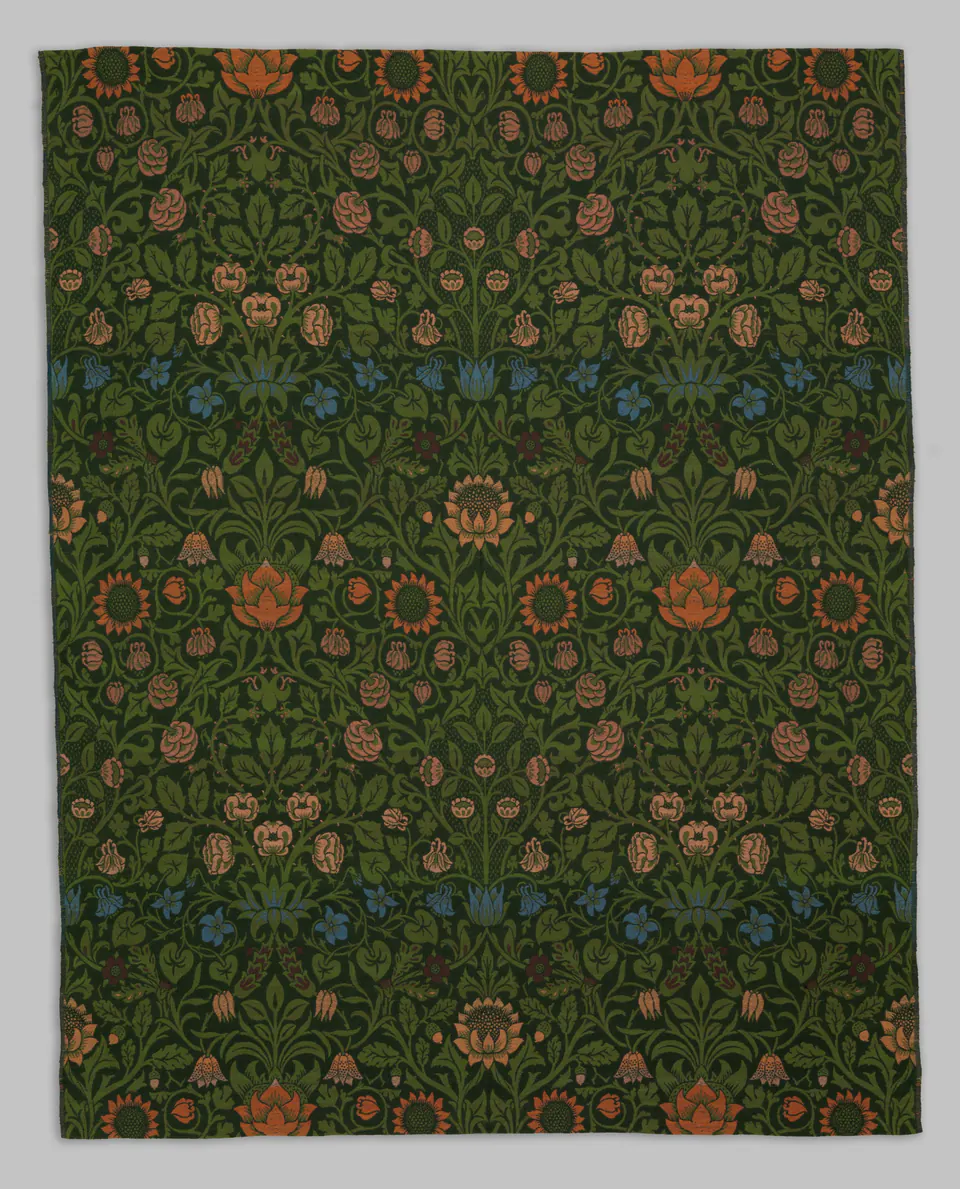
Violet and Columbine
registered 1883 · The Metropolitan Museum of Art · 23.163.16
Public Domain / Open Access (CC0)
Resized to 960 pixels wide and converted to WebP; no crop.
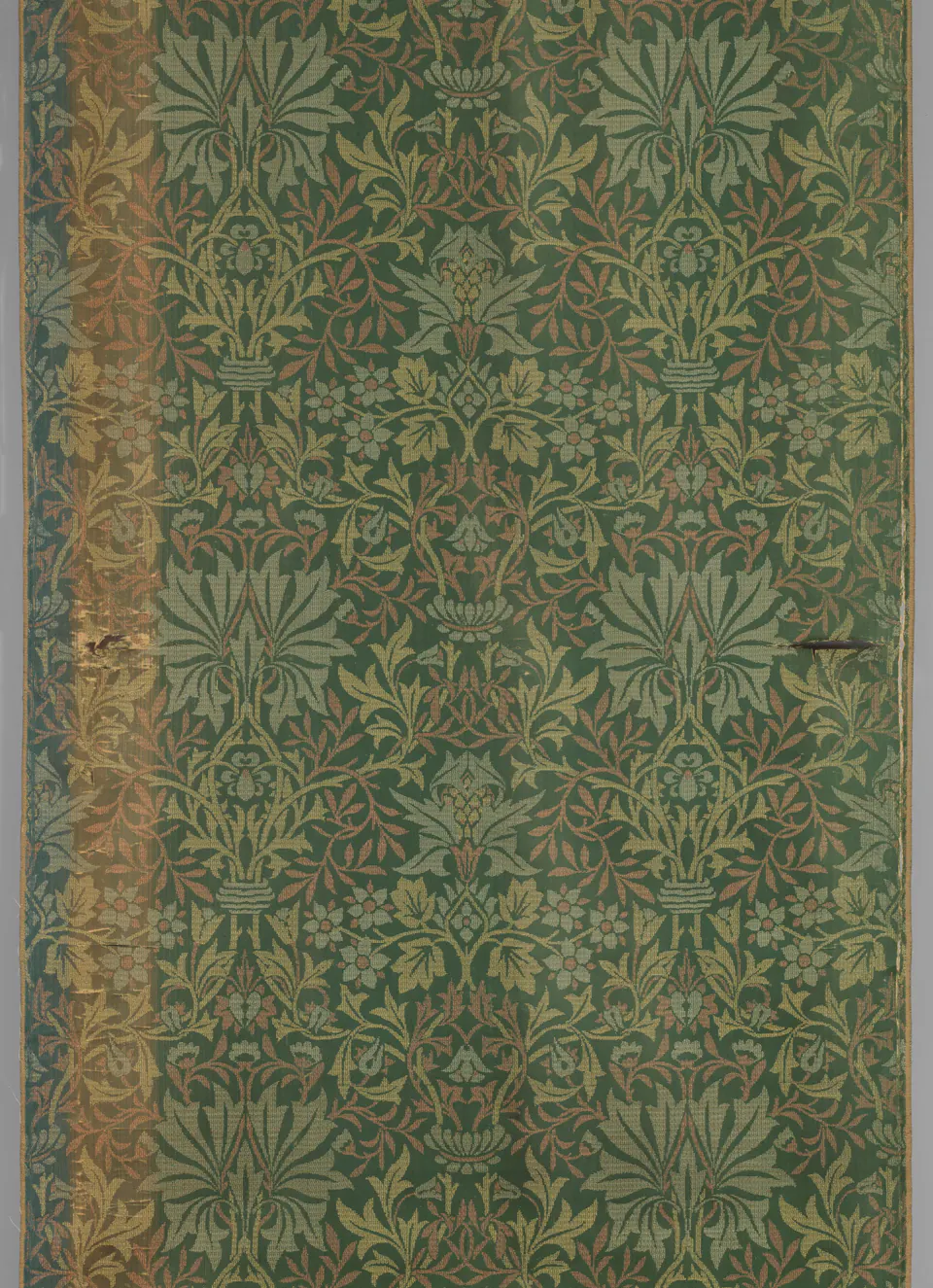
Flower Garden
designed 1879 · The Metropolitan Museum of Art · 23.163.13
Public Domain / Open Access (CC0)
Resized to 960 pixels wide and converted to WebP; no crop.
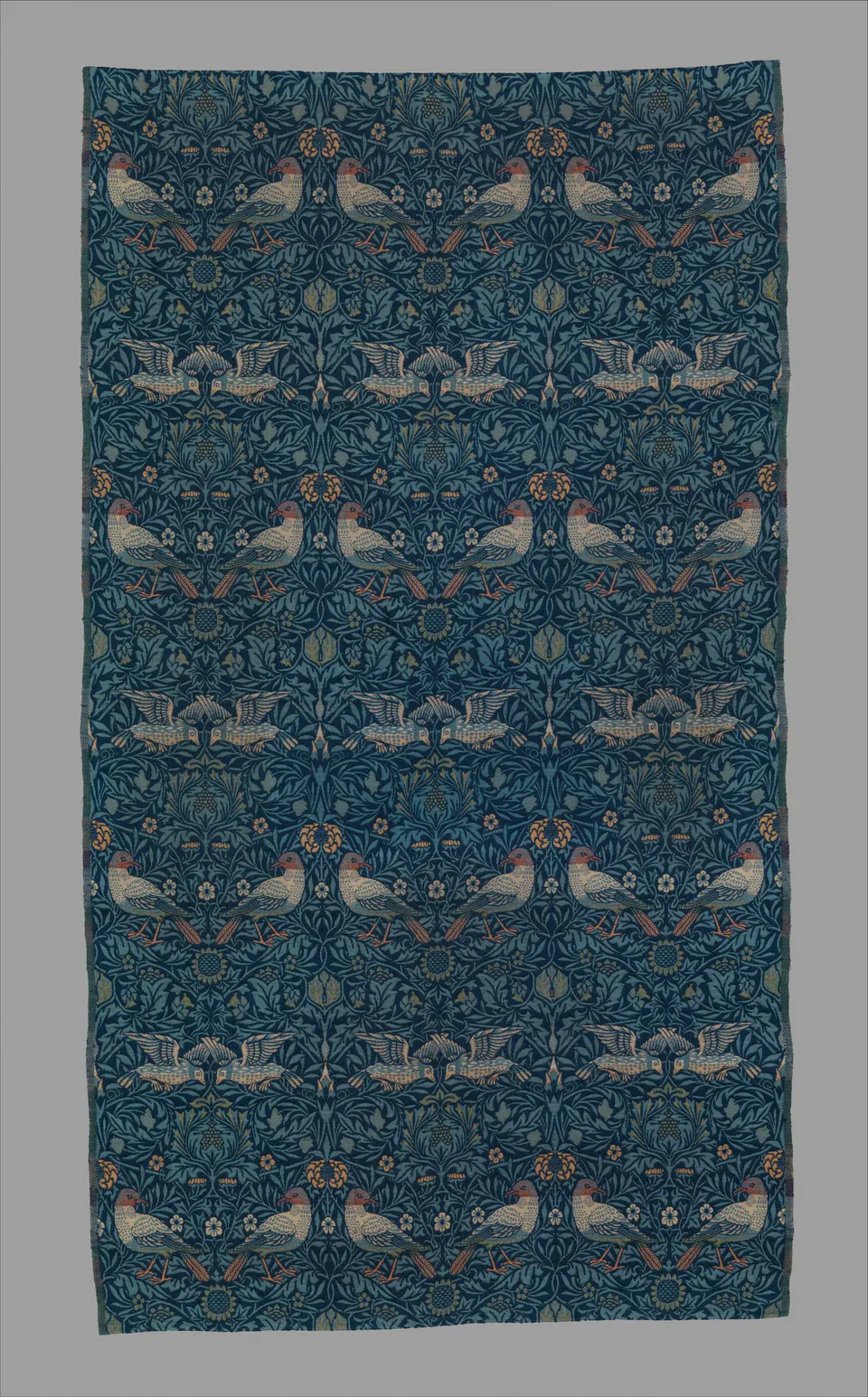
Bird
designed 1878 · The Metropolitan Museum of Art · 23.163.15
Public Domain / Open Access (CC0)
Resized to 960 pixels wide and converted to WebP; no crop.
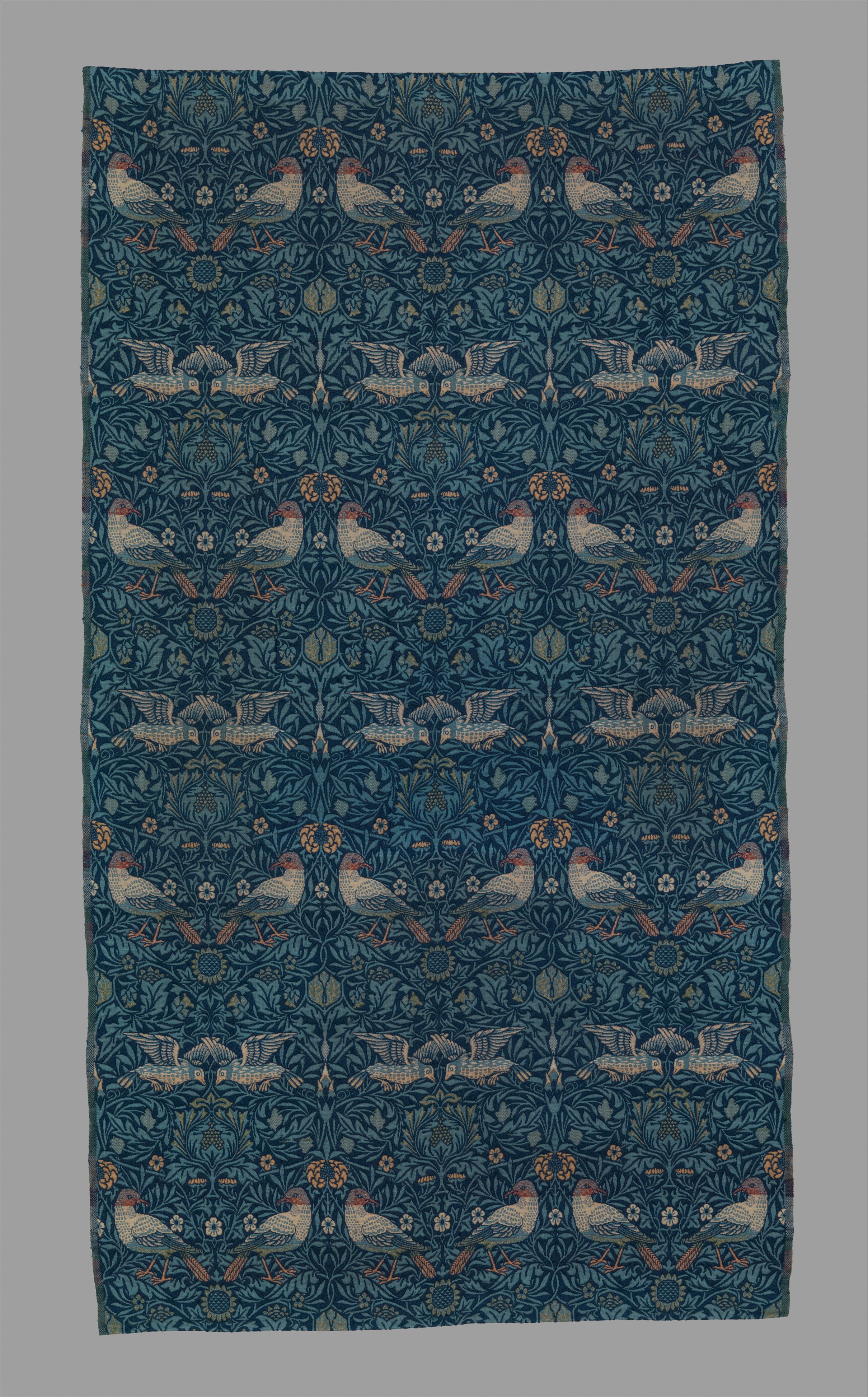
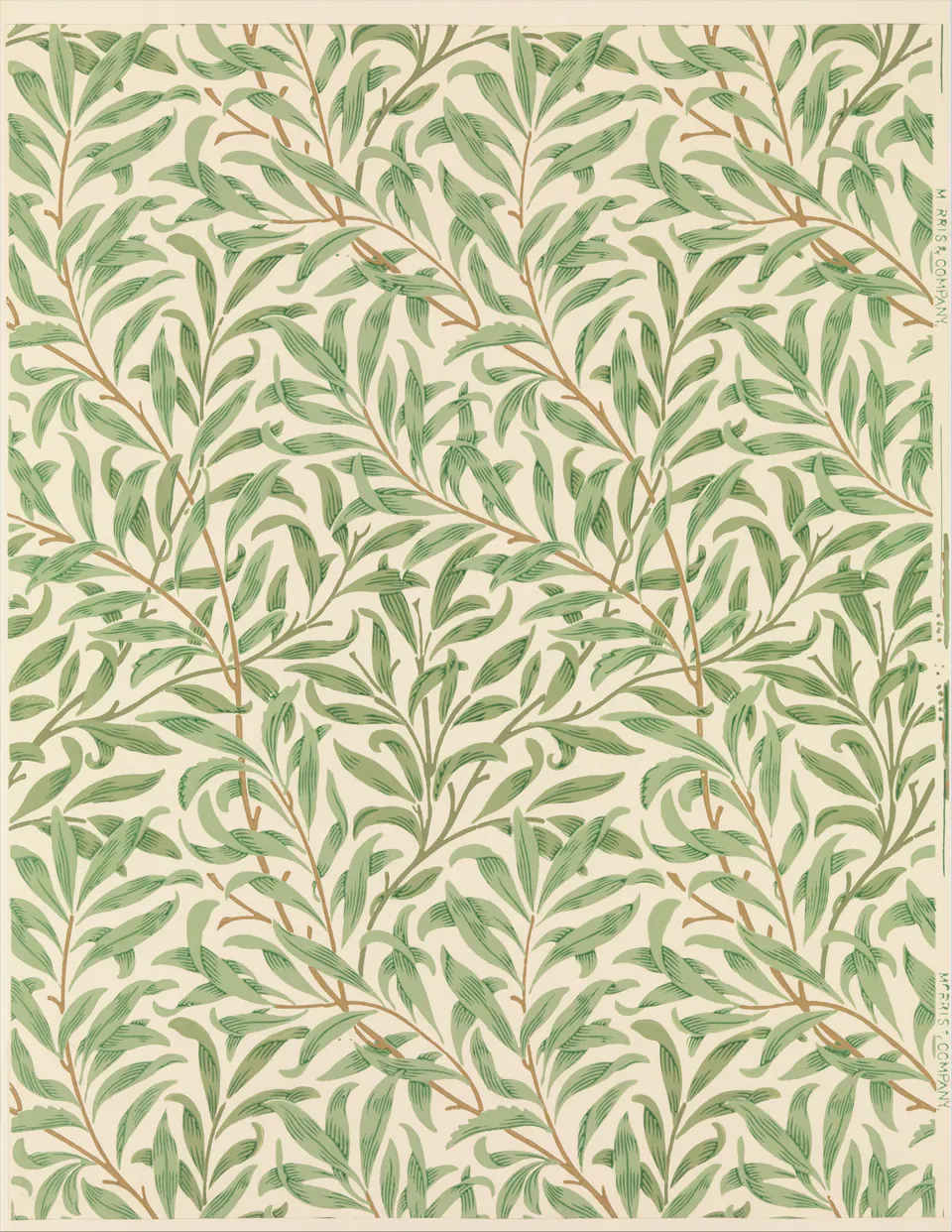
Willow Bough
1887 · The Metropolitan Museum of Art · 23.163.4k
Public Domain / Open Access (CC0)
Resized to 960 pixels wide and converted to WebP; no crop.
Sources and review method
We checked the artist chronology against museum records, treated each named jurisdiction separately, and recorded the provider policy for the image set. These sources support the legal framework and artist dates used above; the source file for any individual image still needs its own record.
- Strawberry Thief — Art Institute of Chicago. Feature identity, designer attribution, design/manufacture dates, accession, and CC0 Public Domain Designation.
- Open Access Images — Art Institute of Chicago. Files labelled CC0 Public Domain Designation may be reused for commercial and non-commercial purposes.
- Pink and Rose — The Metropolitan Museum of Art. Wallpaper object record separating designer, manufacturer, printer, date, and Public Domain file status.
- Image and Data Resources — The Metropolitan Museum of Art. The Met makes images marked Public Domain available for unrestricted use under its Open Access programme.
- Directive 2006/116/EC, Article 1 — EUR-Lex. The EU term for an artistic work is the author’s life plus 70 years.
- How long copyright lasts — UK Government. UK guidance gives 70 years after the author’s death for artistic works.
- Law No. 5846 on Intellectual and Artistic Works, Article 27 — WIPO Lex. The Turkish economic-rights term is the author’s life plus 70 years.
- Circular 15A: Duration of Copyright — U.S. Copyright Office. The 2026 term table places works published before 1931 outside the maximum 95-year publication term.
- Certain Unpublished, Unregistered Works Enter Public Domain — U.S. Copyright Office. Older unpublished works have a separate U.S. term analysis; discovery and first-publication history can matter.
- 17 U.S.C. Chapter 3, including §303 — U.S. Copyright Office. Section 303 states the transition rules and minimum 2002 or 2047 expiry floors for works that were unpublished on 1 January 1978.
- Visual Artists: Publication — U.S. Copyright Office. Distribution can publish a visual artwork, while public display by itself does not establish publication.
- 17 U.S.C. §104A and Circular 38B — U.S. Copyright Office. Foreign-work restoration requires that the work was not already public domain through term expiry in its source country.
- Compendium of U.S. Copyright Office Practices, Chapter 900, §909.3(A) — U.S. Copyright Office. A purely faithful scan or “slavish copy” does not add registrable authorship, while substantial restoration or alteration can require a separate analysis.
- Copyright notice: digital images, photographs and the internet — UK Intellectual Property Office. A digital image can require a separate rights and website-terms check even when its subject is old.
Editorial record
About this article
- Author
- Publisher
- GeMarkt
- Published
- Reviewed
- Internal source & rights check. Conducted by GeMarkt Research Review. This is an internal editorial check—not independent peer review.
- Source standard
- Rights guide source standardSeparates the underlying work from the source file, records the review date, and links the evidence used for the conclusion.
Found a claim that needs checking? Report a factual error.