Are vintage travel posters public domain? We checked 235 of them
We checked 235 vintage posters against archives and auctions: 96 passed every public-domain test, 96 failed, and 43 remained undecided. Here is where they failed.
From the studioThe poster rooms — Cappiello, the Alps, the Riviera, the railway age →
There is a comfortable assumption in the print world: if a poster looks old enough, it must be free. Sepia tones, a steamship, some Art Deco lettering — surely nobody owns that anymore.
We sell vintage posters, so we couldn’t afford the assumption. Before hanging our poster collections on this site, we checked the rights on 235 of them, one by one, against national library catalogues, museum collections and auction records. The result surprised us, and we suspect it will surprise anyone who has ever typed “vintage poster” into a marketplace: 96 of 235 are public domain everywhere we could test — and, in an accidental symmetry we couldn’t have designed, exactly 96 failed at least one test outright. For every poster that cleared, one didn’t. The remaining 43 sit in a parked pile we’ll come back to, because what we couldn’t prove turned out to be as interesting as what we could.
“Vintage”, it turns out, is an aesthetic. It is not a rights status.
A poster has to beat two clocks, not one
The confusion starts because two different copyright systems are ticking at once.
The United States runs a publication clock: as of 2026, works first published before 1931 are in the public domain there. The line moves forward a year every January, which produces genuinely strange edge cases. One poster in our batch — a 1931 exposition sheet, dated on its face and in the national library’s own catalogue — misses the current cutoff by exactly one year. It becomes American public domain on 1 January 2027. We caught it five months early, and we simply have to wait. Five months, on a poster printed ninety-five years ago.
Most of the rest of the world, Türkiye and the EU included, runs a life clock instead: protection lasts until seventy years after the artist’s death. For a poster to be safely public domain worldwide, it has to beat both clocks — published before 1931 and made by someone who died in or before 1955.
Plenty of posters beat one and lose to the other. A Normandy railway poster from around 1930 clears the American test with a year to spare — but it is signed by an illustrator who lived until 1969, so in France, the country it advertises, it stays protected into the 2040s. Free in Chicago, forbidden in Caen.
The trap that killed a whole room
The strangest case in our 175 was a set of American national park posters from the 1930s — the WPA-era sheets printed by the federal government’s own artists. United States government works are public domain from the moment of creation. No clock at all. We thought we had found the cleanest posters in the whole catalogue.
Then the life clock spoke up. Those posters weren’t anonymous: the designers are documented, named people, and one of the best-known of them died in 1996. Which means that in every life-plus-seventy country, posters “born free” in Washington remain in copyright into the 2060s. We had planned a whole room around them. The room died in verification, and we let it die — because “free in one country” is not the standard we print under.
If you take one sentence from this article, take this one: public domain has a geography.
An old-looking poster is not an old poster
The second trap is subtler. Poster style is easy to date; posters are not. Swiss tourism kept commissioning flat, bold, “1920s-looking” lithographs deep into the 1950s, and some of the century’s most collected Swiss poster artists lived long lives — one of them died in 1984. A sheet can look like the Belle Époque and still have a copyright running to the middle of this century.
This is why every verdict in our check rested on documents rather than vibes: a dated imprint on the sheet, a national library record, a museum catalogue, an auction listing with a year. Where two independent sources agreed, we ruled. Where they didn’t, we didn’t.
Even the clean cases carry one more wrinkle worth knowing: some of these posters advertise brands that never died. The chocolate house behind one 1903 poster in our collection has been trading since 1856 and still is; a cognac firm founded in 1860 still uses the bird a poster artist drew for it in 1906 as its logo today. Copyright and trademark are different questions — the artwork can be free while the name on it is still somebody’s living brand. We note it on every such poster and, when two candidates are equally strong, we hang the one whose brand is history.
The parked pile is the honest pile
43 of our 235 ended in neither yes nor no. The commonest reason: a poster signed by a real, named artist about whom the record says almost nothing — no birth year, no death year, sometimes not even a full name. A named artist with an unknown death date can never be cleanly life-plus-seventy. So the poster waits, unlabeled, no matter how good it would look in a collection.
Parking is not a verdict. It’s an admission — and we’d rather admit than guess, because a “public domain” label is a factual claim we make in public, about someone else’s work, with our name attached.
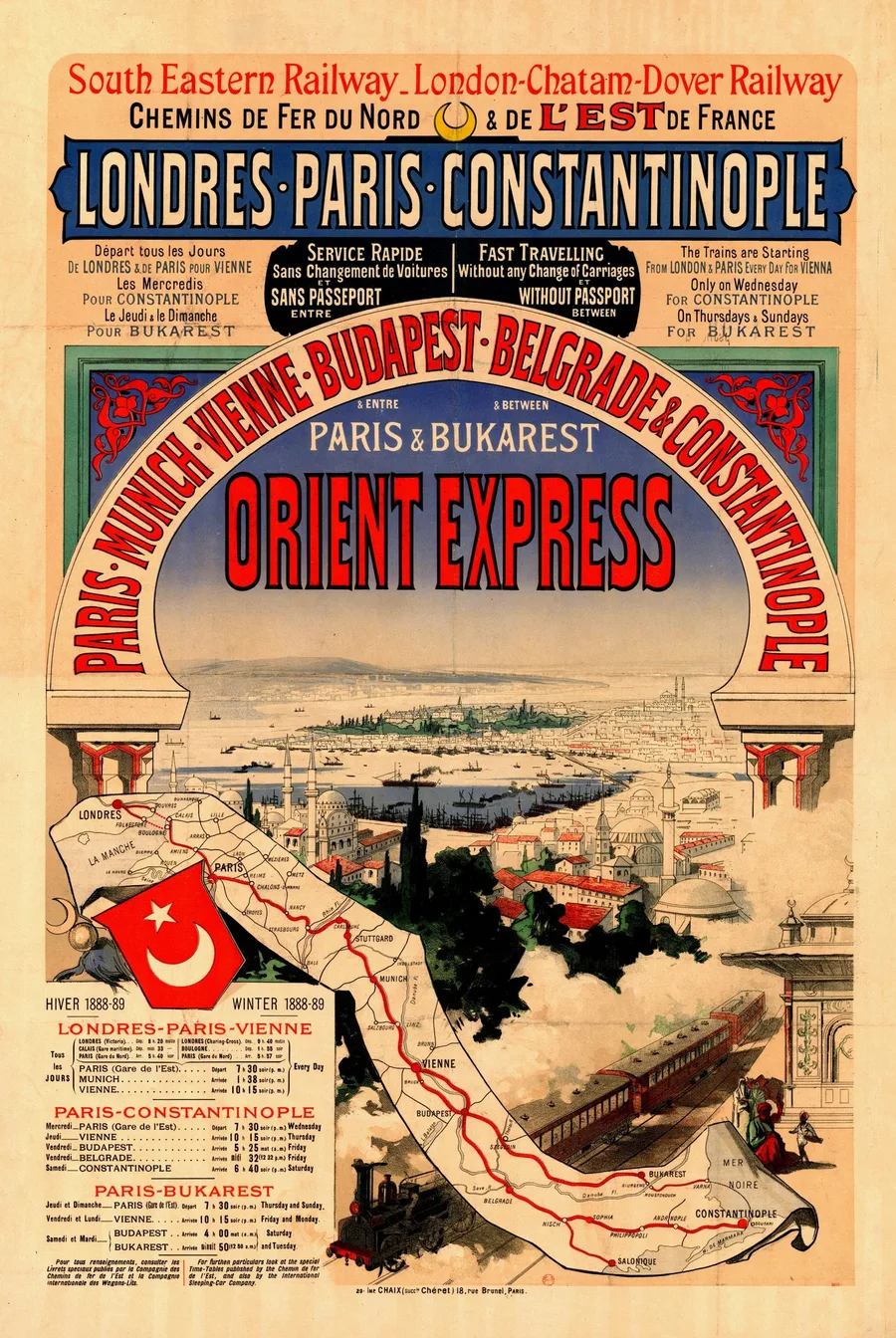
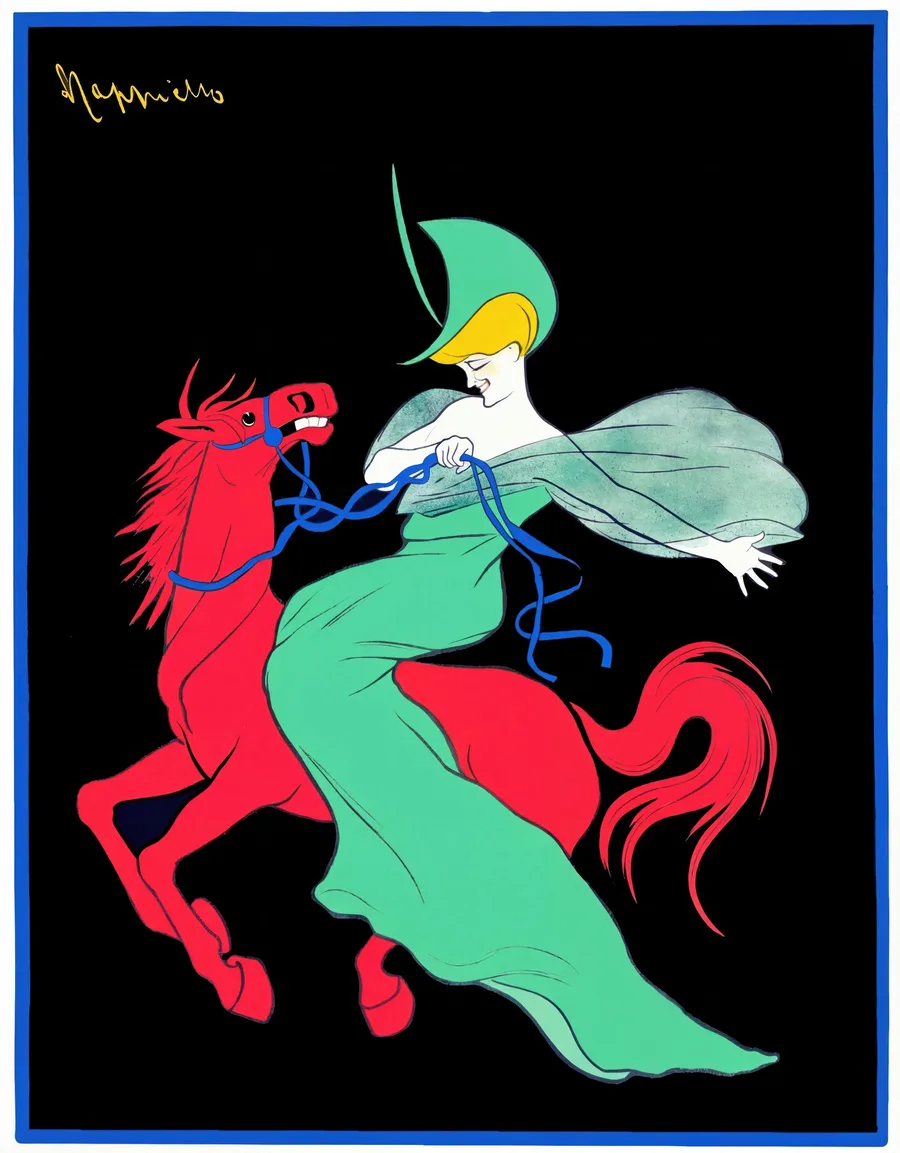
Every poster that did pass now hangs in the collections with its date and attribution shown: the Cappiello room, the Swiss Alps, the Riviera, the railway age. If a sheet is on those pages, it beat both clocks, on paper we can show.
One caveat, as always: copyright terms vary by country and change over time. This is a working method honestly described, not legal advice — for a commercial question that depends on it, ask a lawyer in your jurisdiction.
Editorial record
About this article
- Publisher
- GeMarkt
- Published
Found a claim that needs checking? Report a factual error.