Is Leonetto Cappiello's art public domain? A collector's guide
Cappiello changed the look of the modern street poster — and his classic work is public domain today. Where the lines run: dates, geography, and the trademark wrinkle.
The poster, reinvented
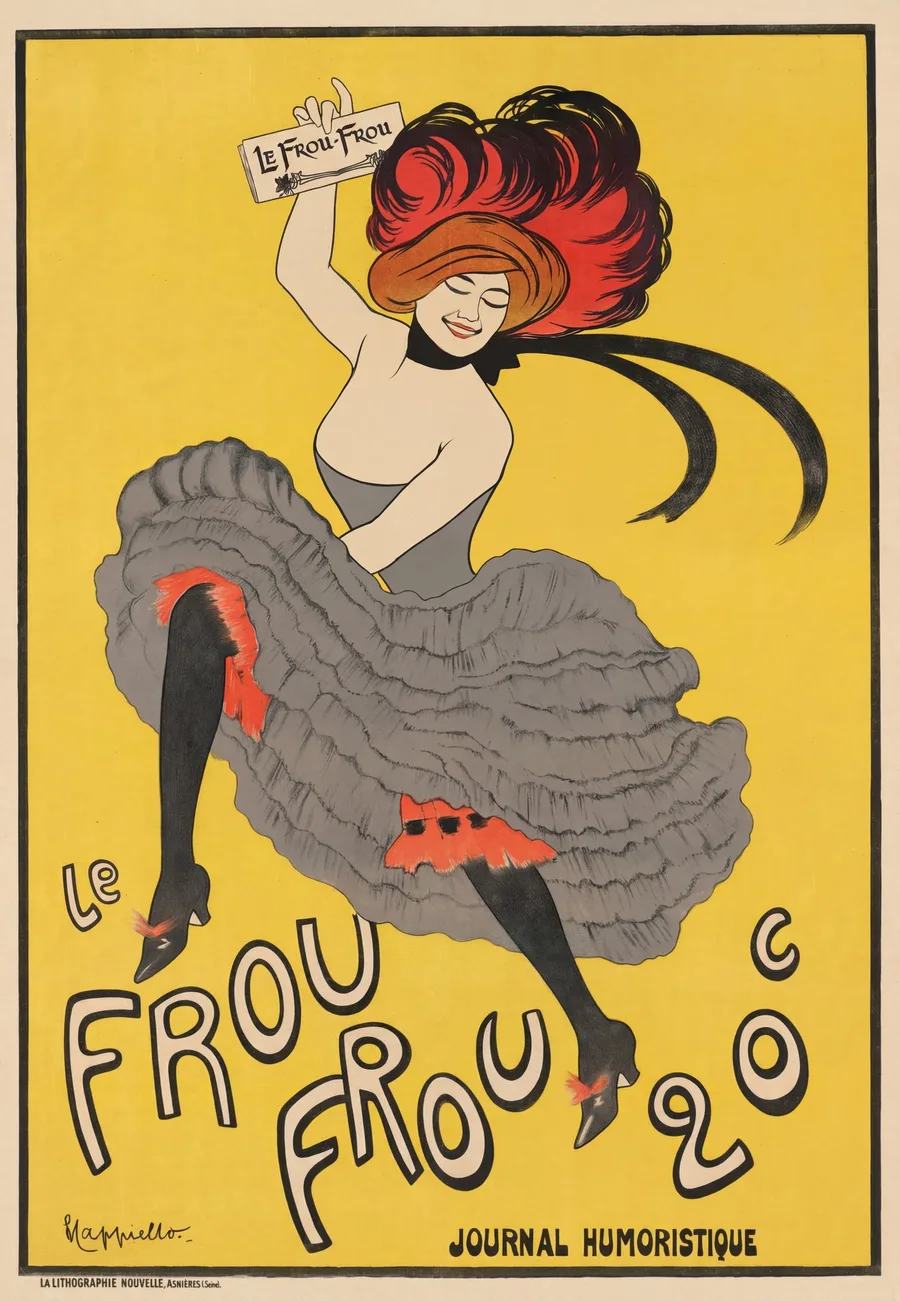
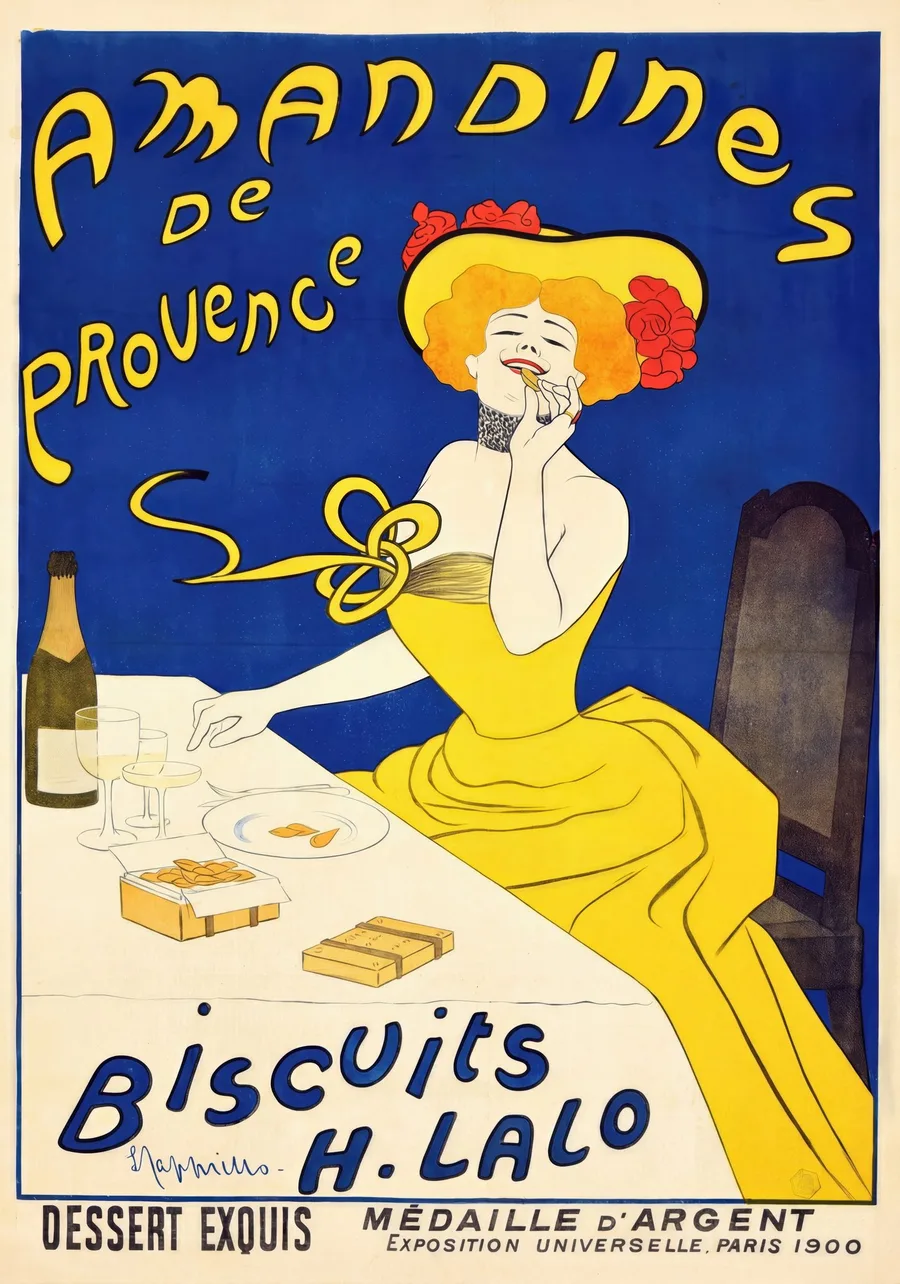
Leonetto Cappiello arrived in Paris from Livorno as a young caricaturist and left the city, decades later, having changed the look of the modern street. He began by drawing actresses and politicians for the satirical press, and that training never left him: the caricaturist’s gift for compressing a whole personality into one exaggerated gesture became the engine of his advertising work. Where the previous generation of poster artists filled every inch with ornament and atmosphere, Cappiello stripped the poster down to a single vivid figure on a flat, often black, ground. His insight was brutally practical. A poster is not studied in a gallery; it is glimpsed from a passing tram. One figure, one gesture, one shock of color, and the product’s name.
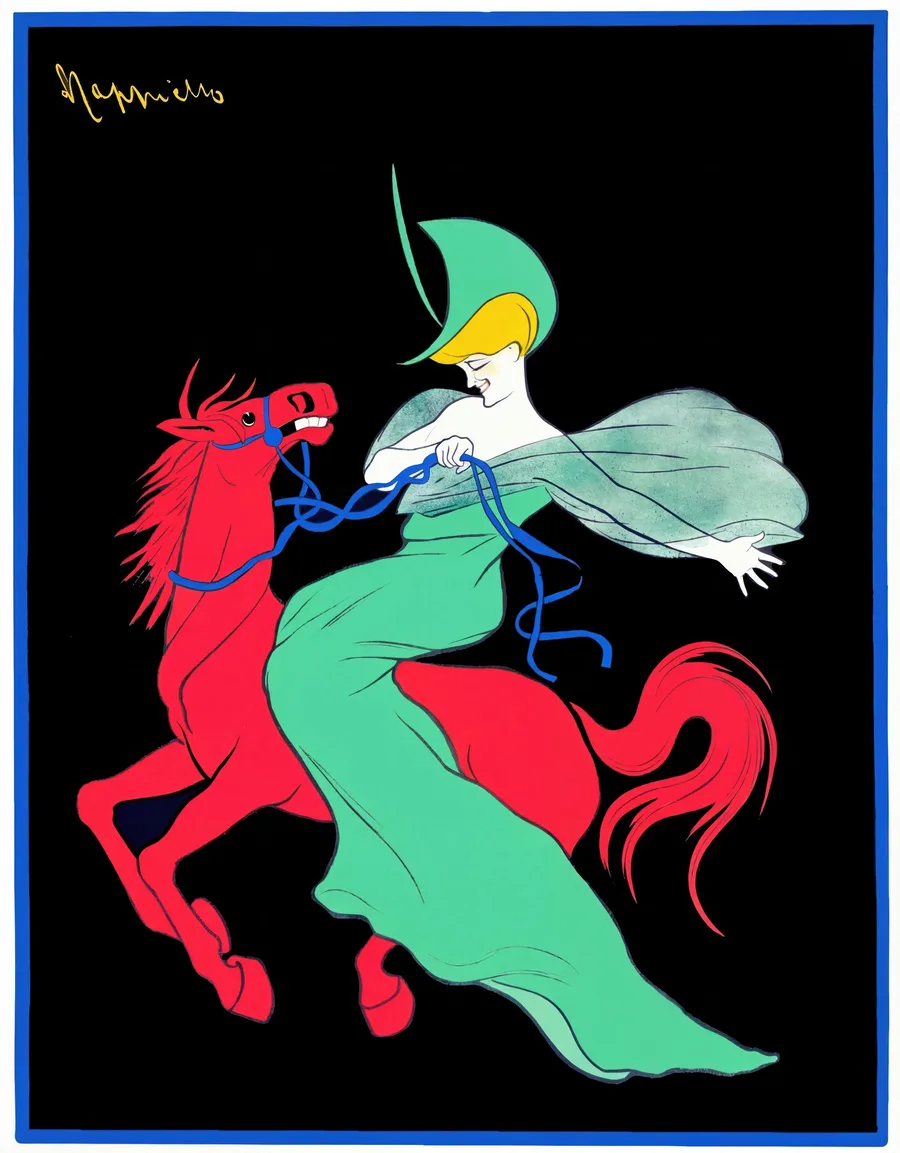
Chocolat Klaus (1903) made the method famous: a woman in green riding a rearing red horse, an image with no logical connection to chocolate whatsoever. That was the point. The absurd figure lodged in the memory, and the brand name lodged with it. Cappiello called this fusion of arresting image and product an “arabesque,” and it became the grammar of twentieth-century advertising. Nearly two decades later, Parapluie-Revel (1922) showed the formula at full maturity, with three silhouetted figures leaning into a slanting downpour beneath their umbrellas, while designs like his Cognac Pellisson work carried the same theatrical energy into the drinks trade. He kept producing posters into the 1930s and died in 1942, widely credited as the father of the modern advertising poster.
The short answer
Yes, with a few honest footnotes.
Cappiello died in 1942. In countries that protect works for the author’s lifetime plus 70 years, which includes most of Europe and much of the world, his copyrights expired at the end of 2012. His work has been in the public domain in those countries since 2013.
The United States counts differently for older works: a work published before 1978 is generally protected for 95 years from publication. For most of Cappiello’s output this changes nothing. Chocolat Klaus (1903) and Parapluie-Revel (1922) cleared the American bar long ago. But Cappiello worked late into his life, and his posters from the 1930s are only now crossing the 95-year line, one publication year at a time. A poster from the early 1930s may be free in Paris and still protected in New York, depending on exactly when it was published.
Copyright terms also genuinely vary beyond these two rules; a handful of countries use longer or shorter periods. This page is general information for collectors, not legal advice.
Copyright is not trademark
There is a second nuance worth knowing. Cappiello painted for brands, and some of those brands are still trading today. Copyright and trademark are different rights. Copyright in the artwork expires; a trademark can live indefinitely as long as the mark is used in commerce. The expiry of Cappiello’s copyright means the artwork itself may be freely reproduced as art. It does not license anyone to use a living company’s name or logo to sell competing goods. For a collector buying a print to hang on a wall, this distinction rarely matters in practice, but it is why “public domain” is not the same claim as “no rights of any kind touch this image.”
“Public domain” is not “every file is free”
One more distinction separates careful sellers from careless ones. Even when the underlying artwork is out of copyright, individual digital files circulate with their own claims attached. Museums and archives sometimes assert rights over their photography or impose license terms on downloads, and jurisdictions disagree about whether a faithful reproduction of a flat public-domain work creates any new right at all. The date on the artwork answers one question; the provenance of the file answers another.
Our approach comes down to a single sentence: every poster in our catalog has its rights status individually verified before we list it, and the restorations we sell are our own.
The Cappiello collection
Our Cappiello collection currently holds 128 posters, spanning the early Belle Epoque commissions through the mature work of the 1920s. Parapluie-Revel, Chocolat Klaus, and Cognac Pellisson are all here, alongside dozens of lesser-known designs for aperitifs, chocolates, cigarettes, and seaside resorts that show how wide his range really was.
Each poster is available in several formats: as a rolled poster if you prefer to frame it yourself, as a stretched canvas, as a framed canvas, or as framed paper ready to hang. If Cappiello’s slanting rain and rearing red horse have been living somewhere in your visual memory, browse the collection and see which of the 128 belongs on your wall.
Editorial record
About this article
- Publisher
- GeMarkt
- Published
Found a claim that needs checking? Report a factual error.